The district has reported 99 snakebite cases so far this year, surpassing 94 cases recorded during the corresponding period in 2025 and marking a 34% increase over 2024, when 74 cases were reported. Health officials and wildlife experts attribute the rise to monsoon rains that force snakes to come out of flooded burrows, agricultural fields, village pathways and residential areas.
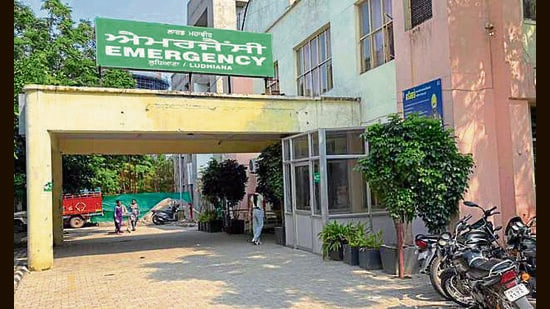
Data from Civil Hospital shows that 18 snakebite cases were reported in June, followed by a sharp rise to 35 in July, while 28 cases have already been recorded in August. Together, the two monsoon months account for 63 of the 99 cases reported this year — nearly 64% of the total. The majority of victims are from rural areas, where farmers and agricultural labourers spend long hours in paddy fields and are more likely to encounter snakes displaced by rainwater and waterlogging.
Dilpreet Singh, a farmer from a village on the city’s outskirts, said snake sightings have increased significantly this season. “We are working in knee-deep water during paddy cultivation. Snakes often emerge from fields after heavy rain, and many farmers now carry torches even during early morning and evening hours to avoid stepping on them,” he said.
Another farmer, Gurmail Singh, said villagers remain cautious during the monsoon. “Earlier, we would spot snakes occasionally, but this year their movement has increased after every spell of rain. People are more alert while working in fields and around fodder storage areas,” he said.
{{/usCountry}}Another farmer, Gurmail Singh, said villagers remain cautious during the monsoon. “Earlier, we would spot snakes occasionally, but this year their movement has increased after every spell of rain. People are more alert while working in fields and around fodder storage areas,” he said.
{{/usCountry}}Dr Amanpreet Kaur, district family planning officer and senior physician, said every snakebite should be treated as a medical emergency regardless of whether the snake is identified.
“People should not panic because many snake species are non-venomous, but victims must immediately report to the nearest health facility. Delays in treatment and dependence on traditional remedies can prove dangerous. Anti-snake venom is available at Civil Hospital and community health centres, and our staff is trained to handle such cases,” she said.
Asmita Narang, wildlife expert at Guru Angad Dev Veterinary and Animal Sciences University (GADVASU), said the spike is a seasonal phenomenon linked to the monsoon. “Heavy rainfall floods underground habitats and forces snakes to move in search of shelter and food. Most snakes avoid human interaction and bite only when threatened or accidentally disturbed. People should remain cautious, particularly in fields, near vegetation and around waterlogged areas,” she said.
Health officials said awareness and timely medical intervention remain the most effective safeguards against fatalities. Residents have been advised to wear protective footwear while working outdoors, use torches at night and avoid attempting to catch or kill snakes. Anyone bitten should seek medical treatment immediately instead of relying on traditional remedies or attempting to treat the wound at home. With paddy cultivation still underway and intermittent rainfall, the risk of snake-human encounters is expected to remain elevated in the coming weeks, particularly in rural areas and waterlogged fields.