
 E-Paper



HC stays demolition of Chandigarh’s Janta Colony
Secretary, housing and urban development, Chandigarh, told to respond whether the petitioners are covered by the eligibility conditions of the 2015 rehabilitation scheme

 Prefer HTon Google


In a setback to Chandigarh administration’s plan of making the city slum-free by May end, the Punjab and Haryana high court on Friday stayed the demolition notices put up at Janta Colony in Sector 25 for May 15.
The high court bench of justice Amol Rattan Singh and justice Lalit Batra acted on the plea of one Davinder and nine others, who are residents of the colony.
The UT administration had put up the notices in the colony on May 3, asking the residents to vacate the area before the demolition drive, planned on May 15.
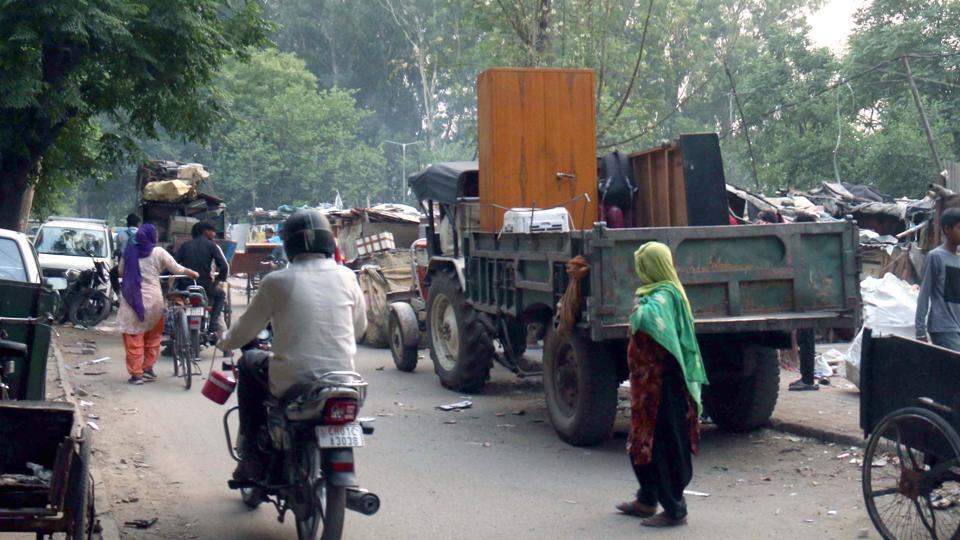
The administration planned to recover around 10 acres of government land from the colony’s illegal shanties, estimated to be around 2,500. Currently the biggest slum area in the city, after the demolition of Colony Number 4 on May 1, Janta Colony is estimated to be home to more than 10,000 people.
It stands on land, worth around ₹350 crore, which has been earmarked for a dispensary, a primary school, a community centre and a shopping area.
In the high court, the residents sought quashing of the May 3 notices, terming them in violation of Article 14 (equality before law) and 21 (right to personal life and liberty) of the Constitution of India.
It was argued that the notices were also in violation of the Chandigarh administration’s policy of November 6, 2006, which talks about rehabilitation of those being evicted. They demanded that the administration be asked to make arrangements for alternative accommodations for them before demolition.
As per petitioners, the inhabitants of the colony are labourers, hawkers, industrial workers, daily wagers, sweepers, domestic workers, porters, etc. They have been living in the colony continuously for the last 15- 25 years. The residents hold ration cards, voter cards, driving licences, Aadhaar cards and PAN cards, issued by competent authorities. Hence, they can’t be evicted without making provisions for their rehabilitation, it was submitted.
The petitioners referred to the Pradhan Mantri Awas Yojana, which as per them says “in-situ” slum redevelopment is to be done using land as resource with private participation for providing houses to eligible slum dwellers, an important component of the “Housing for All” mission of the Government of India.
During the hearing on Friday, the court asked the UT’s counsel whether the petitioners’ case had been considered under the 2015 rehabilitation scheme. UT told the court that their eligibility was considered under the Small Flats Scheme, 2006, and they were not found to be eligible. But their case had not been considered under the 2015 scheme.
“If that is so, we do not see how citing a scheme of 2006 and a petition in which 2015 scheme is not even an issue, can even vaguely determine the case of the petitioners,” the court observed, asking the UT secretary, housing and urban development, to file an affidavit detailing whether or not the petitioners are covered by the eligibility conditions for 2015 scheme.
The matter will now be taken up on June 1 and till then, the administration has been restrained from demolishing the colony.


