In poll-bound Himachal Pradesh, regional divide is more dominant a factor than caste, as political and economic development, and social mobilisation are the fault lines shaping the hill state’s political landscape.
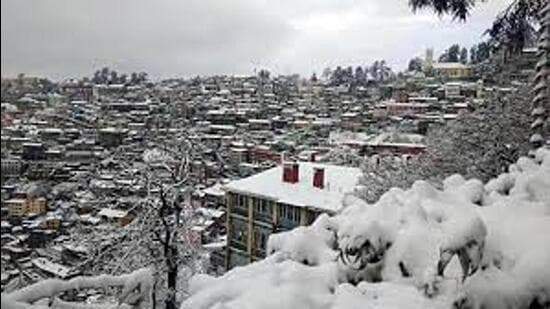
Upper Himachal, as it is vernacularly called, comprises Shimla, Sirmaur, Kullu, Lahaul and Spiti, Solan, Kinnaur and Chamba districts, ‘lower Himachal’, on the other hand, comprises Kangra, Hamirpur, Bilaspur, Una and lower regions of Mandi district.
Before Independence, the upper region of the state comprised small principalities that were merged into the Union of India in 1947. Initially, the state had four districts Mahasu, Mandi, Chamba and Sirmaur. In these areas, residents were influenced by the nationalist movement in British India, but their objective was never to overthrow or eliminate the princely states. The region witnessed a powerful praja mandal movement and when Himachal was formed in 1948, the praja mandals of the state were merged into the Congress. Consequently, Congress has traditionally been a dominant force in the upper region.
In 1966, after the re-organisation of Punjab, a new area, which came to be known as lower Himachal, was merged into the hill state. The region was geographical and culturally different from the upper region and politically more active, but the upper region still remained dominant in state politics. This is gauged by the fact that four out of six chief ministers (CMs) of the state came from upper Himachal.
{{/usCountry}}In 1966, after the re-organisation of Punjab, a new area, which came to be known as lower Himachal, was merged into the hill state. The region was geographical and culturally different from the upper region and politically more active, but the upper region still remained dominant in state politics. This is gauged by the fact that four out of six chief ministers (CMs) of the state came from upper Himachal.
{{/usCountry}}While the first CM YS Parmar was from the Sirmaur district, two CMs – Ram Lal Thakur and six-time CM Virbhadra Singh – were from the apple growing regions, which comprise nearly 17 assembly segments in Kinnaur, Kullu, Mandi and Shimla.
Balancing the apple cart
The apple-producing regions have played a major role in outlining the political contours of the state as the fruit contributes 13.5% to the GDP of the state, which boasts of a ₹6,000 crore apple economy.
The apple-growing regions have produced some of prominent political leaders of the state, including former speaker Vidya Stokes, daughter-in-law of Satya Nand Stokes, the man who pioneered apple growing in Himachal
Stokes’ mother Subhadra Devi, a noted social worker in the area, was nominated as a member of the Himachal Pradesh assembly. Former minister Pandit Padam Dev and BJP’s Daulat Ram Chauhan were also from apple-growing areas of the Shimla district. Satya Dang, who married Himachal’s founder chief minister Dr YS Parmar, was one of the most powerful women leaders of her time. Jai Bihari Lal Khachi was another powerful leader from the area. Known to be a master strategist, the Congress was wary of Khachi.
Power struggles in Mandi
With Jai Ram Thakur becoming the CM, Mandi has also emerged as a political centre in Himachal Pradesh. However, the district has always been politically significant as several leaders from the region were front runners in the race for the CM’s post, but lost due to infighting.
First, it was Karam Singh of Seraj who had challenged the leadership of then chief minister YS Parmar, but Pandit Sukh Ram proved to be the game changer.
As destiny would have it, Pandit Sukh Ram, who was then the union telecom minister, was the front-runner for the CM’s post in 1993. Despite the high command announcing that he was the chief ministerial candidate, he was ditched by two MLAs from Mandi district – Kaul Singh and Rangila Ram Rao, who sided with Virbhadra Singh.
In 2012, Kaul Singh was considered the main contender but again lost as other MLAs from Mandi supported Virbhadra Singh. After he became CM, Jai Ram Thakur did not promote regional politics, setting a new trend in state politics.
Lower Himachal has given the hill state two CMs – Shanta Kumar and Prem Kumar Dhumal, who were both from BJP.
Electoral data from 2003 to 2012 suggests that Congress on average won 17 out of 34 constituencies, while BJP won only eight seats. In 2012, Congress won 18 seats, BJP won 14 seats and other parties won two seats. In 2017, the saffron party won 19 seats, Congress won 13 seats and other parties won two seats. This indicates the changing face of the political spectrum.
Regional swords may rattle in scabbards: Political scientist
Harish Thakur, head of the political science department, at Himachal Pradesh University (HPU), Shimla, says the changing dynamics of state politics in Himachal do not factor in traditional regional animosities. In fact, the issues of development, progress, and national security are determining factors across all sectors.
However, he adds, “If Upper Himachal areas face severe paucity of funds for the development of horticulture, hydroelectricity, and tourism sectors, the prime areas of livelihood in the region, the old swords may rattle in the scabbards.”