Jammu and Kashmir lieutenant governor Manoj Sinha on Wednesday rolled out Radio Frequency Identification (RFID) system for the pilgrims visiting the famous Mata Vaishno Devi Shrine atop Trikuta hills in Reasi district.
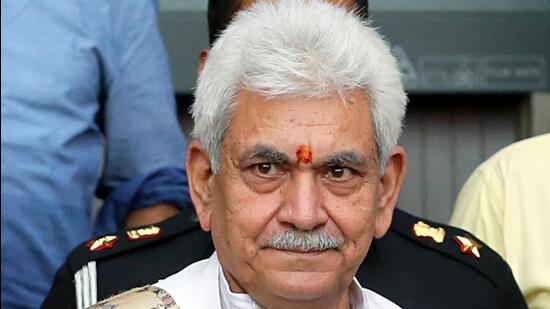
The RFID system is part of various new projects sanctioned for the convenience of the pilgrims in the aftermath of a stampede at the shrine on New Year’s day in which 12 pilgrims were killed and 16 others injured.
The findings of the inquiry ordered by the L-G and marked to the then home secretary Shaleen Kabra remain unclear till date.
“Keeping in view the heavy rush of devotees, we are constantly improving the facilities to make their pilgrimage hassle-free. In the last two years, new projects have been sanctioned for better facilities and resources and important steps have also been taken for crowd management at the holy shrine,” Sinha said.
Addressing a function to celebrate the 37th foundation day of the Shri Mata Vaishno Devi Shrine Board (SMVDSB) and the 12th annual day of Shri Mata Vaishno Devi Gurukul, Sinha highlighted the measures undertaken to cater to the needs of eight-nine lakh devotees visiting the shrine every month.
Referring to the introduction of the RFID system, Sinha said it will ensure seamless access control with minimal hassle to devotees.
{{/usCountry}}Referring to the introduction of the RFID system, Sinha said it will ensure seamless access control with minimal hassle to devotees.
{{/usCountry}}“For better crowd management and tracking of the yatris, 29 counters and control rooms have been set up in Katra and verification counters have been set up at seven locations on the (13 km) track,” he said, adding the work on skywalk will be completed by December.
Sinha said a memorandum of understanding between the National Highway Logistics Management Limited (NHLML) and the Katra Development Authority that was inked on August 30 will create one-of-its-kind intermodal stations for the devotees bringing services like helipad, railway station, bus stand, auto stand, parking, five-star hotels, and other modern-day facilities at one place.
“Keeping in view the heavy rush of devotees, we are constantly improving the facilities to make their pilgrimage hassle-free. In the last two years, new projects have been sanctioned for better facilities and resources and important steps have also been taken for crowd management at the holy shrine. The work on the skywalk will be completed by December,” the LG said.
Enlisting a host of new initiatives taken for ensuring that pilgrims from all over the world get state-of-the-art facilities and further strengthening the linkage between the local economy and the pilgrimage, Sinha said the administration is working on the development and promotion of the spiritual tourism circuit.
“Efforts are being made for conservation and revitalisation of spiritual cultural heritage and to bring prominent spiritual and religious places like Purmandal-Utterbehni, Mansar-Surinsar and Shiv Khori on the religious tourism circuit of the country which will also generate livelihood opportunities for the locals,” he said.
Sinha said 18 projects for the conservation of places with spiritual and cultural importance have been started in Jammu, Kathua, Ramban, Reasi, Samba and Udhampur, which were “neglected” for years.