The Jammu and Kashmir government has notified the Electric Vehicle Policy-2026, following its approval by the cabinet chaired by chief minister Omar Abdullah, laying out a six-year roadmap for expanding clean, affordable and weather-resilient electric mobility in the Union Territory.
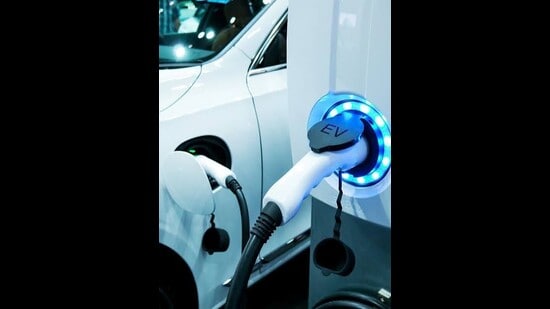
The policy, covering 2026–32, aims to accelerate EV adoption, strengthen charging infrastructure and create an enabling ecosystem for electric mobility across all 20 districts of the Union Territory.
Abdullah said the policy provides a structured framework for advancing clean transport while taking into account the specific terrain and cold-weather conditions of the state.
“The notification marks the formal implementation of the strategy for creating new opportunities in the electric mobility sector,” an official statement said.
It said that the policy targets 1.40 lakh EVs by 2032, supported by demand incentives, climate-specific infrastructure, power-grid integration, public-private partnerships, skill development and employment generation.
Under the strategic infrastructure roadmap, the policy envisages the establishment of 900 public charging sites, including 140 fast-charging hubs, across urban grids and highway corridors.
It also provides for EV-ready parking, with building bye-laws mandating EV-readiness for 20% of parking capacity.
{{/usCountry}}It also provides for EV-ready parking, with building bye-laws mandating EV-readiness for 20% of parking capacity.
{{/usCountry}}Recognising J&K’s distinct climatic conditions, the policy introduces a specialised winter validation protocol under which EVs will undergo winter-performance validation, particularly for operation in snow and sub-zero conditions. The framework also seeks to integrate EV charging demand with the power system.
To encourage adoption, the policy provides for interest subvention of 3–5% on EV loans for up to 36 months, with higher support aimed at reducing the cost of EV ownership for eligible beneficiaries. It also provides for scrappage-linked incentives, with an annual budgetary provision of ₹50 crore to incentivise replacement of old vehicles with cleaner electric vehicles.
The policy further provides top-up incentives for the first 15,800 eligible adopters. The incentives include ₹15 lakh for the first 300 e-buses, ₹1 lakh for the first 1,500 personal cars and ₹5,000 for the first 10,000 two-wheelers, subject to the eligibility and conditions prescribed under the policy.
The policy also envisages phase-wise fleet electrification, expansion of charging networks, greater private-sector participation and development of skilled manpower to support the emerging EV ecosystem.