Lieutenant governor Manoj Sinha on Monday called for greater empowerment of women innovators and their leadership in agricultural technology institutions. He asked private-sector stakeholders to support women-led start-ups and create laboratories, fellowships and incubation platforms to nurture young women engineers from rural areas.
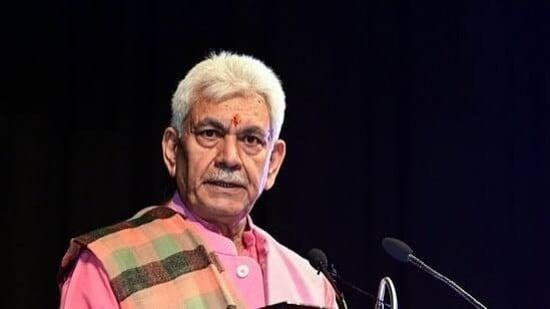
Addressing the 60th annual convention of the Indian Society of Agricultural Engineers (ISAE), co-hosted by Sher-e-Kashmir University of Agricultural Sciences and Technology (SKUAST), Sinha highlighted the significance of the convention’s themes — “Women-led Engineering Innovations in Smart Farming and AI and Robotics for Gen-Z Farming.”
“These subjects underline India’s transition from overcoming food security challenges to assuming a leadership role in global agriculture,” he said, adding that Jammu and Kashmir, with its rich agricultural heritage and challenging terrain, was an apt venue for such deliberations.
Reflecting on the journey of agricultural engineering since ISAE’s inception in 1960, Sinha recalled how scientists and engineers contributed to the Green Revolution through mechanisation and innovations that reduced post-harvest losses. He urged the younger generation to draw inspiration from these achievements while addressing contemporary challenges such as climate change, resource scarcity and sustainable farming.
The LG noted the critical role of women in agriculture, stating that nearly 64% to 76% of the rural female workforce is engaged in farming and allied activities, often without wages or land ownership.
{{/usCountry}}The LG noted the critical role of women in agriculture, stating that nearly 64% to 76% of the rural female workforce is engaged in farming and allied activities, often without wages or land ownership.
{{/usCountry}}“Empowering women innovators and ensuring their leadership in agricultural technology should be our goal. Women-led start-ups in agricultural technology should receive financing with the same confidence with which any other start-up is provided the necessary support and facilities. We must ensure that our engineering colleges and agricultural universities actively nurture them to reach positions of technological leadership. Laboratories, fellowships and incubation platforms should be created where a young woman engineer or scientist from a village in Kishtwar or Kupwara can see her idea progress through a credible journey into a market-ready product,” he said.
The LG said artificial intelligence and robotics must be developed with affordability and accessibility at their core principles.
“The innovations should not remain confined to large land-holding farmers but must reach small and marginal farmers, who constitute nearly 86% of India’s farming community,” he said, advocating for tools that can operate on ordinary smartphones in low-bandwidth villages and for collective ownership models through Farmer Producer Organisations (FPOs).
Sinha urged the Indian Society of Agricultural Engineers, SKUAST-Kashmir, and every young engineer and innovator to develop tools with affordability and access at their core. “Create instruments that work not only on cloud infrastructure, but also on an ordinary smartphone in a low-bandwidth village in Reasi. Develop robotic instruments that can be leased through FPOs or collectively owned by farming communities,” he said.