E-Paper



{Census} Hangul population in J&K sees uptick, wildlife dept elated
However, if compared to the numbers of the past two decades, when the census exercise started, the rare animal’s population has increased by around 50%

 Prefer HTon Google


After two years, the unique Kashmir stag, vernacularly known as Hangul, the state animal of Jammu and Kashmir, has again shown a marginal increase in its population, much to the delight of wildlife department and Hangul lovers across the region.
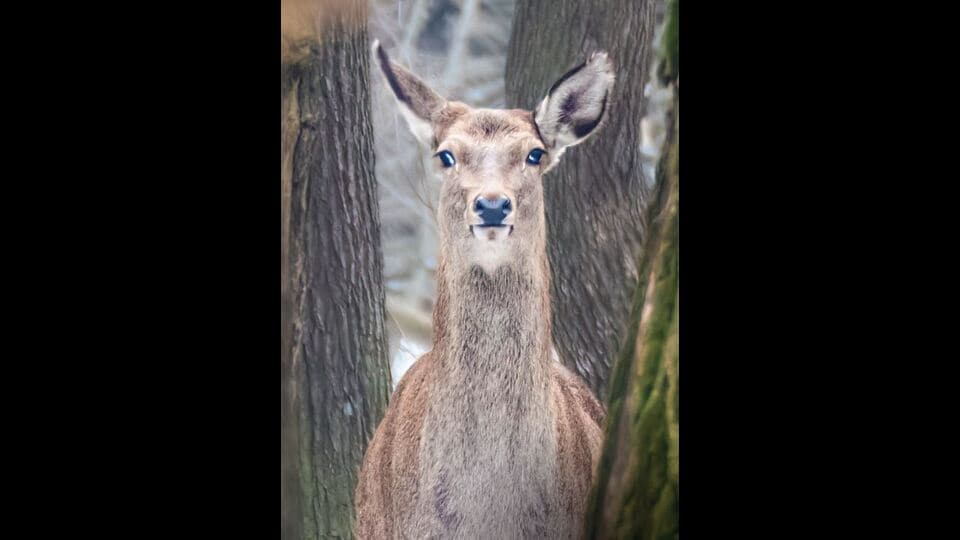
However, if compared to the numbers of the past two decades, when the census exercise started, the rare animal’s population has increased by around 50%.
Earlier, Valley had a healthy population of Hangul but it later became critically endangered, with sightings mostly reported in Srinagar’s Dachigam National Park along with a few pockets in south Kashmir such as in Tral Wildlife Sanctuary.
According to wildlife officials, the stability and increase in population of Hangul is a result of conservation efforts aimed to protect the animal in Dachigam and improvement in the situation in the Valley for the past two decades.
The latest biennial census, which was conducted in April this year and was made public recently, revealed that the population of the animal has increased to 289 from 261 in 2021, a 10% increase.
“Based on the direct animal sightings, the mean population number of Hangul was estimated to be 275 individuals at Dachigam National Park. Also, at Shikargarh, in Tral Wildlife Sanctuary, which is known to be the second home of Hangul, 14 were recorded through camera,” the census report said.
The last viable population of Hangul (Cervus hanglu hanglu) in the Indian sub-continent exists only in the protected Dachigam National Park, a vast mountainous 141 sq km sanctuary on the outskirts of Srinagar, where Hangul grazed in hordes before the start of militancy in 1989. Lately, there were sightings in south Kashmir in Tral.
The Department of Wildlife Protection (DWLP) in collaboration with the Wildlife Institute of India (WII) has been regularly monitoring the Hangul population since 2004 through scientific methods involving research institutes, students and NGOs.
From 197 animals in 2004, the population dwindled to 127 in 2008 before stabilising and marginally increasing to 289 now. The increase is 47%, if 2004 is taken as the base year and 125% in comparison to 2008.
Central Kashmir wildlife warden Altaf Hussain Dentoo said there were three major factors in the past two decades which led to stabilisation of the population of the animal. “One is the protection of its habitat in the form of Dachigam and another is the restricting of human movement inside the core area of the park to almost zero,” he added.
In recent years, the authorities also removed a sheep breeding farm from inside the park. “Earlier, there would be a breach of fences but the grazing in the main lower areas has immensely reduced to the advantage of Hangul,” he said.
“Hangul population is stable but there is no considerable improvement in it because of various concerns,” the census report said.
The specie has been placed in the “critically endangered” category by International Union for Conservation of Nature (IUCN), a Schedule I Species in Indian Wildlife Protection Act 1972 and is the only survivor of the red deer group in the Indian sub-continent. A population census is conducted every two years.
The report pointed out factors like habitat fragmentation and poaching, livestock grazing, predation, ecological threats and disturbed corridors, and landscapes as the reasons for the population remaining under constant stress.
“The studies indicate that besides biotic interferences, some of the major ecological issues concerning the decline in the population and long-term conservation and survival of Hangul are low breeding and disturbed viability. The ideal ratios is 40-50 male/100 female and above 60 fawn/100 female reported in red deer populations, however in the case of Hangul, it is significantly skewed,” the report said.
Population dropped below 200 in early 1990s
Poached for its meat, antlers and skin, the deer’s population dropped below 200 in the early 1990s from 800-900 in 1988 after insurgency paralysed the state administration. It had a thriving population of 3,000-5,000 in the 1900s. However, the poachers were forced out when militancy reached its peak in the mid-1990s and militants and the army battled each other deep in the forests, the natural abode of the shy animal.
Wildlife experts are concerned as to why their numbers are not increasing substantially despite three decades of conservation efforts.
Dentoo said the major reason was the fragmentation of its natural habitat, which extended to a large landscape, including Dachigam, Tral, Ganderbal and Tulail, extending to four Kashmir districts. “The landscape became fragmented due to human interventions such as construction of roads and other works,” he added.
The census report mentions that a Conservation Action Plan (CAP), aimed at connecting the erstwhile habitat areas of Hangul, has been formulated and needs to be approved.
“Landscape level planning needs to be strengthened to connect the erstwhile habitats of Hangul on the northern side i.e. Gurez and Tulel. The aim of the plan is to stop the disturbed trends of the population of the species,” it said.
The report expresses hope for a viable population of Hangul outside the Dachigam as well. “The recent sightings of Hangul based on camera traps in Tral Sanctuary are encouraging. Likewise, the photographic evidence in Wangat Conservation Reserve also shows that the habitats outside Dachigam can be promising to hold a contiguous population of Hangul at the landscape level,” the report concludes.