
 E-Paper



PAU to help farmers mitigate effects of floods on rabi crops
Following the floods in early September that damaged the kharif crop, the Punjab Agricultural University (PAU) has swung into action to restore the nutrient imbalances in the soil in the affected areas to ensure that the damage caused by the floods doesn’t affect the upcoming rabi crops, including wheat.

 Prefer HTon Google


Following the floods in early September that damaged the kharif crop, the Punjab Agricultural University (PAU) has swung into action to restore the nutrient imbalances in the soil in the affected areas to ensure that the damage caused by the floods doesn’t affect the upcoming rabi crops, including wheat.
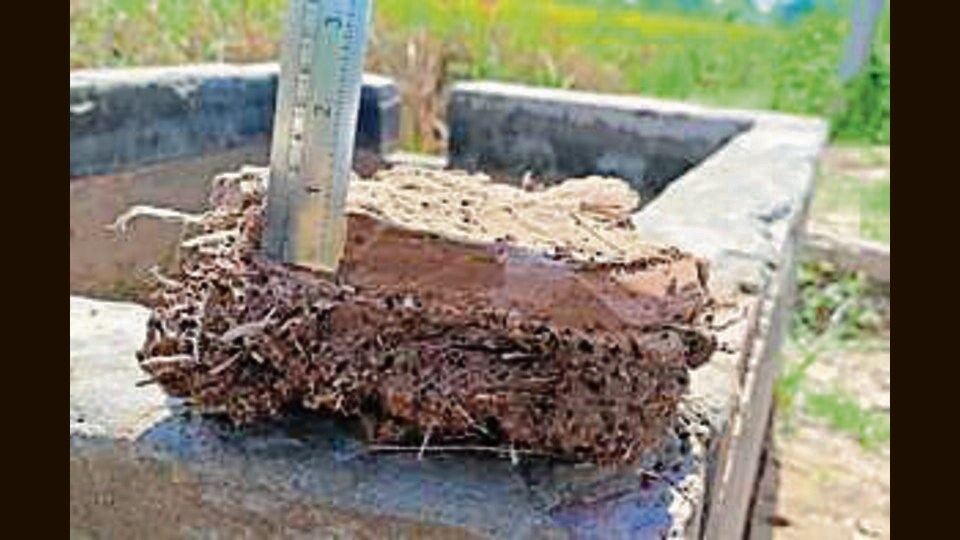
“The flooding in early September has adversely affected farmers by destroying the paddy crop in thousands of acres across various districts. We are trying to ensure that the damage caused by the flood now doesn’t affect the upcoming rabi crop,” said PAU vice-chancellor Dr Satbir Singh Gosal.
He said that the floodwaters left a thick layer of sand over the fertile land. “The sand is free from any nutrition. It just covers the fertile land and has to be removed before the wheat sowing season,” he said.
“The varsity will guide the farmers across the affected district through its Krishi Vigyan Kendras to assess the changed nutrition profile of the soil in their fields and guide them accordingly for corrective measures,” he said.
“We have prepared teams at the KVK to visit villages and help the farmers in the effort,” he said.
He said with coordinated testing, targeted nutrient management and community-level extension support, PAU aims at helping farmers to rebuild the fertility and resilience of the farmlands.
The Department of Soil Science at PAU under the supervision of Dr Rajeev Sikka conducted tests in villages across Amritsar, Gurdaspur, Ferozepur, Kapurthala and Patiala. Dr Sikka emphasised that farmers should get their solid tested so that the necessary corrective steps could be taken.
Dr Ajmer Singh Dhatt, director research, said at several places, advised deep tillage with a chisel plough in heavy soils to restore porosity, while in lighter soils, the deposited silt and clay should be mixed thoroughly to prevent layering.
Dr Makhan Singh Bhullar, director of extension education, urged farmers to integrate organic matter into the soil.
For the rabi season, PAU has advised farmers to follow the university’s recommended fertilizer doses and apply a 2 per cent urea spray (prepared by dissolving 4 kg urea in 200 litres of water) about 40 to 50 days after sowing to boost growth. In wheat and berseem crops, manganese deficiency should be watched for; if symptoms appear, a 0.5 per cent foliar spray of manganese sulphate (0.5% solution of manganese sulphate in 100L of water per acre) is recommended and repeated after a week.


