The State Variety Approval Committee has approved the PR-130 variety of parmal rice for cultivation in the state. A communique shared by PAU stated that the panel includes director, agriculture, Punjab; director, research, PAU; rice experts and sheller owners.
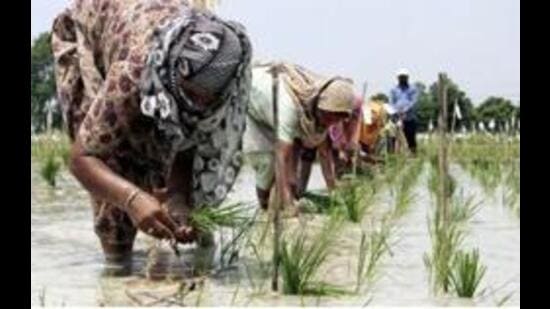
The Punjab Agricultural University (PAU), Ludhiana, has developed the PR-130 variety of rice by crossing the most popular variety PR-121 with another short-duration variety HKR 47.
The approval came after the PR-126 seed, the most famous short-duration variety of paddy crop developed by the Punjab Agriculture University (PAU), had gone off the shelves.
Highlighting its salient characteristics, Dr Gurjit Singh Mangat, additional director of research (crop improvement), said, “It is a mid-maturing, lodging tolerant, bacterial blight resistant variety with better milling quality characteristics. It matures in about 105 days after transplanting.”
“It possesses long slender clear translucent grains with high total and head rice recoveries. The variety resists the attack of all the 10 presently prevalent pathotypes of bacterial blight pathogen in the Punjab state. The average paddy yield of this variety is 30.0 quintals per acre,” maintained Dr Mangat.
This variety will prove beneficial to the pea and potato growers on account of its higher paddy yield, shorter maturity period and disease resistance to the traders due to its excellent milling quality characteristics, he observed.
{{/usCountry}}This variety will prove beneficial to the pea and potato growers on account of its higher paddy yield, shorter maturity period and disease resistance to the traders due to its excellent milling quality characteristics, he observed.
{{/usCountry}}He informed that PAU has produced a large quantity of seeds of this variety, which is available at its research stations; seed farms located at Ladhowal, Naraingarh (Fatehgarh Sahib), Nabha and Kapurthala; Krishi Vigyan Kendras and farmer advisory service centres of PAU.
SAD, BJP seek probe into black-marketing of PR-126 variety
The black-marketing of PR-126 variety of rice has heated up politics as both the Bharatiya Janata Party (BJP) and Shiromani Akali Dal (SAD) demanded a high-level probe in the matter.
During his visit to the city, BJP state president Ashwani Sharma said while the Aam Aadmi Party (AAP) is encouraging farmers to opt for direct seeding of rice (DSR) but the seed compatible for it is being hoarded and black-marketed.
The SAD leader, Mahaeshinder Singh Grewal said that the AAP government’s claim of water-saving and covering ₹1,500 per acre incentive for farmers opting for DSR is an eyewash. Instead of reaching the farmers, these incentives are going straight into the pockets of hoarders.
The university had developed 2,600 quintals of seeds and put them on sale on March 20. But in nearly over a month, the entire stock was emptied.
A major share of the seed was purchased by private seed dealers at ₹65 per kg. The huge demand and resultant scarcity have led to the black-marketing of seeds.
While in Ludhiana, the seed is being sold at ₹80 to 100 per kg, in Moga, Barnala, Nawanshahr and Jalandhar, the seed is being sold at ₹140 per kg.