Even as water level in few of the villages situated around Dhussi Bundh of Sutlej river, fresh trouble brews for the affected villagers after highly toxic water from Chitti Bein, a rivulet, has now started flowing in flood-hit areas.
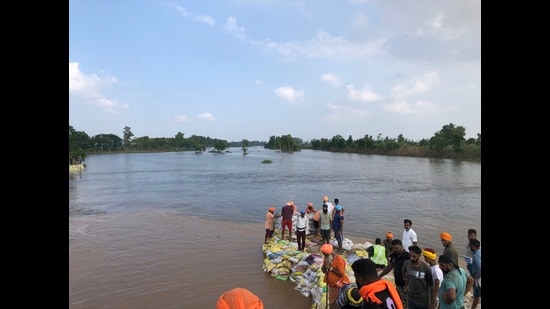
The black water flowing into the dozen villages including Mandala Chhanna, Nal, Nasirpur, Gidarpindi, Khiliwari, Gata Mandi Kasu, Manak and others is clearly visible from the breaches at Dhusi Bundh. The foul smell has already started emanating from the affected villages due to black water. This further poses a threat of spread of chronic and skin diseases among the villagers and further damage to soil health of thousands of acres of agricultural fields, which are already gutted due to floods. Moreover, the workers involved in plugging of breach have to float in toxic water to continue with plugging operations. Chitti Bein flows along Dhussi Bundh in Shahkot sub-division villages before it merges into Sutlej river.
The 160-km Chitti Bein carries untreated industrial waste from industrial units of Jalandhar and Phagwara and untreated sewage water of Jalandhar city and nearly 200 villages dumped into Kala Sanghian drain, which further merges into the Bein. Member parliament Rajya Sabha and noted environmentalist Balbir Singh Seechewal said it is a serious issue as the highly toxic water not only dent the health of local villagers but also deplete the underground water. “The situation has turned grim as one can see black water flowing into the villages. Earlier, it was mudded water coming from the Sutlej. The foul odour has added to the miseries of locals and those, who are making efforts to plug breach at Mandala Chhanna villages,” said Seechewal, who raises the issues of untreated industrial and sewage waste dumped into the Bein multiple times. He added that the administration should come and see how Chitti Bein is now wreaking havoc after Sutlej flooded the villages.
“The paddy cultivation on thousands acres of land will be completely destroyed with this water as earlier there were hopes of revival of the crop,” Seechewal said. Pritam Singh, a resident of Nal village, said they are now stranded in the black water all around as it has become very difficult to deal with foul smell emanating from it. “We faced the same situation in 2019 as even then this toxic water remained stranded in villages for several days. Five years later, there is still no solution,” he said.
{{/usCountry}}“The paddy cultivation on thousands acres of land will be completely destroyed with this water as earlier there were hopes of revival of the crop,” Seechewal said. Pritam Singh, a resident of Nal village, said they are now stranded in the black water all around as it has become very difficult to deal with foul smell emanating from it. “We faced the same situation in 2019 as even then this toxic water remained stranded in villages for several days. Five years later, there is still no solution,” he said.
{{/usCountry}}Breaches yet to be plugged
Even as water has receded to some extent, the teams of Seechwal and local administration are facing herculean task in bridging the breaches at Mandala Chhanna and Gata Mandi Kasu villages. Though the work of plugging breach at Mandala village is going on at a steadfast pace, the work on another breach, which is nearly over 500 meter wide is yet to begin. Deputy commissioner Vishesh Sarangal said they are in contact with technical experts of Seechwal’s team and drainage department before starting the work in bridging Gata Mandi Kasu breach as there was no access.
“Moreover, the water level is quite high near the bridge therefore we have to wait for the water level to recede. We are creating access on both sides of the river,” he said.
Kapurthala villages situated downstream remain 6-8ft flooded
Even as the water receded in Jalandhar villages receded, as many as 14 villages of Sultanpur Lodhi sub-division in Kapurthala district remained 7-8 feet flooded. These villages are situated downstream where the water is flowing and accumulating at high speed.
Deputy commissioner, Kapurthala Captain Karnail Singh said the situation is completely under control as there was no loss of human life during the floods in the district as more than 300 people were evacuated from the flood zone. “With lesser water coming from breaches in Jalandhar district, the concerned officials have been directed to speed up the rehabilitation works,” he said. He added that they received reports about seepage of water from bundh on Kali Bein near Sarupwal village following which the drainage department with the support of the local villagers strengthened it with sand bags. Meanwhile, he added for assistance of farmers, he said the Basmati saplings have been planted in 20 nurseries by the agriculture department to supply the basmati sapling in flood affected areas to ensure the next crop.