The report of the Kargil Review Committee chaired by K Subrahmanyam (tabled in Parliament in February 2000) described Op Vijay as a “unique high-altitude war”, peerless in the annals of global alpine hostilities. Not only was the Indian Army (IA) facing an entrenched enemy backed by artillery and infantry battalion support weapons, but it also had to contend with the challenge of nature. In the guise of a virtually breathless and treeless topography, weather extremities, and an unmapped labyrinthine of invaded ridges and peaks that towered to 19,000 feet.
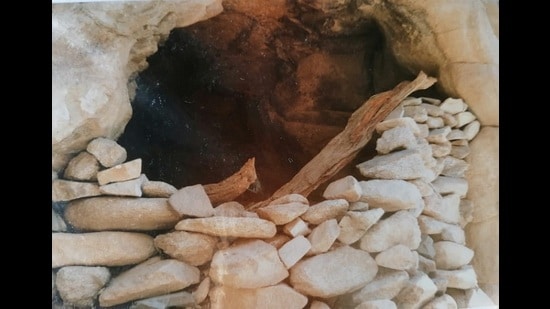
But nature cut both ways, in the end contributing to the rout of the enemy, which fled abandoning 244 bodies. The IA showed grace under fire and buried them in nameless graves with due rites. It was a tedious task to dig graves in boulder-strewn ridges and hard soil; so, some decaying corpses were inserted into natural rock cavities and covered to afford protection from beasts. All that is left on ground of the forward-most Pakistani intrusions in Kargil or “the bulged LoC” is a line of cemeteries. Tombs disowned by the Pakistan Army, and whose rotting remains emit the pungency of Musharraf’s deceit and guilt.
At the outset, the enemy exploited the dreaded 1998-99 Kargil winter by creeping in and paying heavily in terms of troops lost in avalanches. But it gained time by building stone bunkers and capturing IA’s vacated Bajrang Post and other seasonal posts. Caves used by bears were harnessed to its tactical defences. These provided protection from snow, sleet and bombardment.
For IA, the challenge was to surmount slippery boulders as big as cottages when ascending the spurs of ridgelines to surprise the enemy at night. The same boulders provided shelter from Pakistani fire, though stone splinters from ricocheting bullets wounded our troops.
{{/usCountry}}For IA, the challenge was to surmount slippery boulders as big as cottages when ascending the spurs of ridgelines to surprise the enemy at night. The same boulders provided shelter from Pakistani fire, though stone splinters from ricocheting bullets wounded our troops.
{{/usCountry}}“The tactical complication was to maintain sub-unit cohesion as the topography, darkness and enemy fire enforced a scattering effect upon assaulting troops. There were no climb rehearsals or detailed mapping of boulder-blocked ascents. There was no option but to ‘feel’ our way up when confronted with boulders in darkness. We slipped and fell, and when a boulder was unconquerable, we recommenced the ascent. Any noise made was seized by the Pakistanis to locate us and fire. But we got so accustomed by the time we fought the Khalubar battle that our toes literally grew eyes, i.e., our feet guided us through obstacles without us seeing them first,” Brig. Amul Asthana (retd), who was 2IC of the 1/11 Gurkha Rifles, told this writer.
Where even eagles dared not tread, there stood ice cliffs so sheer. These were assaulted by soldiers but slipping and falling, or cutting through ice, created noise and alerted the enemy. The enemy rolled down boulders, killing assault troops, as with Capt. N. Kenguruse (MVC-P). But with summer, ice melted and streamed down to Indian positions. Pakistanis, deprived of snow as a water source, found their battlements on ‘top of the world’ rendered untenable by nature, a capricious mistress of battle.
“The IV saline used to freeze. I would light a fire after taking off my parka and placing it above so that the flame was hidden to enemy eyes. The saline, thus melted, would be administered to wounded soldiers. I innovated by placing saline in my sleeping bag to keep it warmer!” Col. (Dr.) Rajesh Adhau (SM Gallantry), who was RMO for 13 JAK Rifles, told this writer.
vjswild2@gmail.com