Exactly 27 years ago, the Tricolour fluttered valiantly against the winds lashing the towering heights from Mashkoh to the South Siachen Glacier. These were flags hoisted on rocky outcrops crusted crimson by the blood of valiant soldiers, who had fought a war limited to regaining India’s own territory.
At that time, no one had thought of the alpine flowers that had survived the ravages of war. It was time to count the body bags and rolls of bandages that had laid siege to ghastly wounds: 527 dead and 1,363 wounded and maimed.
The war valleys of 1999 had been dotted with the influx of tents, troops, trucks, artillery guns and rocket launchers much to the relief of the rattled Kargil Generals. The flowers of emerald meadows were trampled upon by a rumbling military. Flowers along mountain brooks tumbling from the occupied heights were withered by poison: the cordite from artillery shelling had turned the snowtops dirty black. Creatures had fled their abodes at Tiger Hill: Brown bears, Himalayan ibex, the passing falcons that gave the war-torn massif a wide miss.
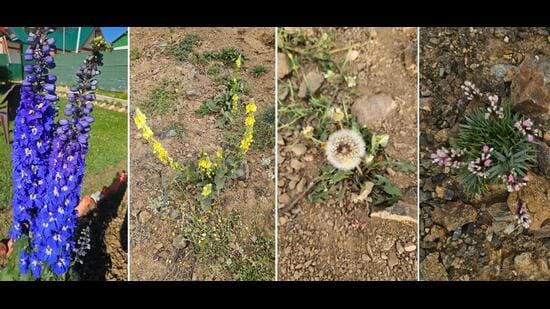
The Kargil landscape, now dotted with flowers, is peaceful under the watchful eyes of more than a division of infantry perched on faraway LoC heights. But there are lingering reminders of war in the guise of unexploded ordnances (UXOs), i.e., mines, artillery shells, rockets etc., that shift on the slopes due to rain, avalanches and snow. To date, UXOs cause injuries and deaths to porters, soldiers, graziers, livestock and wild animals.
{{/usCountry}}The Kargil landscape, now dotted with flowers, is peaceful under the watchful eyes of more than a division of infantry perched on faraway LoC heights. But there are lingering reminders of war in the guise of unexploded ordnances (UXOs), i.e., mines, artillery shells, rockets etc., that shift on the slopes due to rain, avalanches and snow. To date, UXOs cause injuries and deaths to porters, soldiers, graziers, livestock and wild animals.
{{/usCountry}}In the shadows of a meditative Tiger Hill, flowers sprout effortlessly on Sando Top and bejewel the gaunt valleys. A glimpse of Kargil’s flowers of peace presented itself through the eyes of a warrior: Col. (Dr) Rajesh Adhau, Sena Medal (Gallantry). He was the RMO of the 13 JAK Rifles (Bravest of the Brave), Capt Vikram Batra’s (PVC-P) paltan, during the war. The gentle doctor has an eye for flowers, juniper trees, creatures and the beauty of the Ladakh landscape through which he once roved as a soldier-medic defying bullets and shells to save lives. Adhau climbed to the battlefields as part of Kargil War’s commemorative expeditions this month.
The snowmelts that tumble from the battlefields of Tololing, Bhimbet, Gun Hill, etc., are festooned with Drass’s famous yellow roses. Rose bushes of vibrant yellow splash the sides of crystal-clear, joyously murmuring, silvery streams celebrating a summer parole from winter’s prison of freeze. Adhau’s civil doctor wife, Deepali, was left utterly charmed by Drass’s buttery smiles.
Today, on Kargil Vijay Divas, we pray that never again are living flowers plucked and offered by girls to memorials of young soldiers gone with the winds of war. We don’t want the Bofors booming again at Tiger Hill; we want more and more flowers blooming there.
vjswild2@gmail.com