In a hopeful year-end note on the literary togetherness of undivided Punjab that has quietly and surely continued despite borders with writers labouring to cross the script split of Gurmukhi and Shahmukhi sans remuneration for the love of it. But the young boy carried with him memories of rural life of Majha and Doaba and the Jat bravado he had seen here and there of this macho community. This featured later in his short fiction, novels and poetry. In hand is a collection of his short stories with the rather coarse masochistic title of ‘Bande Khanian’ (Man Eaters) and three Jat women huddled together in conspiral conversation, designed by Inderbir.
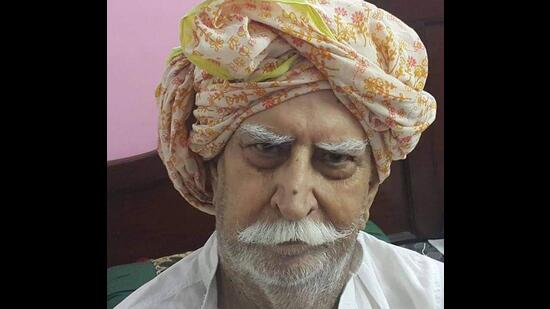
Tales of pride and prejudice
Going to Afzal Ahsan Randhawa’s stories born of the Jat heartland and asking for gender sensitivity is a tall order. Another title of one of his famous representative stories is titled ‘Rann Ghorha te Talwar’ which puts woman, horse and sword in the same grouping. It is taken from a verse by Waris Shah who said that these three are faithful to none. This in a way is his strength of capturing the Punjab Jat scenario with authenticity. The story is about two brothers Lakhan Singh and Makhan Singh. Lakhan is awaiting the release of his younger brother from a three-year term in jail. In Makhan’s absence, he has taken special care of his jailed brother’s favourite white horse. Makhan, known for his reckless bravado, is the hero of the village and cherished by his older brother. His return is eagerly awaited by the village and Noora the horse keeper is asked to fetch the brother who had injured another Jat in an inter-village feud of injuring a rival Kartara. The real cause of the rivalry is not known but, on the way, he asks Noora of his love Jito and who unwittingly reveals that his girl Jito is now seeing his enemy Kartara. Noora vouches that he has seen them every evening at the well near the graveyard of Kartara’s village. Makhan sends Noora home and heads on his white horse to the graveyard well. He sees the back of Jito and her lover and stabs him in his back. The man falls and his turban falls too. When Makhan sees his face, he is shocked because the lover is not Kartara but his own doting elder brother Lakhan. Jito stands trembling in fear, but Makhan gets atop his white horse and turns his face towards the police station and gives his horse a kickstart and rides on to surrender.
This story is just a sampler of the ouvre of Randhava, born between yet another doaba of Raavi and Beas who authored stories, poems and novels in Pakistani Punjabi, including ‘Suran Grehan’ and ‘Doaba’, which are considered as his significant works.
{{/usCountry}}This story is just a sampler of the ouvre of Randhava, born between yet another doaba of Raavi and Beas who authored stories, poems and novels in Pakistani Punjabi, including ‘Suran Grehan’ and ‘Doaba’, which are considered as his significant works.
{{/usCountry}}Author and activist
Randhawa penned several collections of stories, plays and novels, including the well-known ‘Suraj Grehan’ and ‘Doaba’. He was a lawyer by profession and a left-of-the-road politician. He was a member of the People’s Party of Pakistan and further he contested a byelection to the National Assembly from Lyallpur (now Faisalabad) on this party’s ticket in 1972. He was one of the contributors to the framing of the 1973 constitution of Pakistan. During the dictatorial regime of General Zia Ul Haq, he faced a lot of wrath and was disqualified from taking part in politics for seven years. He was popular among the Sikhs as he opposed the 1984 Operation Bluestar by the Indian Army.
Randhawa had a fan following among the non-resident Punjabis of India and Pakistan. In 1986, Randhawa was awarded the Prof Piara Singh Gill and Karam Singh Sandhu Memorial Award by the International Association of Punjabi Authors and Artists. The president of Pakistan conferred the ‘Pride of Performance’ award on him. He was bestowed upon with the Kartar Singh Dhaliwal award by the Punjabi Sahit Akademi, Ludhiana. However, he is most loved for his storytelling in which he captured the composite rural culture of pre-Partition Punjab. Ammara Ahmad, a journalist- translator of Pakistan now living in California, aspires to translate his fiction into English. She says, “He is less known in English, and I feel his stories should reach a wider audience. One interesting aspect is that he is more popular in India than Pakistan as his works have been widely published in ‘Gurmukhi”. Indeed, he was an author who took Punjab as a whole in tracing commonalities in spite of the Radcliffe Line.