E-Paper



5 key challenges before new Uttarakhand CM Pushkar Singh Dhami
A political analyst said the biggest challenge before him would be “to work in coordination with the senior BJP leaders".

 Prefer HTon Google


45-year-old Pushkar Singh Dhami, the new chief minister of Uttarakhand, has many challenges ahead of him at a time when the assembly elections are less than a year away, political observers say.
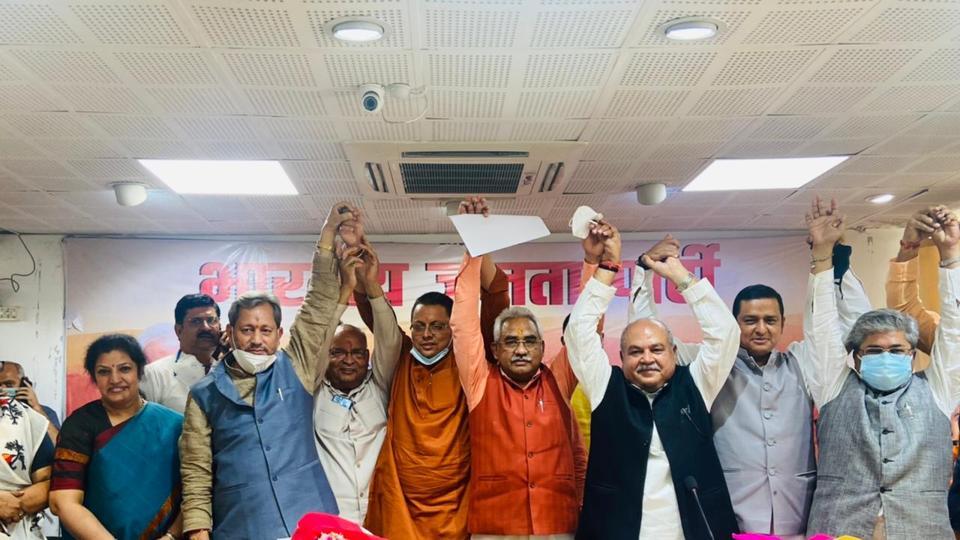
First, being the youngest CM of the state, who has never held any ministerial position, the question is how will he deal with political veterans in his party, many of whom were in the race for the CM post. Will he be able to assert himself before them and get his orders and vision for the party implemented?
SMA Kazmi, Dehradun based political analyst said that BJP seems to have played its biggest gamble ahead of the elections by making a comparatively younger politician who doesn’t have much experience of the governance or party politics, as the new CM of the state. “With very little time left for the elections, I wonder whether he really has to perform or make some difference. He will also have to deal with political mess and issues from the past. Creating rapport with senior party colleagues and cadre will be one of his biggest challenges,” he said.
Second, he has little time to perform, with elections scheduled early next year. Political observers say it will take him at least four to five months to get acquainted with the functioning of the government and the secretariat. In such little time, he has a lot on his plate and less experience when compared to the other veteran politicians in his party. Being from US Nagar, he also has little time for creating rapport with the party cadre and people from other regions of the state, especially the Garhwal region.
Third, if he will be able to check infighting in the party and different voices coming up from different power centres in the party. Being junior to other veterans, it is to be seen if he will be able to intervene and resolve the differences within the party leaders or the ministers. In the past few months, former CMs Trivendra Singh Rawat and Tirath Singh Rawat were seen indulging in shadow boxing over the alleged Mahakumbh testing scam.
Political analyst and professor of political science in Garhwal Central University, MM Semwal said the biggest challenge before him would be “to work in coordination with the senior leaders of BJP who were overlooked for the CM position.”
Fourth, Dhami will have to deal with issues and discontent that emerged during the tenures of the two previous CMs. How he deals with that needs to be seen. There has been growing discontent among the people on issues ranging from growing unemployment in the state, hill migration, people from various sectors seeking relief packages for economic losses due to Covid-19, poor health infrastructure in hill districts and improving the health infrastructure in the state. He also will have to make his stand clear on whether Char Dham Devasthanam Management Board will be scrapped or not. The preceding two CMs differed on the same.
Also read: ‘Sad his father isn’t with us to see him as CM’ - Pushkar Singh Dhami’s mother
Finally, a Thakur by caste, it is to be seen if he will be pitted against veteran Thakur leader from Congress Harish Rawat. Will he be able to have a state-wide sway within his caste and in general among the people as Harish Rawat is yet to be seen. Harish Rawat is one of the most popular political faces in the state, Dhami’s people connecting skills are likely to be pitted against the veteran Congress leader.
“By electing Dhami, the BJP leadership did a surgical strike on its own senior state leaders which include the likes of Bansidhar Bhagat, Harak Singh Rawat, Satpal Maharaj, Dhan Singh Rawat, Harak Singh Rawat and Yashpal Arya. Dhami would have a tough time working in coordination with them ahead of next year’s assembly elections,” said Semwal.
Semwal also cited Dhami’s lack of administrative experience as another major challenge in his tenure. “Due to his inexperience, he would largely have to rely on the bureaucracy in his short tenure.”
The senior political analyst further said that the new CM would also face the challenge of “clearing the mess created by the previous two CMs whether it be the alleged Mahakumbh fake Covid test or the Covid-19 mismanagement in the state.”
“Not only this, he would practically have nothing new to take before the public ahead of elections as all the major announcements, including recruitment on 22,000 vacancies and distribution of laptops of school students, were made by previous CM Tirath Singh Rawat before putting down his papers on Friday night,” said Semwal.
He also said, “Dhami would also have to take a decision on whether to continue with or abolish the controversial Char Dham Devasthanam Management Board against which the priest community has been protesting for long.”
Semwal however, also termed the election as new CM as a golden opportunity for the 45-year-old legislator who would be the state’s youngest CM.
“Despite the challenges, he would be the CM which is a golden opportunity for him to leave a mark on the party and the public with his works. In the nutshell, his short tenure would not be smooth but at the same time not too uneven,” he said.
Devendra Bhasin, state BJP spokesperson, however, said that he is confident that being a young and dynamic leader, Dhami will meet the challenges ahead of him in the election year. “In BJP, we believe in working collectively and facing all challenges collectively. He is not there as an individual but represents our collective approach,” he said.