For the first time in seven years, Mohd Ismail has felt a sense of justice. On Thursday, the International Court of Justice (ICJ) ruled that Myanmar had committed genocide during its crackdown in the in August 2017 in the northern Rakhine state against the Rohingya Muslim minority population.
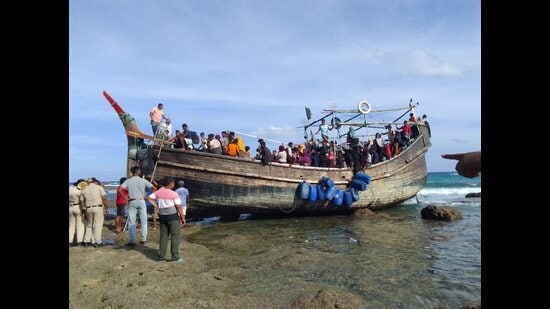
The 46-year-old is among the thousands who fled the country amid reports of mass killings, rape, torture and the burning of villages. Myanmar had said its military operations were a legitimate response to attacks by the insurgent group, Arakan Rohingya Salvation Army (ARSA).
“10 members of my family had fled together. But only six of us managed to reach India together,” shared Ismail. “Later I learned one brother had reached Malaysia, and another Bangladesh. The other two–I still have no idea where they went.”
Ismail currently lives in Shaheen Bagh. “For the first time in a decade, it feels like we aren’t being denied justice,” he added.
Similar emotions surfaced for others who fled the atrocities to save their lives, leaving behind everything in the process — their homes, valuables, family members and friends, and, most importantly, their national identity.
While the ruling brought back painful memories, it also offered a ray of hope through international recognition of the injustices thousands like him had endured.
{{/usCountry}}While the ruling brought back painful memories, it also offered a ray of hope through international recognition of the injustices thousands like him had endured.
{{/usCountry}}Noorul Amin, 26, who lives in Budhela village in Vikaspuri, recalled being just eight years old when he fled Myanmar, floating on a banana tree trunk to reach Bangladesh before eventually arriving in India in 2007.
“The case dragged on for years, and many of us had lost patience and hope. If you ask me what the judgment has given me, it is hope,” he said.
For many others, however, this is only one step towards a larger quest for justice.
“I read online about what the court said. It felt nice that at least they have acknowledged that we suffered injustice. But that’s not enough; real justice will come when we can return back home safely,” said 44-year-old Mohd Usman.
As per government estimates, there are currently 40,000 Rohingya Muslims living in various parts of India.
Stay updated with all top Cities including, Bengaluru, Delhi, Mumbai and more across India. Stay informed on the latest happenings in World News along with Delhi Election 2025 and Delhi Election Result 2025 Live, New Delhi Election Result Live, Kalkaji Election Result Live at Hindustan Times.
Stay updated with all top Cities including, Bengaluru, Delhi, Mumbai and more across India. Stay informed on the latest happenings in World News along with Delhi Election 2025 and Delhi Election Result 2025 Live, New Delhi Election Result Live, Kalkaji Election Result Live at Hindustan Times.