E-Paper



Birders, forest dept officials working on Delhi ‘Bird Atlas’
According to the plan, two surveys will be carried out to dig the information and the Atlas is likely to be released in December 2025

 Prefer HTon Google


The Delhi forest department is set to issue a Bird Atlas, which will be a comprehensive guide with bird species in the Capital, their geographical distribution, and habitats. Forest department officials, on Friday, said that the publication will be prepared with the help of surveys to be majorly conducted by birders from the Delhi Bird Group, Bird Count India, students and NGOs, however, final approval from the government is pending.
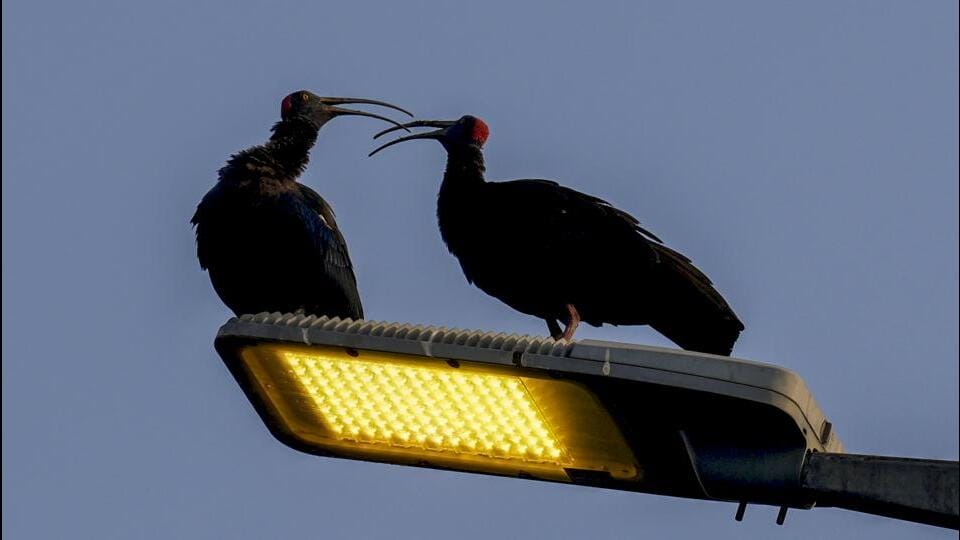
According to the plan, two surveys will be carried out to dig the information for Bird Atlas -- the first survey is scheduled to start next month while the second one is planned in July -- and the Atlas is likely to be released in December 2025.
The methodology for the atlas involves first dividing Delhi into grids of 6.6 sq km each. Each grid has a quadrant of size 3.3 sq km, which is further divided into sub-cells of 1.1 sq km. As part of the atlas survey, 145 sub-cells of 1.1 sq km each will be covered by birders.
“The plan is to commence the preparation of Bird Atlas from next month. The file has been sent to the government for final clearances and once approved, the Atlas survey can commence on the ground. We plan to involve experienced birders, photographers, people from NGOs and even students to make it a citizen-based survey. A detailed book is planned to be released in December next year,” a senior forest department official said.
The Delhi Bird Atlas, officials said, will be created as an influence from surveys carried out in other places like Kerala, Mysore, Pune, Coimbatore and Goa. Birders said that an Atlas not only gives a comprehensive assessment of the avian diversity in a region, it also helps compare changes in bird diversity over the years.
“Over the years, one can use it to study changes in habitats of certain species and how the diversity is changing,” Pankaj Gupta, a birder and part of the team involved in preparation of the Delhi Bird Atlas, said.
Gupta said each sub-cell of roughly a sq km each will be covered four times, with an average of 15 minutes being spent per assessment. Thus, for 145 sub-cells — 580 checklists will be prepared, with a total of 145 hours spent birding-on-ground.
“One need not cover the entire 1km stretch too. The team will simply have to identify a good birding habitat and 15 minutes is enough to identify the species there. Since each area will be covered four times, it is unlikely that species will be missed,” Gupta explained, adding that each team will get around eight locations to cover. “These checklists will be uploaded on the eBird portal, which will help collate a detailed list,” he stated.
The department said over 150 people – mostly volunteers – will be required to conduct the field survey. Each team will consist of a veteran birder, a photographer and a volunteer. While the first survey will take place between January and March over 30 days, the second will commence in July and end in September, also to be conducted in 30 days.
The department had announced the atlas earlier this year about, officials said they had spent the last several months identifying and finalising its methodology.
Birder Nikhil Devasar, who has organised several bird counts in the Capital before, said a Bird Atlas is an essential resource for understanding the distribution and abundance of bird species in a region. “Birds are a great indicator of the health of our environment and the data from the Bird Atlas is crucial for assessing the health of our city. Bird Atlas encourages volunteers from all fields to participate so that they are all stakeholders in managing our ecosystems,” he said.