A massive expansion of electric buses, crackdown on polluting vehicles, stricter enforcement at construction sites, cloud seeding pilots, deployment of over 1,000 water sprinklers and 140 anti-smog guns, and six new air monitoring stations — these are among the key steps outlined in Delhi’s new air pollution action plan unveiled by chief minister Rekha Gupta on Tuesday.
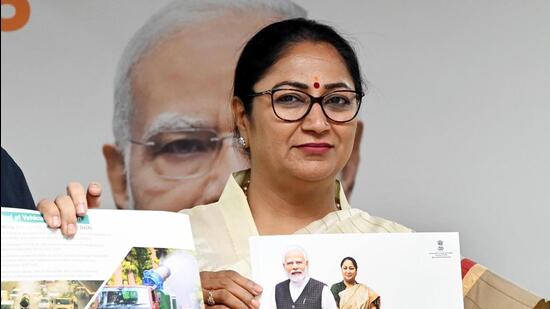
Billed as the “most scientific and actionable” road map yet for the Capital’s battle against bad air, the 25-point Air Pollution Mitigation Plan 2025 targets seven key sources: dust, vehicle emissions, construction and demolition waste, solid waste, industrial pollution, greening, and real-time monitoring.
“Providing clean air to Delhi’s citizens is not optional — it is our duty,” Gupta said, releasing the plan at the Delhi Secretariat flanked by cabinet ministers Ashish Sood, Manjinder Singh Sirsa, and Kapil Mishra. “This plan balances enforcement, innovation, and public engagement. This plan is not just a document, but a robust road map to protect the health of our citizens in the coming years. It lays the foundation for a clean, green, and healthy Delhi.”
The Bharatiya Janata Party had promised halving Delhi’s pollution by 2030 in its election manifesto ahead of the 2025 Delhi assembly polls.
{{/usCountry}}The Bharatiya Janata Party had promised halving Delhi’s pollution by 2030 in its election manifesto ahead of the 2025 Delhi assembly polls.
{{/usCountry}}Key measures include deploying more than 5,000 new electric buses and 2,299 e-autos by year-end, installing ANPR (automatic number plate recognition) cameras to keep end-of-life vehicles out of the city, mandatory anti-smog guns at all large commercial buildings, and launching a tree plantation drive that will see seven million saplings planted under the “Ek Ped Maa Ke Naam (A tree for your mother)” campaign.
The government will also audit PUC centres every six months, scale up C&D waste processing by 1,000 tonnes per day, and make 100% recycled construction material mandatory for government projects.
In a first, the plan integrates advanced tools such as AI, GPS tracking, cloud computing, and automated alerts into Delhi’s air quality governance systems. “We’re also launching a ‘Startup Innovation Challenge’ to bring in low-cost, high-impact ideas for pollution control,” Gupta said.
One of the more ambitious pilot efforts will involve cloud seeding to test the feasibility of artificial rain to control airborne dust. This will be done in collaboration with IIT Kanpur, which will also partner with the government on other scientific interventions.
To tackle dust pollution — among the most visible sources of smog in Delhi — the city will see over 1,000 water sprinklers and 140 anti-smog guns in year-round operation, with real-time GPS and CCTV tracking. The government also plans to expand night-time cleaning with 200 mechanical road sweepers, 70 electric litter pickers, and 38 tankers.
For the construction sector, Gupta announced that all projects spread over 500 square metres must register with the Delhi Pollution Control Committee (DPCC) and follow a 14-point dust control checklist embedded into the building approval process.
On vehicular emissions, the plan reiterates the strict enforcement of a Commission for Air Quality Management (CAQM) directive that bans all but BS-VI, CNG, and electric commercial goods vehicles from entering the Capital. Digital alerts will be sent to non-compliant vehicle owners in neighbouring states.
The electric mobility push includes charging stations across commercial areas, malls, airports, railway stations, and municipal parking lots — a step officials say is crucial to shifting public transport and last-mile connectivity to cleaner modes. A total of 2,299 electric autos will be stationed at metro hubs, while over 5,000 new electric buses are on the cards, with 2,080 expected to hit the roads by year-end.
Landfills, another long-standing air pollutant, are also under the spotlight. Timelines have been issued for remediating legacy waste at Okhla by March 2027, Bhalswa by December 2027, and Ghazipur by September 2028. Residents’ associations have been asked to enforce household-level segregation and replace winter biomass burning with electric heating options for support staff.
Delhi will also see six new ambient air quality monitoring stations and a real-time source apportionment study. Emphasising public participation, Gupta urged residents to enlist as “Environment Doots” — the city’s first line of vigilance and action.
Experts have broadly welcomed the plan but flagged the absence of stronger targets. “Electric mobility needs a clear commitment to zero-emission vehicles, not vague references to clean vehicles,” said Anumita Roychowdhury, executive director of research and advocacy at the Centre for Science and Environment (CSE). “The focus on bus transport is welcome, but it requires setting ridership goals. And solid waste management needs a 100% diversion target for wet waste.”
Roychowdhury also welcomed the plan’s emphasis on enforcing approved fuels and tackling fugitive emissions in industrial zones. “However, household fuels remain an overlooked source. We hope to see stronger systemic and infrastructure-level interventions to drive long-term improvements,” she added.
Stay updated with all top Cities including, Bengaluru, Delhi, Mumbai and more across India. Stay informed on the latest happenings in World News along with Delhi Election 2025 and Delhi Election Result 2025 Live, New Delhi Election Result Live, Kalkaji Election Result Live at Hindustan Times.
Stay updated with all top Cities including, Bengaluru, Delhi, Mumbai and more across India. Stay informed on the latest happenings in World News along with Delhi Election 2025 and Delhi Election Result 2025 Live, New Delhi Election Result Live, Kalkaji Election Result Live at Hindustan Times.