E-Paper



DDA starts reviving Yamuna floodplains in Delhi
The Delhi Development Authority has started post-flood restoration work along the Yamuna floodplains, including the Asita East biodiversity park and Vasudev Ghat. The parks were heavily damaged during the recent Delhi floods, with silt deposits of around 1.5 feet. The DDA is removing the silt and procuring 5,000 new plants for Asita. Vasudev Ghat is also being cleared of silt and developed as a tourist destination. The restoration efforts aim to conserve flora, create habitats for fauna, and ensure environmental sustainability. Experts suggest identifying and developing wetlands and grasslands as catchment areas for the Yamuna River.

 Prefer HTon Google


The Delhi Development Authority (DDA) has started post-flood restoration work along the Yamuna floodplains with Asita East biodiversity park next to the ITO barrage and Vasudev Ghat along the western banks of the river.
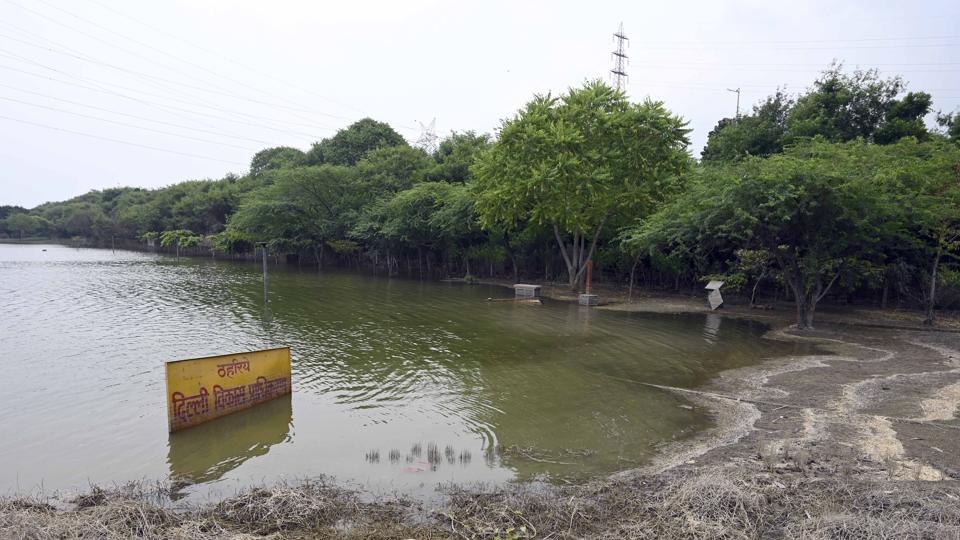
Officials said that about 1.5 feet of silt was deposited by the river that is being removed from Vasudev Ghat using earthmovers while around 5,000 new plants are being procured for Asita, which suffered maximum damage among all biodiversity parks along the river.
The Asita East project spread over 90 hectares was formally inaugurated by the lieutenant governor on September 7, 2022, where he hosted a delegation of G20 envoys in March. The park was completely submerged during the Delhi floods in July.
“Asita is right next to the ITO barrage where most of the Yamuna flood water accumulated. While flooding is always good for the floodplains, most of the new plantation in Asita suffered as it was submerged for days. We will now plant in small batches and have started the procurement of about 5,000 plants. We will also use bigger saplings than we used before as it may have a better survival rate,” said a senior DDA official.
He added that most of the silt deposited in Asita will be kept as it is and the pathway and plantations will be done over the fertile deposits. “The pathway has been damaged with a lot of silt deposition. We will keep the silt, level it, and build the path over it,” added the official.
The other biodiversity parks in Delhi mostly comprised older plantations. Officials added that the eastern bank did suffer more loss of plantation than the western bank because of the direction of the flow of Yamuna across Delhi.
Meanwhile, Vasudev Ghat, which was under development, also had silt deposits of around 1.5 feet that are now being cleared.
Officials said that the ghat is being developed in a unique manner that will be different from the existing ghats in Delhi and will become a tourist destination. It is being created between the existing Yamuna Ghat and Nigam Bodh Ghat, from Wazirabad to Old Railway Bridge on the western banks. DDA vice-chairperson Subhashish Panda had earlier said that the name was suggested by the Prime Minister.
“We started concretisation to develop the steps and several chhatri structures have already been developed. There may have been less damage if all of the steps were made, but we have started work again and are desilting the area. We may keep the height of the ghat slightly higher than we initially planned,” said a second DDA official.
Spread over 16 hectares, the proposed landscape style is in “Charbagh” style with baradaris and chhatris derived from the vocabulary of historic gardens of adjacent Qudsia Bagh. The ghat will have three entrances with parking space for 150 cars. Officials said that the floodplain rejuvenation style along this ghat will also be different from the existing ones.
“Naturalisation of floodplains to conserve the flora and create habitats for fauna is proposed. All existing trees are being retained and 1,700 more trees of native species are being planted along with riverine grasses. Wastewater from the existing drains will be filtered using coir logs and reed plantation before releasing it directly into the river to ensure environmental sustainability,” said the second DDA official.
Meanwhile, experts said that rivers survive through their wetlands and grasslands, which should be identified across Delhi and developed to act as catchment areas, especially in the context of the recent floods.
“Ee must look at Yamuna’s riparian zone carefully and identify which grasses will grow best. Tall grasses and a few tree species are best suited for active flood zones. The Yamuna can be divided into two parts as it flows through Delhi. From Palla to Wazirabad, the area is pristine and there are lots of opportunities for restoration in this area,” said Faiyaz Khudsar, eco-restoration expert.