E-Paper



Supreme Court asks NTA where things stand on 2024 exam reforms plan
The Supreme Court stressed on the need to institutionalise the NTA and equip it with the adequate manpower required to run a unified national testing agency.

 Prefer HTon Google


The Supreme Court on Wednesday asked the Union government to present details of its implementation of the recommendations of the K Radhakrishnan committee, constituted in the aftermath of the NEET-UG 2024 controversy, along with a definite timeline, stressing that it was more concerned with institutionalising the National Testing Agency (NTA) than merely putting in place security protocols on paper.
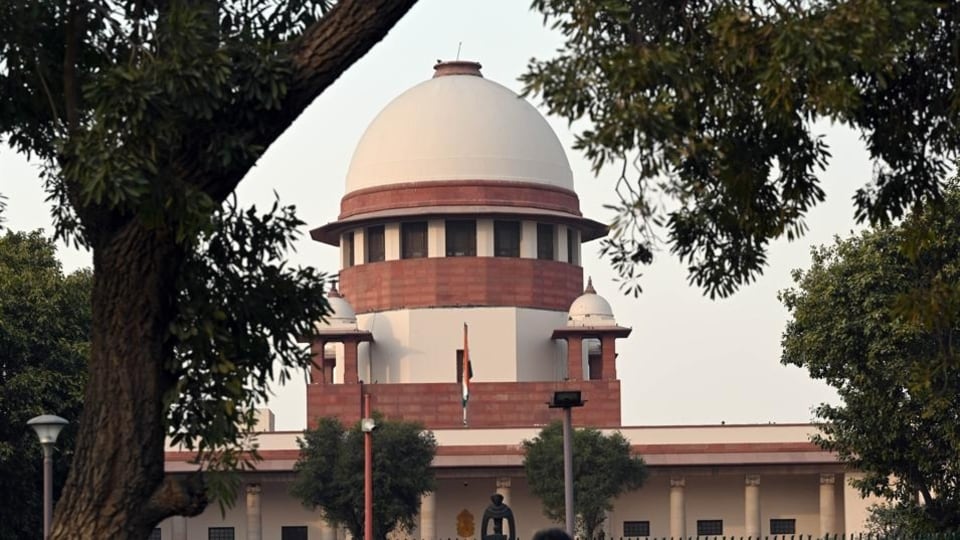
A bench of justices PS Narasimha and Alok Aradhe, hearing petitions related to the NEET UG 2026 paper leak , directed the Union government to file an affidavit detailing the steps taken to implement the Radhakrishnan committee’s recommendations, as “reflected and nuanced” by the high-powered task force headed by Infosys co-founder Nandan Nilekani, and give indicative timelines for their implementation.
Radhakrishnan committee's recommendations
As part of its efforts to address the 2026 paper leak, the Union government set up a committee headed by Nilekani to address systemic issues; it has also sought to strengthen NTA, by creating new senior level positions, including for security. The Radhakrishnan committee was set up in the wake of a similar controversy two years ago, and submitted its recommendations in October 2024.
Deep Dive

HT reported in late July that only 57 of the 101 recommendations of the Radhakrishnan committee were fully recommended and another 10 partially. One of the most significant of these recommendations, the restructuring of NTA, was implemented only in the third week of July, following the 2026 NEET paper leak, which forced a retest. The controversy eventually claimed the head of then education minister Dharmendra Pradhan.
The court directed the secretary concerned to file an affidavit within three weeks, detailing the steps taken to implement the Radhakrishnan committee’s recommendations as reflected and nuanced by the Nilekani committee, along with indicative timelines.
The order said its concern was the “institutionalisation of National Testing Agency with all necessary infrastructure, manpower and other technological capabilities.”
SC points out “systemic problem”
The court’s intervention came as the Centre explained in detail the elaborate security measures currently employed by the NTA to prevent question-paper leaks, including multiple layers of question-paper selection, sealed transportation, GPS tracking, CCTV surveillance, police escort and one-time-use boxes that have to be physically broken open before the examination.
But the bench said such measures were already part of the examination systems examined by the Radhakrishnan committee and the real concern was whether these safeguards could survive changes in personnel and evolve into a permanent institutional processes.
“All this was already under the purview of the Radhakrishnan committee,” observed the bench, pointing out that the court had gone through the systems being developed over a period of time. It added that the committee had correctly identified the problem as systemic, requiring institutionalisation.
“This process on paper, everything is good. But then one exam happens and by the time the second exam happens, it is a new picture altogether,” said the bench, adding that it wanted to know what the NTA actually looked like as an institution -- how many officers it had, where its office was situated, how much staff and security it had and what infrastructure had been created.
Also Read I ‘NEET exam system foolproof, difficult to breach’: Centre to SC after paper leak
In addition to the recent paper leak, NTA has also been left red-faced by errors in some papers, their most recent being those in UGC-NET discovered Sunday.
On Monday, reacting to the Sunday incident, education ministry officials said NTA has fired at least 50 staff and embarked on the process of filling 10 new senior positions including Chief Technology Officer, General Manager (Test Security), and GM (R&D and Psychometrics).
Solicitor General reveals Centre's moves
The Supreme Court’s observations on Wednesday assume significance against the backdrop of recurring NEET-UG paper leaks and the court’s earlier concerns that merely shifting an examination online would not by itself eliminate the possibility of question-paper breaches.
Solicitor general Tushar Mehta told the court that the Centre had accepted the Radhakrishnan committee’s recommendations “in toto” and that steps were being taken to implement them.
Mehta added that advertisements had been issued for several positions, including a technology officer, chief finance officer and general managers.

The bench, however, sought details of whether the newly sanctioned senior positions had actually been filled and whether the NTA had a separate physical establishment and the requisite manpower.
The court drew a comparison with the Union Public Service Commission, saying that an institution which conducts examinations regularly develops institutional memory and expertise over time.
“Experienced persons get transferred. Then the whole experience goes. It must flow down to the next level and the next level so that they could pick up from the seniors. Institutional memory does not depend on individuals,” it remarked.
Dedicated digital infrastructure
The bench also asked whether the NTA had a dedicated department and full-time officer for digital infrastructure, besides adequate testing infrastructure and research and development capabilities.
The Centre informed the court that the NTA was setting up its own technology team with support from the National Informatics Centre and was onboarding professional teams as well as developing indigenous artificial intelligence models for translation of question papers.
Also Read I 'Expert opinion must prevail’: Punjab, Haryana HC rejects NEET-UG answer key pleas
Mehta said that the NTA’s question bank of 500 questions was translated into 13 languages, but the government was not relying on AI for the translation at present and was using human translators. “There was a breach and the people who were involved are arrested,” he said.
The bench also raised concerns over data security, asking whether the NTA had a sovereign database to store examination data and what sovereign software was being developed for the purpose. The court said security of question papers and storage of examination data required dedicated infrastructure and a database that was ready for use.
Centre details elaborate question-paper security
The Solicitor General outlined the NTA’s multi-layered process for preparing and transporting question papers to prevent leaks.
A large question bank is first created by multiple moderators, after which a second set of moderators prepares four papers; the Director General then selects two, ensuring no single person knows the final paper. These are sent in sealed covers to printing presses under CCTV and CISF security, with the digital code to open the covers provided only upon arrival. The presses are closed to outsiders and the entire operation is video-recorded.
Printed papers are jumbled, packed in tamper-proof boxes with unique identifiers, and placed in one-time-use iron trunks. Two sets are transported in GPS-tracked vehicles to separate bank strong rooms. On the exam day, the Director General informs the city coordinator which trunk to use; it is moved under police protection and video surveillance to centres. The final packet is opened shortly before the test in the presence of two students, with the process recorded for future reference.
The bench, however, said the issue was not whether the procedures were elaborate but whether the NTA had the institutional capacity to continuously upgrade and enforce them. “You have to train and prepare the personnel for times to come, not just for one examination,” the bench said, stressing the need for candidate-friendly arrangements, grievance mechanisms and strengthening of the agency’s physical and intellectual capacity.
Also Read I SC to set up high-powered panel to probe allegations of police excesses during NEET protest
The bench referred to the Radhakrishnan committee’s recommendation for creating multiple dedicated verticals within the NTA, including testing centres, candidate experience, information security and digital infrastructure. The court also asked about the location and physical infrastructure of the NTA and whether it had the manpower required to operate as a specialised national testing body.
The petitions have been filed by the United Doctors Front, Federation of All India Medical Associations and others seeking restructuring of the NTA and a stronger oversight mechanism to prevent recurring question-paper leaks.