
 E-Paper



'Expert opinion must prevail’: Punjab, Haryana HC rejects NEET-UG answer key pleas
The court upheld the National Testing Agency's process, noting objections were thoroughly reviewed by subject experts before finalization.

 Prefer HTon Google


The Punjab and Haryana high court has held that courts should ordinarily defer to the opinion of subject experts in academic matters and should not interfere with examination answer keys once they have been scrutinised and finalised through a proper expert-review process.
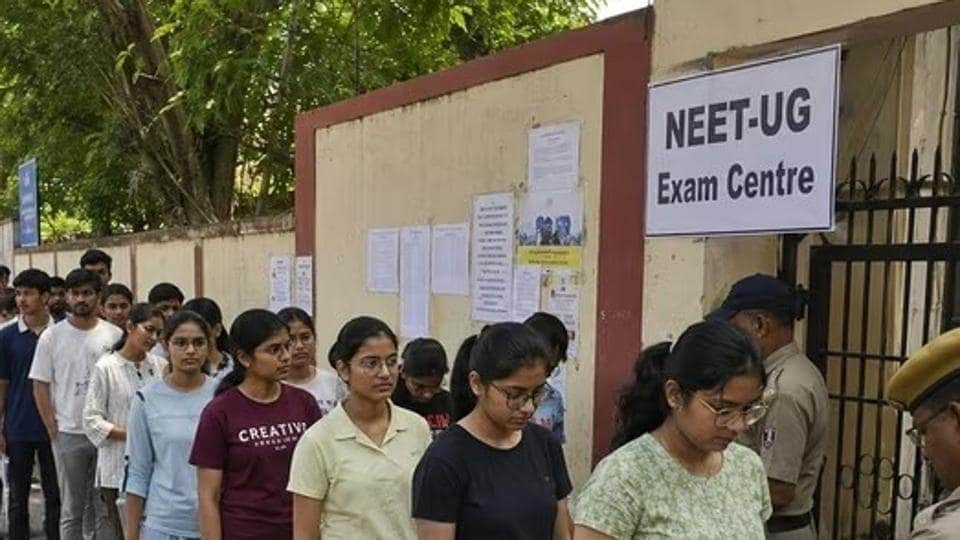
A division bench comprising justice Suvir Sehgal and justice Deepinder Singh Nalwa made the observation while dismissing a batch of petitions challenging the answer keys of questions in the National Eligibility-cum-Entrance Test (NEET-UG) 2026.
The petitions were filed by two students from the tricity who had raised objections to certain answers after the National Testing Agency (NTA), which conducts NEET for admission to medical courses, uploaded the provisional answer keys on its website on June 25. The petitioners claimed that some of their objections had not been properly considered before the final answer keys were issued.
Also Read | MCC NEET MDS Counselling 2026: Round 1 choice filling begins at mcc.nic.in, direct link here
The court, however, examined the material placed before it by the NTA and found that the objections had been referred to a panel of subject experts for consideration.
During the proceedings, the HC summoned the relevant records from the NTA, including the reports submitted by the experts in a sealed cover. It had also sought an affidavit explaining the manner in which the objections raised by the candidates had been dealt with.
After examining the material, the bench noted that the experts had certified that they had verified the answer keys and ensured their correctness. The experts had also stated that they had considered and carefully reviewed the challenges raised by candidates against individual questions before finalising the answers.
The NTA, through its director Binod Kumar Sahu, informed the court that all challenges received against the provisional answer keys, including those submitted by the petitioners, were placed before a panel of eminent subject experts drawn from premier institutions of national repute, including IITs and Central Universities.
Also Read | NEET UG success story: At 51, NEET aspirant with 2 PhDs and MBA secures government MBBS seat
According to the affidavit, the final answer keys were prepared based on the opinions of the respective subject experts after they had considered and settled the challenges. The revised/final answer keys were subsequently applied to the responses of all candidates and the result was prepared in accordance with the pre-declared examination norms.
The NTA further stated that the objections raised by the petitioners against the final answer key were examined by the experts and found to be incorrect.
The agency also relied upon the NEET information bulletin, which provides that the NTA’s decision on challenges to the provisional answer key would be final. The bulletin further states that the result would be prepared based on the revised answer key and that there would be no provision for re-checking or re-evaluation of answer sheets.
While refusing to interfere with the final answer keys, the HC emphasised the limited role of courts in matters requiring specialised academic assessment.
“This court is not an expert in respective subjects. It is not permissible for the high court to examine the question paper and the answer keys,” the bench observed.
Also Read | After NEET Paper Leak Storm, NTA Floats ₹7.5 Crore Tender For 'Security Services'| CJP Stir
The bench further observed: “It is not the correct answer alone, but the most appropriate answer in the opinion of the evaluators/experts, which has to be treated as the correct answer and has to be awarded four marks.”
The HC held that once the competent experts had considered the objections and finalised the answer keys, there was no justification for the court to substitute its own opinion for that of the experts while exercising its extraordinary writ jurisdiction under Article 226 of the Constitution.
“It is the opinion of the experts, which has to prevail and once they find a particular answer to be correct, the same is not to be interfered with by the court in the exercise of extraordinary writ jurisdiction under Article 226 of the Constitution of India,” the bench observed.
The court found no justifiable ground to interfere either with the answer keys finalised by the experts or with the result declared by the NTA. The petitions were accordingly dismissed.


