
 E-Paper



UPI merchant charges begin October 15: Who pays, who does not, and why NPCI says the zero-fee era had to end
0.4% merchant fee, capped at ₹300, announced for UPI merchant payments above ₹2,000. Small digital payments up to ₹2,000- threshold stay free.

 Prefer HTon Google


Merchants accepting UPI payments above ₹2,000 will pay a fee for the first time from October 15, under a framework cleared by the UPI & services steering committee headed by the National Payments Corporation of India (NPCI), which manages the payments system.
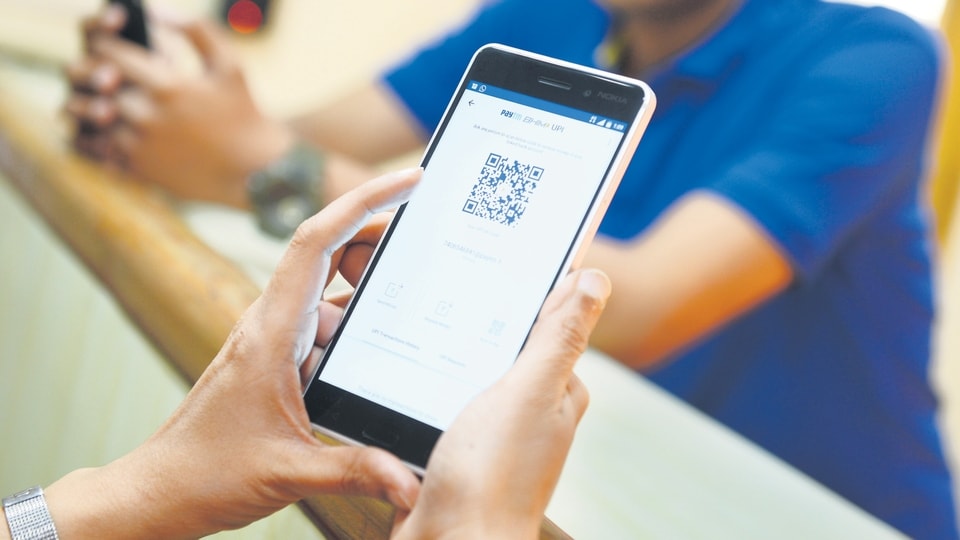
Person-to-person transfers will be exempted from the charge, which has been set at 0.4% of the transaction value, and payments to certain categories will attract a flat ₹5 fee irrespective of the amount.
The framework follows a change in law and a fresh rule under it. Parliament cleared the Taxation and Other Laws (Amendment) Bill, 2026 on August 11, amending Section 10A of the Payment and Settlement Systems Act, 2007, to give the government the power to permit charges on specified digital payment modes.
A separate gazette notification issued on Monday under the same section formally bars any charge, direct or indirect, on UPI transactions up to ₹2,000 and on RuPay debit card payments.
The NPCI said the exemptions will cover 95% of low-value transactions.
What is the new charge?
Two structures will apply on UPI payments above ₹2,000:
- A flat Merchant Discount Rate (MDR) of ₹5 per transaction on payments to merchants in four specified categories — railways, telecom services, insurance and fuel.
- An MDR of 0.4% on other person-to-merchant (P2M) UPI payments above ₹2,000, capped at ₹300 per transaction.
Take a UPI payment of ₹10,000. If it goes to a railway ticket counter, a telecom operator, an insurer or a fuel outlet, the merchant is billed ₹5. If it goes to any other merchant, the charge is 0.4% of the value — ₹40.
Similarly, at ₹20,000, merchants pay ₹80; at ₹50,000, they pay ₹200 and at ₹1 lakh — the standard per-transaction UPI ceiling for most users —0.4% would work out to ₹400, but the framework's ₹300 cap steps in and the merchant pays ₹300.
For the four exempted categories, it remains at ₹5 per transaction.
Which transactions attract the charge?
The MDR applies only to person-to-merchant (P2M) UPI payments above ₹2,000. Within that, the flat ₹5 fee is limited to the four notified sectors — railways, telecom, insurance and fuel. The 0.4% rate, capped at ₹300, covers all other P2M payments above the ₹2,000 threshold.
Also read: Rapido operator fined ₹10 lakh, told to stop nudges asking consumers to pay more
Which do not?
Four categories of UPI payment remain outside any charge:
- All person-to-person (P2P) UPI transfers, regardless of value.
- All P2M payments up to ₹2,000.
- Payments to a category the framework calls person-to-person merchant (P2PM) — small vendors receiving up to ₹1 lakh a month directly into their bank accounts through UPI QR. This covers the street hawker, kirana and cab-driver segment that finance minister Nirmala Sitharaman had specifically named on the floor of the Rajya Sabha.
- All RuPay debit card transactions.
Categories with special treatment
A few sectors sit outside the standard two-slab structure. UPI payments to capital market intermediaries — mutual funds, stockbrokers, dealers and securities firms — attract a nominal MDR of 0.02% of the transaction value, capped at ₹300. This is materially lower than the 0.4% rate that applies to general merchant transactions above ₹2,000, and is aimed at not weighing down retail participation in the formal financial markets with processing fees.
Public utility payments — electricity distribution charges, municipal water and piped natural gas — are treated as a designated industry category. UPI payments above ₹2,000 in this segment carry the flat ₹5 fee, in line with the treatment of railways, telecom, insurance and fuel. Utility payments below ₹2,000 remain outside any charge, letting state distribution utilities and municipal corporations digitise bill collection without high processing fees.
Fee collections by schools, universities and institutions running entrance examinations also come under a designated industry category, with above- ₹ 2,000 payments carrying flat or capped structures rather than a percentage-based charge. Educational transactions below ₹2,000 remain free.
Also read: New UPI charges: Will you pay extra for sending money or shopping? 5 things that remain free
Who pays the MDR?
The bill goes to the merchant, not to the person making the payment. But while the norm is that MDR is to be paid by the merchant, in reality many pass the charge on to customers, especially on high-value card transactions where MDR has never enjoyed the waiver it has on UPI.
Whether UPI now sees similar pass-through in the notified sectors, or in higher-ticket merchant transactions elsewhere, will depend on individual merchants and, in regulated sectors like fuel and railways, on the pricing rules that govern them.
In an FAQ on whether consumer prices will be affected, the National Payments Corporation of India (NPCI) said “no” and said that “market dynamics and historical payment trends show that merchants absorb nominal digital processing costs to drive higher business volume”.
How does UPI MDR compare with card charges?
MDR has always applied to card payments. The Reserve Bank of India (RBI) caps the rate for debit cards; credit-card MDR is left to the market.
Under an RBI notification dated December 6, 2017 — the operative circular on debit-card MDR — the rate at physical PoS or for online transactions cannot exceed 0.90% for merchants with annual turnover above ₹20 lakh, with a per-transaction ceiling of ₹1,000. For small merchants below that turnover, the cap is 0.40%, with a ceiling of ₹200. QR-code debit payments are capped at 0.80% and 0.30% respectively, with the same rupee ceilings.
Credit-card MDR, which the RBI does not cap, typically ranges between 1.5% and 2% — a figure finance minister Nirmala Sitharaman cited in the Rajya Sabha on August 11.
By that yardstick, the revised UPI MDR — ₹5 flat in the notified sectors, 0.02% capped at ₹300 for capital markets, or 0.4% capped at ₹300 on other merchant payments — is lower than the effective charge on comparable card transactions, and materially lower than credit-card MDR.
Why now?
UPI processed 24.51 billion transactions worth ₹29.90 lakh crore in August 2026 alone, according to NPCI’s FAQ document. At that scale, the system handles hundreds of millions of payments a day, on physical server capacity, high-throughput telecom links, layered cybersecurity monitoring and specialised banking software — all of which need continuous spending, it said. Running the network, NPCI has said, costs the industry around ₹20,000 crore a year.
The Union government has, since FY 2021-22, been making annual budgetary payments to acquiring banks to compensate for the zero-MDR regime on small merchant UPI transactions. NPCI's position is that these payments were meant as short-term bridge funding to accelerate early digital adoption, not as permanent compensation for the industry's operating costs. Funding on annual fiscal allocations, it argues, leaves the system exposed to budgetary uncertainty and limits how much banks and payment companies can invest in long-term technology. A threshold-based commercial model, in its view, offers a steadier revenue stream for continued upgrades.
Where the money goes
The framework says the MDR revenue from higher-value transactions will be distributed among UPI ecosystem players — banks, apps and NPCI — and earmarked for UPI's expansion to new users and merchants, along with investments in resilience, cybersecurity and innovation.
A dedicated fund for small merchants is also to be established, to support digital payment infrastructure among existing small merchants and to extend acceptance into tier-3 and smaller markets, without imposing any charge on the small merchants themselves.


