E-Paper



No transaction charge on UPI for users, small merchants: Nirmala Sitharaman
The debate over a transaction fee being charged on UPI came into picture after amending Section 10A of the Payment and Settlement Systems Act, 2007.

 Prefer HTon Google


Indian customers will continue to use instant digital payments without paying any transaction charge, Union finance minister Nirmala Sitharaman assured the Parliament on Monday, saying no fee will be charged from street hawkers, cab drivers, kirana stores and small merchants for using unified payments interface (UPI).
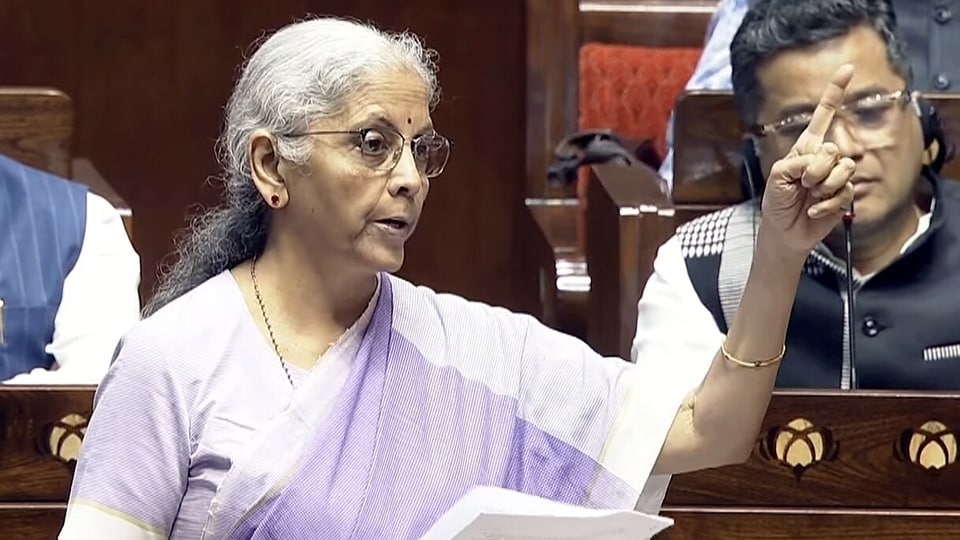
Referring to the “most discussed and debated point” pertaining to merchant discount rate (MDR) in the proposed umbrella legislation — the Taxation and Other Laws (Amendment) Bill, 2026 — she said the Bill that has been passed by the Lok Sabha, “proposes to amend Section 10A of the Payment and Settlement Systems Act, 2007” and the amendment is “an enabling” provision. MDR is a fee charged to a merchant by a bank for processing electronic or digital payments such as credit cards, debit cards, and UPI. As on date, no MDR is charged on UPI.
FM declares “no tax or transaction charge”
Sitharaman said the bill does not impose any tax or transaction charge on UPI users. “So, I’d like to read that again. The enabling provision that we are bringing in today does not impose any tax or transaction charge on UPI uses. It enables the government to specify, through notification, the electronic payment modes that will continue to receive statutory protection against charges,” she said.
“Once the Bill is passed in Parliament, the UPI and services steering committee headed by the National Payment Corporation of India (NPCI), will consider and decide whether any MDR should be introduced, and if so, its scope and structure,” she added. According to NPCI’s website, the UPI & Services Steering Committee currently has 22 members, including State Bank of India, Punjab National Bank, ICICI Bank, HDFC Bank, Google pay, Phone pe, Payments Council of India (PCI) and Indian Banks’ Association (IBA).
Also Read I UPI kardo: From mandir to baraat, there’s a QR code for everything in India
While replying to discussions on the bill, the finance minister told Rajya Sabha that no MDR framework was finalised. Citing experience from Visa and MasterCard, she said, “Electronic merchants routinely pay MDR of around 1.5% to 2%, or plus more than 2% on credit cards and up to 0.90% on debit cards today too.” Yet, major retailers generally do not add a separate charge to the customers. Instead, they actively promote card usage through discounts and EMI offers, she added.
UPI is currently the least attractive option in this category, even with zero MDR charge, she said. Unlike credit cards, today, nobody offers rewards and issue of funded discounts on UPI. The sustainable revenue stream can actually enable more innovations such as merchant issuer offers on UPI, she added.
She refuted charges of Rajya Sabha member John Brittas that the amendments are proposed under pressure from external forces.
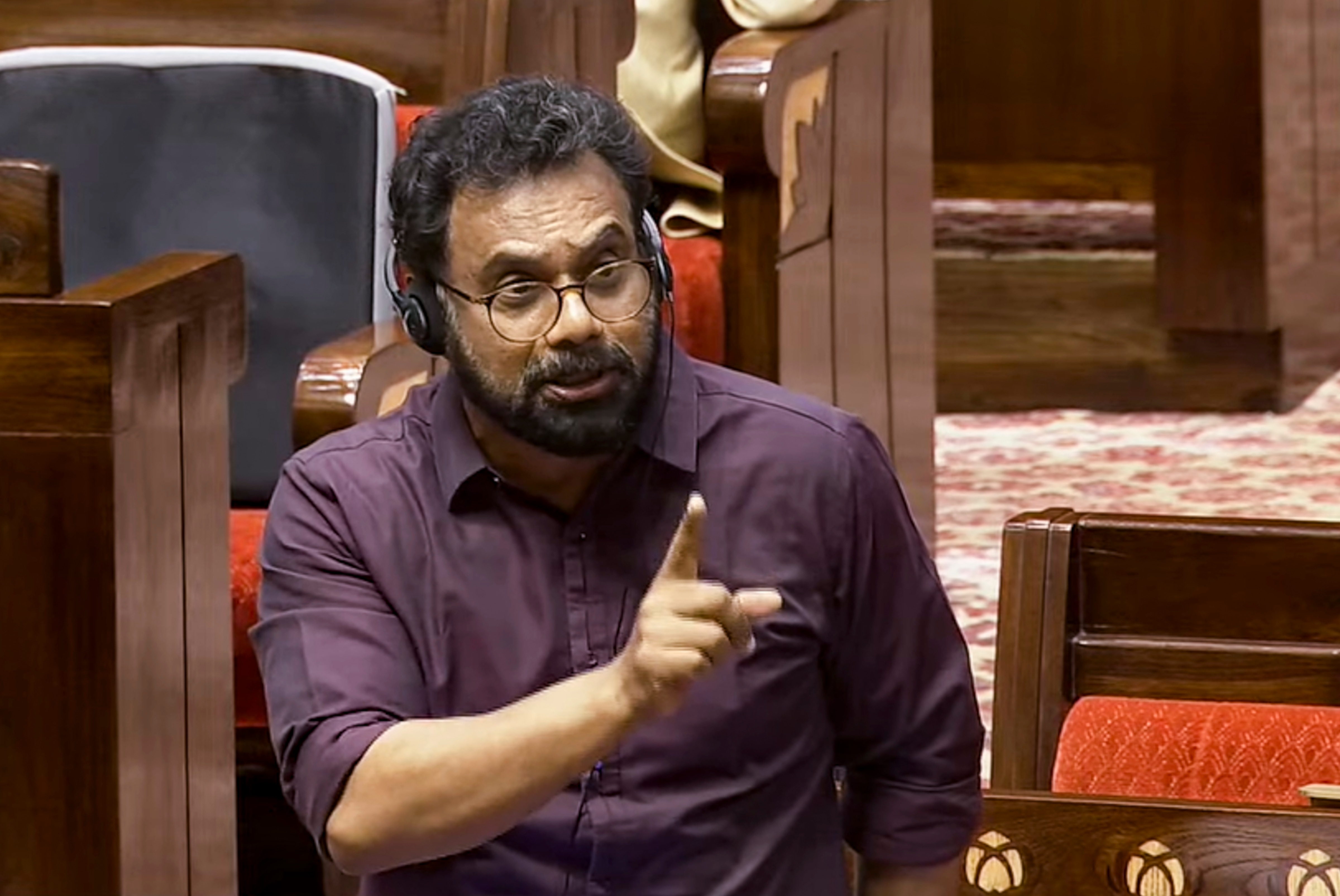
John Brittas accuses government of “foreign pressure”
Brittas accused the government of “relying on the promises of the foreign countries” to bring an ordinance in June to attract foreign investments in the government securities (G-Sec) and alleged that the US Trade Representative (USTR) insisted it “to charge” UPI.
“The same pressure was [exerted] on Brazil.. they didn’t heed though,” he said, citing Prime Minister Narendra Modi’s statement at the G20 Finance Ministers and Central Bank Governors meet in February 2023 that India’s digital payment ecosystem had been developed as a free public good. “Thus, the current Bill goes against the principle of India,” he added.
Also Read I UPI transactions to remain free, nominal charges may apply on limited merchant transactions, govt clarifies
Rebutting Brittas, the finance minister said, several major faster payment ecosystems, including Australia (up to 0.5% per transaction), Brazil (up to 0.33%), China (0.4%) Indonesia (0.3%), South Korea (0.72 to 1.99%) South Africa (approximately 0.4% capped at 30 Rand), Singapore (1.30%), and the US (0.5%) charge fees for such payments. “Brazil, about which our hon’ble member, John Britta, said…Brazil has 0.22% to 0.33%. I’m giving an indicative charge. Brazil has charges,” she added.
On India, she posed a question, “Will consumer pay any UPI charge?” and she answered: “No. UPI has remained free for consumers since it’s launched, and every Indian will continue to make this instant digital payment without paying a transaction charge.”
President gives ordinance
After her reply, the Rajya Sabha the House returned the Taxation and Other Laws (Amendment) Bill, 2026 to the Lok Sabha, which had passed the money bill on August 6. With the completion of the legislative process, the Bill is passed by the Parliament. The Bill sought to amend three laws -- the Payment and Settlement Systems Act, 2007, the Income-tax Act, 2025, and the Finance Act, 2026, besides replacing the Income-tax (Amendment) Ordinance, 2026.
The ordinance was promulgated by the President of India on June 5 and was effective retrospectively from April 1. It gave tax exemptions to eligible foreign investors on government securities (G-Secs) with objectives to attract global capital from foreign institutional investors (FIIs), foreign portfolio investors (FPIs) and the Bank for International Settlements (BIS).
Also Read I Big change in UPI policy? Payments above ₹2,000 may carry a fee. What we know
Earlier on Monday, the Rajya Sabha also passed the Bankers’ Books Evidence Bill, 2026. Speaking on the Bill in the House, Sitharaman said these are the kind of bills on which the opposition should actually take interest and participate in the debate. “These are very informatory. These are going to help the country to move forward fast. And these are steps on which no one can have a difference of opinion, except if they want to suggest improvements on it. So, it’s such a sad state… that our opposition chooses to walk out on these kinds of important debates.”