E-Paper



Delhi Metro to monitor vibration levels at 90 locations
The Delhi Metro Rail Corporation (DMRC) will monitor vibration levels at 90 locations in its network and take corrective action if levels exceed standards. The move is aimed at ensuring safety and efficiency of the infrastructure, particularly in underground stations where vibration damage is a key problem. Tri-axial velocity sensors will be used to measure and monitor vibrations, and the data will also be used to assess the effectiveness of previous interventions. The monitoring will be completed within one year after the tender is awarded.


To ensure safety and efficiency of its infrastructure, the Delhi Metro Rail Corporation (DMRC) said that it will monitor vibration levels at 90 different locations across its network. Officials said that wherever such levels are found to be exceeding the permissible standards, corrective action by installing shock absorbers or extra track-padding will be taken.
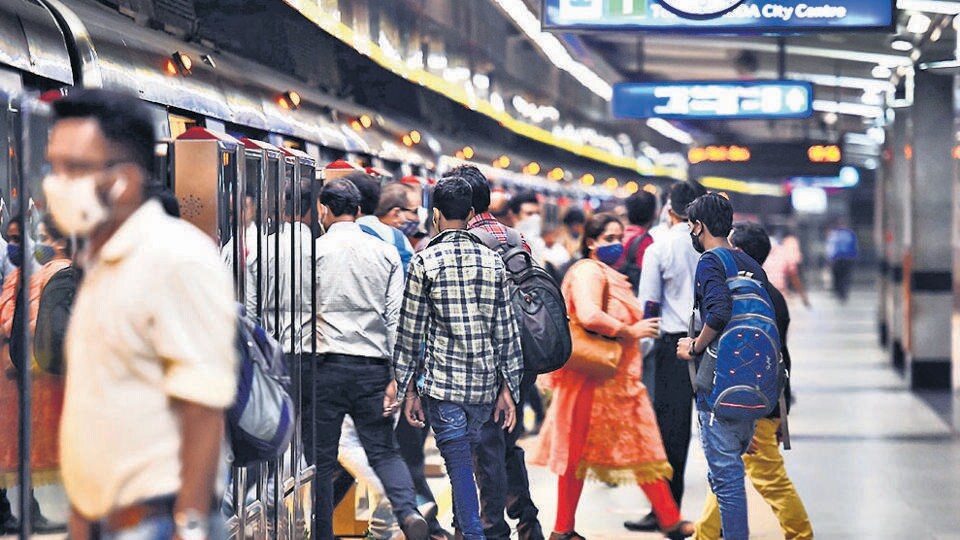
A tender has been floated to carry out testing at these 90 spots across all its lines, most of which will be at underground locations.
Officials said that vibration damage was a key problem in several underground stations and the move will identify areas where it is above permissible standards. Vibrations are generally caused by the interaction between the wheel and the rail track, officials added.
“The tender has been invited as a proactive measure to ensure safety and enhance the efficiency of the entire DMRC infrastructure. This work shall be completed within one year after the award of the tender and the 90 locations shall be finalised after internal assessments in due course,” said Anuj Dayal, principal executive director, corporate communications at DMRC.
The DMRC has been carrying out periodic vibration testing of its underground sections, with similar checks carried out in 2021 and 2019. DMRC in the past has received complaints regarding such vibrations from residents of Saket, Hauz Khas, Begumpur, Shahbad Mohammadpur and Sarvapriya Vihar.
“Tri-axial velocity sensors shall be used to measure and monitor the vibrations. The monitoring shall be done for 24 hours with duly calibrated velocity sensors. The agency to which the tender is awarded will then submit the report to DMRC within seven days after completion of the monitoring,” said Dayal.
DMRC said the data will also be used to assess effectiveness in terms of past interventions.
“We always been concerned about the safety of our structures as well as that of nearby buildings. In the past as well, various measures have been taken such as installing specially designed shock absorbers and extra padding at critical points along the tracks to minimise vibrations transmitted to nearby buildings. These initiatives have not only enhanced passenger comfort but also safeguarded the structural integrity of surrounding buildings,” Dayal added.