
 E-Paper



Delhi plans 55km elevated Ring Road, work to start in 6 months, says govt
The first phase to be an 11.5-kilometre stretch between Kashmere Gate interstate bus terminal (ISBT) and Ashram or DND Flyway.

 Prefer HTon Google


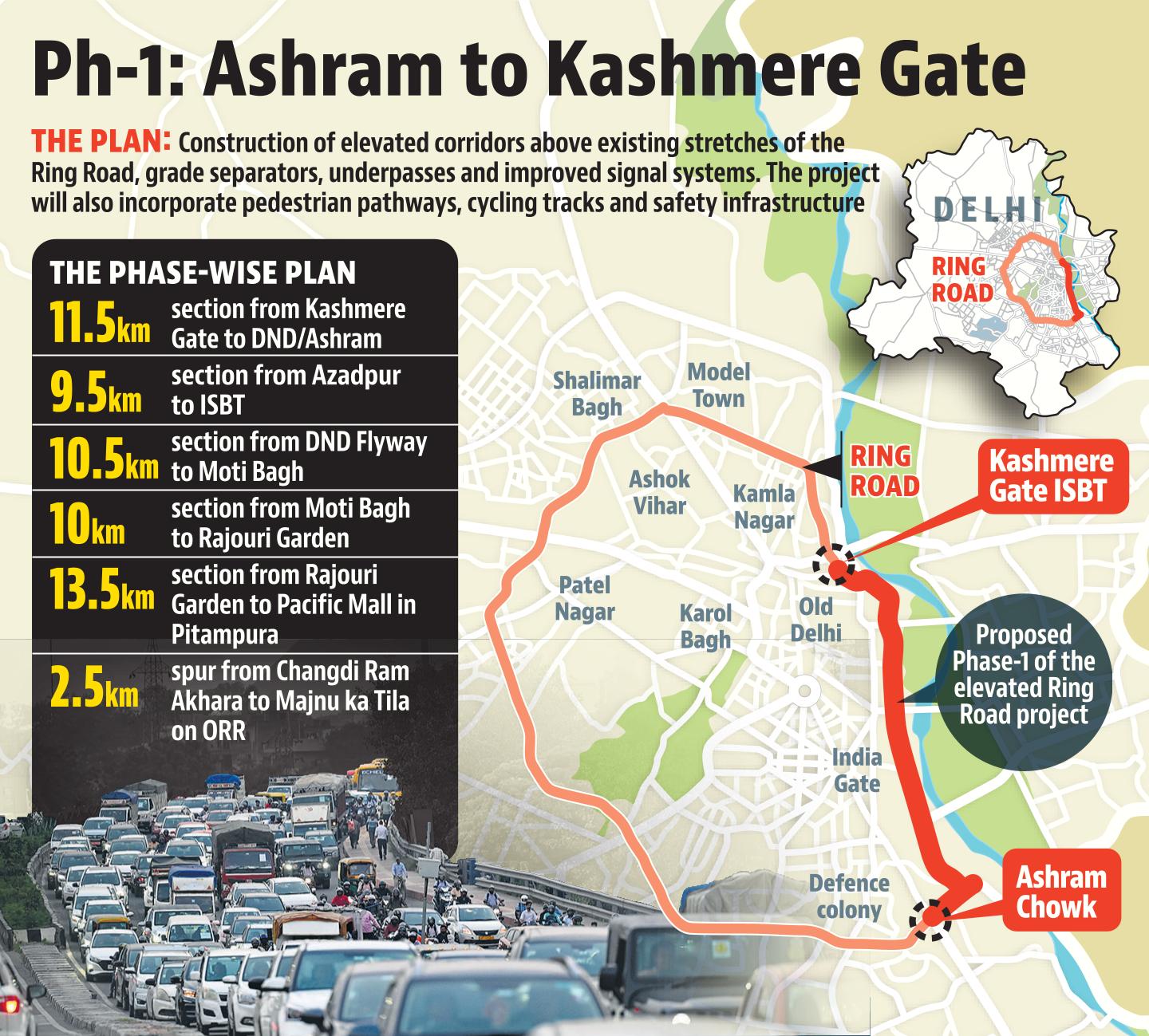
New Delhi : The Public Works Department (PWD) will undertake the 55-kilometre elevated road plan, spanning across the entire Mahatma Gandhi Ring Road, in six phases, according to officers aware of the matter, with the first phase to be an 11.5-kilometre stretch between Kashmere Gate interstate bus terminal (ISBT) and Ashram or DND Flyway.
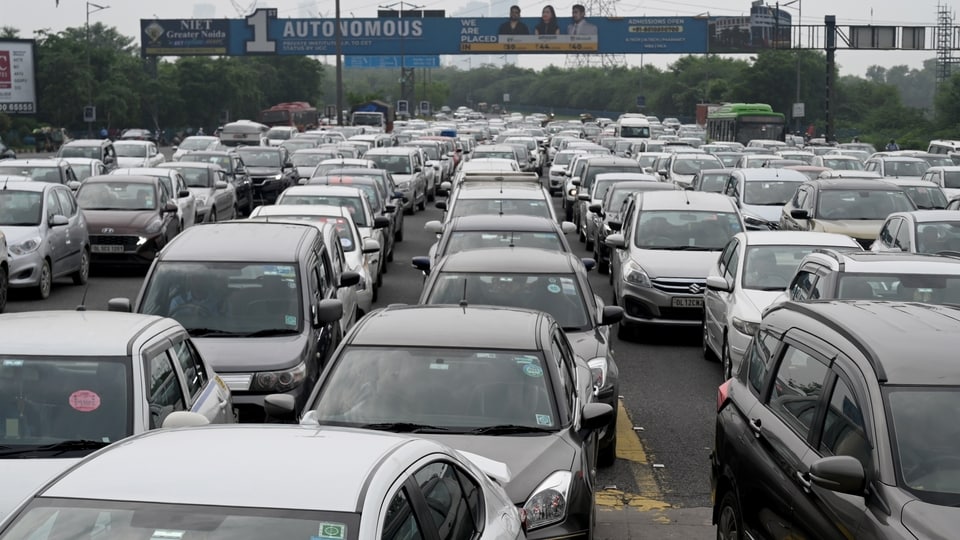
The plan has been formulated on the basis of a preliminary project report, officials said, citing minimal roadblocks on the 11.5km stretch and possession of land for the same. The consultant has started preparing a detailed project report, following which approvals and financial clearances will be taken. On-ground construction is expected to start in around six months, officials said.
Officials said that alternatively, a 9.5km section from Azadpur to Kashmere Gate ISBT may also be taken up in the first phase, given this section also has fewer operational hurdles.
The entire project is envisaged as a new level of Ring Road over the existing Ring Road that is built at-grade, with multiple elevated portions. “The consultant has prepared options for the alignment of the stretch for all the six phases. The one from the ISBT to Ashram is the most feasible and the least amount of concerns like shifting of utilities, permissions, trees in the alignment elevated Metro line or land acquisition,” said PWD minister Parvesh Verma.
The minister said that the consultant, AECOM, has been tasked with easing congestion and improving mobility across the Capital. The project, which covers one of Delhi’s busiest arterial road networks, will be executed in six phases and includes plans for elevated corridors, redesigned intersections and integration with public transport systems.
Planned to span around 55km, the proposed redevelopment will loosely envisaged in six sections as: 9.5km section from Azadpur to ISBT, 11.5km section from ISBT to DND Flyway or Ashram, 10.5km section from DND Flyway to Moti Bagh, 10km section from Moti Bagh to Rajouri Garden, 13.5km section from Rajouri Garden to Pacific Mall in Pitampura, and a 2.5km spur covering the stretch from Changdi Ram Akhara to Kajnu ka Tila on the Outer Ring Road.
Officials said the project has been planned to ensure timely execution and financial allocation over the next few years. The consultant will also be conducting traffic and mobility assessments, environmental and social impact studies, and geotechnical investigations. The firm will also prepare engineering designs, cost estimates and implementation strategies supported by traffic modelling and simulation tools, they said.
Officials said that the DPR is set to be completed soon, based on reconnaissance surveys, topographical mapping and junction assessments, followed by environmental clearance processes and land studies between in the next five weeks, and conceptual design and traffic modelling will be taken up in the next phase.
The proposed redesign includes construction of elevated corridors above existing stretches of the Ring Road, grade separators, underpasses and improved signal systems. The project will also incorporate pedestrian pathways, cycling tracks and safety infrastructure, such as improved lighting and signage.
Experts say that with proper feasibility and engineering design, the idea can take shape, but issues like height, location of ramps and traffic volume have to be carefully considered. “Historically, the Ring Road was always meant to be an elevated corridor. The decision to build it at-grade, with piecemeal flyovers later, compromised its efficiency. A third layer of road is tricky as it would be at least 15-20 metres high,” said S Velmurugan, who has served as a senior principal scientist with the Central Road Research Institute (CRRI).
He added that an uninterrupted elevated corridor will significantly reduce bottlenecks and travel time across Delhi. “But construction must be phased and meticulously planned to prevent chaos. Loops like the one near AIIMS will be difficult as a lot of vertical development has already been done along the Ring Road,” he said.
Verma said the project would be implemented with a focus on long-term urban mobility solutions, with integration of the route with Delhi Metro and other public transport systems.
Verma said the government would ensure transparency throughout the project life cycle. “Our aim is not to build temporary fixes, but long-term mobility systems that make Delhi truly world-class. We are ensuring full transparency and accountability at every stage from survey to execution,” he said.


Stay updated with all top Cities including, Bengaluru, Delhi, Mumbai and more across India. Stay informed on the latest happenings in World News along with Delhi Election 2025 and Delhi Election Result 2025 Live, New Delhi Election Result Live, Kalkaji Election Result Live at Hindustan Times.


