Senior engineers and project managers overseeing key infrastructure projects such as the work on an underpass and extension of the flyover at Ashram and the revamp of Pragati Maidan said that the four-day ban on construction activities between November 14 and 17 announced by the Delhi government on Saturday in view of the hazardous levels of air pollution in the city is likely to delay work, leading to missed deadlines.
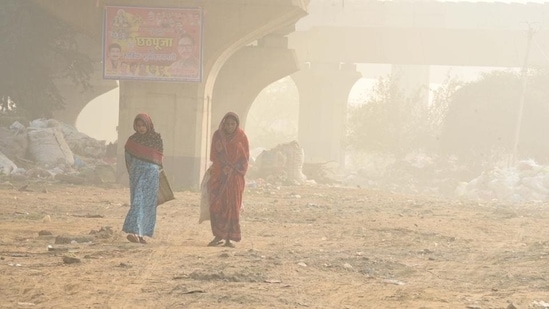
The Public Works Department is currently working on several projects such as Pragati Maidan integrated transit corridor development, Ashram underpass, Benito Juarez Road-San Martin Road underpass, the streetscaping of eleven arterial stretches and others. The Pragati Maidan and Ashram underpass projects are in advanced stages with more than 95% work being completed.
A senior PWD official who asked not to be named said that some of these projects are specifically aimed at decongesting arterial stretches and thereby cutting vehicular emissions, adding that the government should grant exemption to such projects.
{{/usCountry}}A senior PWD official who asked not to be named said that some of these projects are specifically aimed at decongesting arterial stretches and thereby cutting vehicular emissions, adding that the government should grant exemption to such projects.
{{/usCountry}}Hours after the Supreme Court ordered the Centre and Delhi government to take “emergent measures” to curb dangerous air pollution levels in the national Capital, Delhi chief minister Arvind Kejriwal on Saturday announced several measures such as shutting of schools for in-person classes for a week, banning construction between November 14 and 17, and work for home for government employees for a week from Monday.
Officials associated with infrastructure projects said that monsoon has already led to delays, and the current ban may further hit objectives to meet deadline. “In 2019-2020, the construction ban continued for several months and then it was followed by the national lockdown which led to complete derailment of many projects aimed at decongesting the city. We are planning to deploy the existing labour in cleaning and dust control measures so that we don’t face labour shortage once the ban is lifted,” a senior PWD official said.
The municipal corporations that are also working on road improvement projects across the city said the ban will hit work progress, but it was necessary at the moment. East Delhi Municipal Corporation Mayor Shyam Sunder Aggarwal said projects such as Shahdara lake revamp, Karkardooma zonal headquarters, road and school development projects will be impacted. “Unlike previous construction bans, the Delhi government should ensure that food and sustenance for labourers and their families is ensured. Most of these households are on hand to mouth basis and daily earnings. We do not have enough financial resources to take care of them but some relief should be provided,” Aggarwal said.
A 2018 study conducted by The Energy and Resources Institute (Teri), a Delhi-based research institute, showed that vehicle emissions account for 24%-28% of the city’s pollution. Dust, on the other hand, contributed only 18%-38% to the city’s overall pollution.
A senior municipal official from the north corporation said, “Many projects were delayed due to heavy monsoon rain this year, and an extended ban can further derail them. We can take care of workers for a week but if the ban runs for an extended period, we will have to relieve some of them. It is government’s order and we cannot do much in this regard,” the official said, adding that the situation will be reviewed on November 18.
According to the Supreme Court mandated Graded Response Action Plan (Grap), a ban on construction activities has to be implemented if the air quality index -- on a scale of 0 to 500 -- touches ‘‘severe plus (500+)’ or emergency category.
The Delhi Metro Rail Corporation (DMRC), which has been working on three corridors of its Phase 4 expansion plans, said it will follow the government directions. Anuj Dayal, executive director, corporate communication DMRC said, “The DMRC will follow the government instructions . We are awaiting the detailed directions. Accordingly, necessary actions will be taken to ensure compliance. It is too early to assess what impact it will have on the progress of construction work.”
Dr. S Velmurugan, chief scientist, Central Road Research Institute (CRRI), said the agencies should not leave the sites unattended. “The agencies should not leave the open construction sites unattended in places such as Ashram underpass or Central Vista project. A section labourers should be used to sprinkle water at the sites and in implementing anti-dust measures,” he said.
He added that if the government decides to further extend the ban, it may consider exempting a few projects that will prove critical in decongesting major stretches, albeit with stringent dust control measures.
Delhi’s recorded its worst air quality on Friday with the city recording an AQI of 471, the worst recorded so far this year. On Saturday, it improved a bit to reach 437.
Public health experts have warned that even short-term exposure to such high pollution levels may cause damage to several key organs such as lungs, heart and brain, even among healthy individuals.
Stay updated with all top Cities including, Bengaluru, Delhi, Mumbai and more across India. Stay informed on the latest happenings in World News along with Delhi Election 2025 and Delhi Election Result 2025 Live, New Delhi Election Result Live, Kalkaji Election Result Live at Hindustan Times.
Stay updated with all top Cities including, Bengaluru, Delhi, Mumbai and more across India. Stay informed on the latest happenings in World News along with Delhi Election 2025 and Delhi Election Result 2025 Live, New Delhi Election Result Live, Kalkaji Election Result Live at Hindustan Times.