
 E-Paper



Extending regulatory assets deadline will push ₹22K cr burden on consumers: Delhi discoms tell SC
The submission by the discoms came in response to an application moved by DERC seeking modification of a court direction of August 6 that directed the return of accumulated regulatory assets worth ₹31,500 crore

 Prefer HTon Google


New Delhi
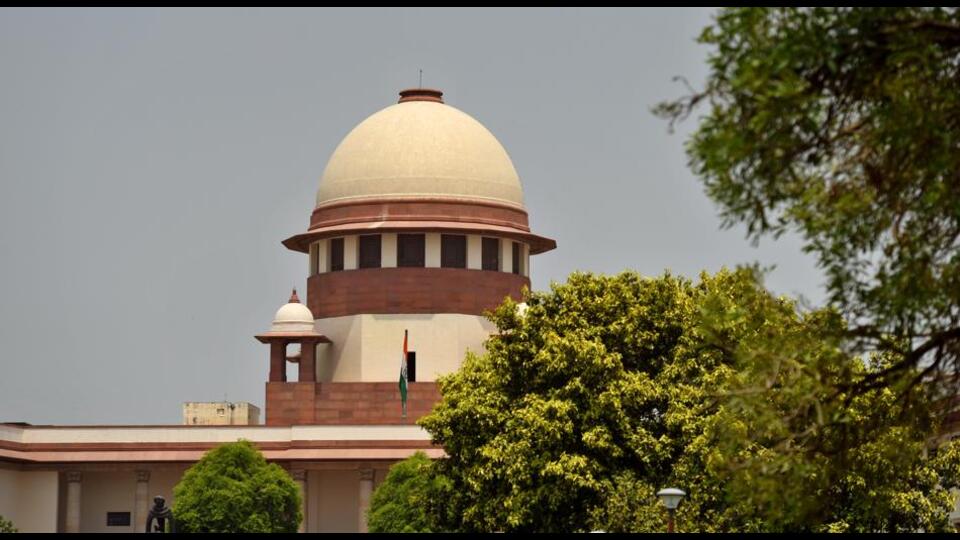
Delhi’s private power distribution companies (discoms) on Tuesday told the Supreme Court that consumers will be saddled with an additional burden of ₹22,000 crore if it extends the four-year deadline to liquidate regulatory assets to seven years, on the request of the Delhi Electricity Regulatory Commission (DERC).
The submission by the discoms came in response to an application moved by DERC seeking modification of a court direction of August 6 that directed the return of accumulated regulatory assets worth ₹31,500 crore to BSES Yamuna Power Limited (BYPL), BSES Rajdhani Power Limited (BRPL) and Tata Power Delhi Distribution Limited (TPDDL) by charting a road map over four years beginning April 1, 2024.
DERC sought seven years instead of four to clear the dues, saying that the same would create less of a tariff shock on consumers.
To be sure, a component of carrying cost will be added if the payment timeline is altered to seven years.
Reserving orders on the application, a bench of justices PS Narasimha and Sandeep Mehta said, “Ultimately, it will all come down to consumers only.” Noting that in terms of its August 6 judgment, the Appellate Tribunal for Electricity (APTEL) has registered a suo motu petition for monitoring court’s directions, the bench indicated that it will allow APTEL to determine this issue as well.
Senior advocates Kapil Sibal and Abhishek Manu Singhvi, appearing for BSES and TPDDL, opposed the DERC application, stating that any tinkering with the schedule will cost consumers dearly.
Singhvi said, “If the payment is spread out, there is a carrying cost of ₹22,000 crore that will be added. Any postponement of the deadline means inclusion of ₹22,000 crore. So why is the Commission shedding crocodile tears for consumers?”
Sibal told the court that the consumers will only stand to benefit if the DERC sticks to the schedule laid down by the court. According to him, the carrying cost, which is the interest on the amount to be paid, will be added to the liability of the commission that will ultimately be passed on to consumers.
The bench said, “When we started this case, our concern was not the discoms but to set a norm throughout the country so that the accumulation of regulatory assets (RA) do not recur.”
However, the case is faced with the question of legacy dues that had accumulated over the past years.
Solicitor General Tushar Mehta, appearing for DERC, said, “For a common man who receives the electricity bill, it will be more than double the amount that he usually receives if we are to stick by the four-year deadline that ends in April 2028. According to him, going by the judgment will result in a huge tariff shock to consumers in their monthly bills. For BYPL catering to east Delhi, the pinch will be the most up to 109%, for BRPL supplying power to south and west Delhi, it will be 82%, and 40% rise for north Delhi consumers serviced by TPDDL.”
Presently, as per the calculation of DERC, the dues payable to the discoms are apportioned at approximately ₹15,500 crore to BRPL, ₹10,388 crore to BYPL and ₹5,652 crore to TPDDL.
“Who is to monitor whether these figures are correct,” the bench said, adding, “We are not sure about the tariff shock and the carrying cost as we have asked the respective regulatory commission to work out the trajectory for making payments. We cannot sit in judgment over these figures presented before us. We will leave it to APTEL to modulate it.”
The states of Kerala, Rajasthan and the national capital territory of Delhi had also moved applications supporting the DERC’s plea for modification. Kerala, represented by senior advocate Gopal Sankaranarayanan, informed the bench that the state has an accumulated RA of over ₹6,600 crore and that the rules governing liquidation of RA provide for a seven-year window.
Rajasthan, on the other hand, told the court that the state had formulated its own rules, which will be impacted as the state has provided for a seven-year period for liquidating RA.
Mehta said that the judgment of August 6, in two paragraphs, notes that existing regulatory assets are to be liquidated within seven years as per Rule 23 of Electricity Rules, 2005, as inserted by the Electricity (Amendment) Rules, 2024. Rule 23 deals with the gap between approved Annual Revenue Requirement (ARR) and estimated annual revenue from approved tariff and envisages that any gap be liquidated in seven equal yearly instalments from the next financial year.
He pointed out that despite noting this aspect, the judgment in the final paragraph notes the period of liquidation as four years, starting April 2024.
“The impact will be on the end consumer which should not be so harsh that one cannot bear it. It affects every stakeholder, particularly consumers. We do not seek a reduction in the amount to be paid. But if a seven-year period is provided, the impact on the monthly bill will be greatly reduced to 33% (BRPL), 44% (BYPL) and 16% (TPDDL).”
The bench said, “You have had enough time since amended Rule 23 came into force from April 1, 2024. We only took Rule 23 as the guiding principle. This rule existed from the beginning. It is because you did not adhere to it, we had to pass the judgment.”
Additional Solicitor General (ASG) N Venkataraman, appearing for the Delhi government, told the court that of an accumulated RA of ₹31,500 crore, a majority portion of over ₹27,000 crore is to be returned to the government. However, the court did not spare the Delhi government, alleging that it was equally to be blamed for this state of affairs as the government holds a 49% stake in the three discoms.
While examining the issue in its judgment, the top court had widened the scope to analyse the situation across the country. Figures disclosed that Tamil Nadu has an estimated RA of ₹89,375 crore as of FY 2021–22, while Rajasthan’s cumulative RA had crossed ₹47,000 crore by FY 2024–25.

Stay updated with all top Cities including, Bengaluru, Delhi, Mumbai and more across India. Stay informed on the latest happenings in World News along with Delhi Election 2025 and Delhi Election Result 2025 Live, New Delhi Election Result Live, Kalkaji Election Result Live at Hindustan Times.


