New Delhi: The New Delhi Municipal Council (NDMC) will develop effluent treatment plants (ETPs) at dhobi ghats in areas under the civic body, and use treated water for horticulture, senior civic officials said. In the first phase, five plants with 20-70 kilolitres per day (kld) capacity will be set up, they said.
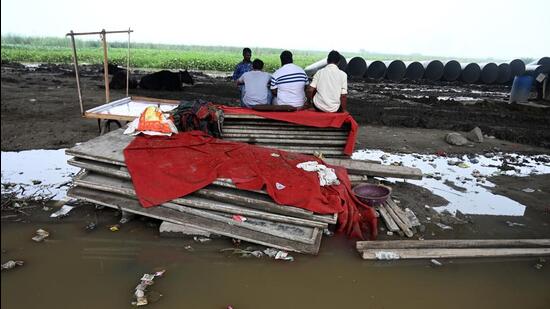
An NDMC official said that the treatment plants will be set up on Dhobi Ghat No 5 near Pt Pant Marg; Dhobi Ghat No 4 near Talkatora Road; Dhobi Ghat No 15 near South Avenue Lane; Ghat at Hailey Lane near Ugrasen Baoli and Ghat at Princess Park Part-II, near Bhagwan Das Road.
“These plants will be developed on public-private partnership (PPP) on hybrid annuity model,” the official said.
{{/usCountry}}“These plants will be developed on public-private partnership (PPP) on hybrid annuity model,” the official said.
{{/usCountry}}The companies hired to develop them will operate the treatment plants for five years. In all, dhobi ghats are located at 17 places and managed by more than 400 authorised washermen for decades.
Officials said the plant with the largest treatment capacity, of 70kld, will come up near Talkatora Road and the smallest one, of 20kld capacity, on Pt Pant Marg. “NDMC will provide 100 to 500 square metre plots for these ETPs,” the official said.
An NDMC project report on the ETP proposal states that there is consistent increasing water demand for irrigation of green area. “NDMC is desirous to improve the efficiency of irrigation by developing infrastructure ETPs. With this objective, development of ETP infrastructure is proposed under hybrid Annuity at five identified locations,” the report states.
The effluents of the five sites have been studied on five parameters pH, biochemical oxygen demand (BOD), chemical oxygen demand (COD), total suspended solids (TSS) and oil grease. Maximum pH of 10 units was recorded at Bhagwan Das Road, while oil and grease of 8mg/l was recorded at Talkatora Road and 2mg/l was recorded at Bhagwan Das road. The BOD levels were 84mg/l and 90mgl, respectively, at these two locations. The ghat at Talkatora Road also had maximum COD and TSS levels out of the five locations, at 448 mg/l and 300mg/l.
The BOD indicates the level of organic pollution in water by measuring how much oxygen microorganisms need to break down that the biodegradable component, COD measures the total oxygen required for the chemical oxidation of all organic and inorganic pollutants while TSS indicates the turbidity levels due to undissolved components. Lower values indicate better water quality levels.
Oil and grease (O&G) in wastewater, refers to as fats, oils, and grease. It measures the amount of polar (animal/vegetable) and non-polar (petroleum-based) hydrocarbons that can cause blockages in sewers, damage aquatic ecosystems by reducing oxygen transfer, and interfere with wastewater treatment processes.
According to the conditions set up by the NDMC, the acceptable parameter of the treated water should be TSS and BOD levels of less than 10mg/l, pH between range of 6.5-8.5; and COD less than 50ppm.
Stay updated with all top Cities including, Bengaluru, Delhi, Mumbai and more across India. Stay informed on the latest happenings in World News along with Delhi Election 2025 and Delhi Election Result 2025 Live, New Delhi Election Result Live, Kalkaji Election Result Live at Hindustan Times.
Stay updated with all top Cities including, Bengaluru, Delhi, Mumbai and more across India. Stay informed on the latest happenings in World News along with Delhi Election 2025 and Delhi Election Result 2025 Live, New Delhi Election Result Live, Kalkaji Election Result Live at Hindustan Times.