Cab aggregators operating in Delhi will have to apply for a licence to operate, register their drivers with the government, set up easily accessible customer care channels and charge a fixed a base fare, according to a draft policy proposed by the Delhi government.
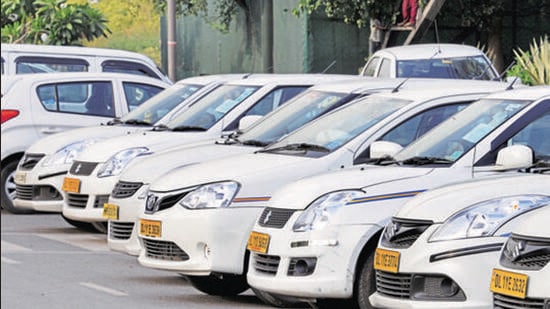
The proposed policy, Motor vehicle aggregators scheme, 2021, was shared on Monday in the public domain to seek suggestions from stakeholders and the general public.
Estimates with the state transport department shows that Delhi has at least 150,000 vehicles plying under different cab aggregators, but it is mostly is a floating number as these vehicles keep moving between Delhi and NCR cities such as Noida, Gurugram, Faridabad and so on.
The policy mandates all cab aggregators to ensure that 5% to 50% of their new fleet of two-wheelers or four-wheelers are electric vehicles in phases within the time frame of six months to two years from the date of notification of the final policy.
“Delhi has become the first state to announce the draft aggregator scheme which mandates electric vehicle fleets for ride aggregators and delivery services. The policy was essential as presently, there is no accountability on the part of the cab aggregators. There is no set of rules for them. Until now, we had no policy to even keep a record of such companies, their fleet of vehicles and drivers. Our aim is to maximise the safety of users and ensure ease of doing business for such aggregator companies, while also making them more responsible as stakeholders in public transportation,” said Delhi transport minister Kailash Gahlot.
If the policy is notified, all cab aggregators who have their offices in India, and run a fleet of more than 50 vehicles will have to mandatorily get a licence from the state transport department, failing which a fine of at least ₹25,000 per vehicle will be charged.
{{/usCountry}}If the policy is notified, all cab aggregators who have their offices in India, and run a fleet of more than 50 vehicles will have to mandatorily get a licence from the state transport department, failing which a fine of at least ₹25,000 per vehicle will be charged.
{{/usCountry}}To regulate fares, which currently has no government control and often go up to five times in the name of surge pricing, the transport department has proposed to set a base fare and the maximum surge pricing could only be up to twice the base fare fixed by the government, the policy mandates.
To ensure safety of passengers and the drivers, the policy proposes that all driver partners, even if they work for multiple aggregator companies, will have to be registered with the government, failing which fines will be imposed on the company. It proposes taking “appropriate action” against a driver partner within one month if there are 15% or more grievances against him/her. The policy says that remedial training should be given to drivers having a rating less than 3.5 over a period of one year.
To address the issue of air pollution, the policy promotes use of electric vehicles. It mandates that all vehicles onboarded by the companies from the date of notification cannot be older than five years, and the existing fleet may not be older than 8 years. Within the first six months from the date of notification of the policy, 10% of all newly inducted two-wheelers and 5% of all new four-wheelers will have to be electric vehicles, the draft policy says.
It adds that one year from notification, 25% of all new two-wheelers and 15% of all new four-wheelers have to be EVs, while two years from notification, 50% of all new two-wheelers and 25% of all new four-wheelers will have to be EVs.
HT was the first to report on cab aggregator policy in 2017, and highlighted the different aspects of the rules such as mandatory licensing for all cab aggregator companies in a series of reports in the following years.
However, the policy was put in abeyance in 2019 owing to the focus on the EV policy.
Expert quote needed
Stay updated with all top Cities including, Bengaluru, Delhi, Mumbai and more across India. Stay informed on the latest happenings in World News along with Delhi Election 2025 and Delhi Election Result 2025 Live, New Delhi Election Result Live, Kalkaji Election Result Live at Hindustan Times.
Stay updated with all top Cities including, Bengaluru, Delhi, Mumbai and more across India. Stay informed on the latest happenings in World News along with Delhi Election 2025 and Delhi Election Result 2025 Live, New Delhi Election Result Live, Kalkaji Election Result Live at Hindustan Times.