Rain and strong winds turned saviours for Delhi on Friday, sparing residents the usual post-Dussehra spike in air pollution that follows effigy burning celebrations marking the culmination of the nine-day Navratri festival. After days of moderate pollution and hazy skies, the weather provided a much-needed respite for the national capital’s residents.
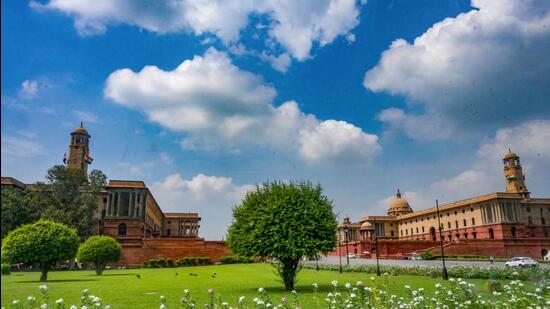
The city’s air quality improved on Friday, reaching the ‘satisfactory’ category and ending a 21-day streak of moderate AQI readings above 100. Delhi’s 24-hour average AQI stood at 88 at 4pm, an improvement from 123 at the same time on Thursday – marking the lowest post-Dussehra AQI since 2022, when it was recorded at 79 on October 6.
Comparing past years, the post-Dussehra air quality in Delhi has often worsened dramatically. In 2022, the AQI was 155 on Dussehra (October 12) before climbing to 224 the next day.
In 2023, the city saw an AQI of 220 on Dussehra (October 25), which spiked further to 243 the following day.
The highest post-Dussehra AQI recorded in recent years was in 2020, when it soared to 353 on October 26, entering the ‘very poor’ category.
Experts attributed the relief on Friday to a combination of meteorological factors. “Winter is yet to arrive and we had rain in the first half of the day, followed by scattered spells even in the evening. We also had consistent winds of 15km/hour in the evening, which did not let pollutants accumulate,” said Mahesh Palawat, vice president at Skymet Meteorology.
{{/usCountry}}Experts attributed the relief on Friday to a combination of meteorological factors. “Winter is yet to arrive and we had rain in the first half of the day, followed by scattered spells even in the evening. We also had consistent winds of 15km/hour in the evening, which did not let pollutants accumulate,” said Mahesh Palawat, vice president at Skymet Meteorology.
{{/usCountry}}The capital has seen similar relief before. In 2022, strong winds of 20-30 km/hour throughout the day helped disperse pollutants, bringing the AQI down from 211 on Dussehra to 79 the following day.
Delhi Pollution Control Committee’s (DPCC) real-time data also showed short, marginal spikes in the PM 2.5 levels at most continuous ambient air quality stations (CAAQMS) between 9-10pm, before improving once again. At Anand Vihar for instance, the hourly PM 2.5 levels shot up from 68 micrograms per cubic metre (µg/m³) at 8pm to 96µg/m³ at 9pm, before dipping to 80µg/m³ at 10pm and further improving to 41µg/m³ by 11pm.
At Punjabi Bagh, another busy residential area, the peak daily PM 2.5 value was recorded at 121µg/m³ at 10pm, but it dipped to 95µg/m³ by 11pm and to 81µg/m³ by midnight.
At RK Puram, the peak was 88µg/m³ at 10pm. At Ashok Vihar in north Delhi, the peak was recorded at 10pm, at 141µg/m³, DPCC data showed.
Experts said burning of effigies and firecrackers leads to a sharp spike in PM 2.5 levels, while PM 10 generally spikes in the city due to increased dust upliftment.
In India, the safe one-hour PM 2.5 standard is 60µg/m³, meaning the Delhi’s peaks were around 2 to 2.5 times the safe limit on Thursday night. By contrast, during Diwali, when meteorological conditions are typically less favourable and multiple firecrackers are ignited simultaneously, these peaks can rise to as much as 30 times the safe standard.
Anumita Roychowdhury, executive director of research and advocacy, said the early timing of Dussehra this year has certainly helped, unlike in previous years when the festival fell in the last week of October. The last time it occurred this early was in 2017, on September 30.
“Meteorological conditions have helped. Even if it had not rained, we would not have seen a major spike as temperatures are high and we still have decent winds. But a combination of rain, winds and high temperatures all played its role,” Roychowdhury said, underscoring the importance of weather factors from October through December in influencing the city’s air quality.
Delhi mainly saw partially cloudy skies on Friday, with no rain. The India Meteorological Department (IMD) has said a strong western disturbance will begin to influence northwest India from October 4 till October 8, with light showers to commence over Delhi from October 5. Meanwhile, light to moderate rain is likely in the city on October 6 and 7, it said.
Delhi’s maximum temperature was 33.5°C on Friday – a degree below normal. The minimum was 23.7°C, a degree above normal. The maximum is forecast to hover between 34-36°C over the weekend, before dipping to 31-33°C on Monday. A dip in minimum temperature is meanwhile likely from October 9 onwards, after cold northwesterly winds return.
Stay updated with all top Cities including, Bengaluru, Delhi, Mumbai and more across India. Stay informed on the latest happenings in World News along with Delhi Election 2025 and Delhi Election Result 2025 Live, New Delhi Election Result Live, Kalkaji Election Result Live at Hindustan Times.
Stay updated with all top Cities including, Bengaluru, Delhi, Mumbai and more across India. Stay informed on the latest happenings in World News along with Delhi Election 2025 and Delhi Election Result 2025 Live, New Delhi Election Result Live, Kalkaji Election Result Live at Hindustan Times.