
 E-Paper



Residential, commercial growth planned along Delhi–Meerut RRTS corridor
Planned on the lines of Transit Oriented Development (TOD), the projects aim to put affordable housing, workplaces, and amenities within walking distance of rapid transit hubs

 Prefer HTon Google


The National Capital Region Transport Corporation (NCRTC) on Friday said it is working with the governments of Delhi and Uttar Pradesh to prepare zonal and regional master plans for housing and commercial projects along the 82km Delhi–Meerut Regional Rapid Transit System (RRTS) corridor.
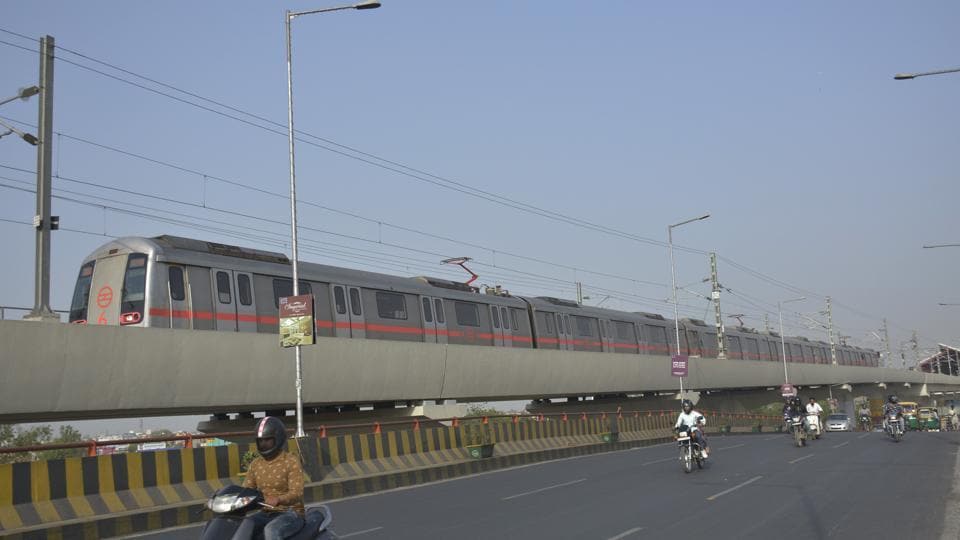
Planned on the lines of Transit Oriented Development (TOD), the projects aim to put affordable housing, workplaces, and amenities within walking distance of rapid transit hubs. Officials said this approach is expected to reshape urban growth across the corridor, while also creating new economic opportunities.
In Delhi, RRTS stations at Jangpura, Sarai Kale Khan and Anand Vihar have been identified as TOD hubs by the Delhi Development Authority (DDA). The upcoming TOD hub at Karkardooma, close to Anand Vihar, will also plug into this network.
“We are in talks with the DDA to identify and develop such areas for residential and commercial purposes. Integrated Zonal Plans for Jangpura and Sarai Kale Khan are at advanced stages and could be made public soon, while Anand Vihar’s plan is under review,” said Puneet Vats, NCRTC spokesperson.
Shalabh Goel, managing director of NCRTC, said the aim of the RRTS was always larger than faster travel. “One of the goals was to enable polycentric development in the NCR. With 55km of the corridor already open, we are seeing that impact. TOD will help create vibrant, liveable communities and unlock economic value for the entire region,” he said.
In Uttar Pradesh, master plans for residential and commercial development along Ghaziabad, Modinagar and Meerut stretches are being prepared by state and local agencies, with NCRTC providing support.
Meerut and Ghaziabad take the lead
Meerut Development Authority (MDA) has earmarked 3,273 hectares for TOD-based projects under its Master Plan 2031. Of this, 2,442 hectares have been organised into seven TOD zones and two special development areas around RRTS stations. These zones are designed as self-sufficient urban nodes combining housing, commercial spaces, education, healthcare and retail. One flagship project is the New Meerut Township, a 350-hectare greenfield development near the Meerut South station.
Ghaziabad has prepared a GIS-based Integrated Master Plan 2031, covering Ghaziabad, Loni, Modinagar and Muradnagar. The plan expands the development area by 27% to over 32,000 hectares, allocating land for residential, commercial, industrial, recreational and transport-related uses, while carving out TOD zones and special development areas along major expressways.
Real estate ripple effect
Officials said the operational corridor is already pushing up land values. In Meerut, property prices within two kilometres of RRTS stations have risen 30–50% in two years, with some areas seeing hikes of up to 67%. Ghaziabad is witnessing similar growth, fuelled by improved connectivity and integrated planning.
The corridor is also expected to strengthen industrial clusters. In Meerut, hubs such as Partapur and Rithani — known for sports goods, footwear and food processing — are benefitting from faster access to Delhi markets, while Ghaziabad’s industrial zones are being expanded under its 2031 plan.
The affordability question
Experts, however, cautioned that demand for affordable homes remains under strain. “Sales of apartments costing up to ₹45 lakh have declined due to rising land and construction costs. States should lower stamp duty to 1% for women and 3% for men on affordable homes, while also boosting supply,” said G Hari Babu, president of Naredco.
With the full Delhi–Meerut RRTS corridor expected to open soon, planners and developers see the potential for entire new communities to emerge around its stations — reshaping not just how people travel, but how they live and work in the region.

Stay updated with all top Cities including, Bengaluru, Delhi, Mumbai and more across India. Stay informed on the latest happenings in World News along with Delhi Election 2025 and Delhi Election Result 2025 Live, New Delhi Election Result Live, Kalkaji Election Result Live at Hindustan Times.


