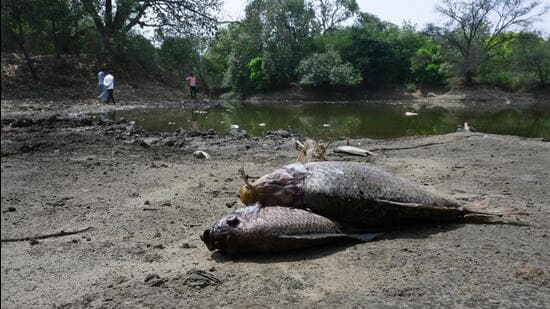
Sewage discharge into a 1.5 acre pond in Dwarka Sector 23 resulted in the death of all the fish in it even as residents of the area alleged on Thursday that the water body was polluted by a drain belonging to the Delhi Development Authority.
Read here: Sensors, cameras at Delhi landfills in MCD plan to prevent fires
According to residents of sectors 22, 23 and the nearby Pochanpur village, the discharge of sewage on Wednesday into the pond — revived by them almost a decade ago — was through DDA’s trunk drain-II for which the body is currently carrying out beautification work.
Hundreds of fish were seen floating on the surface in a matter of hours, the locals alleged.
Denying the allegation, DDA said that the discharge of excess sewage was by another “public utility department in charge of sewerage system”.
Following the incident, locals have written to the lieutenant governor, the Delhi government’s environment department, the Pollution Control Committee (DPCC) and National Mission for Clean Ganga (NMCG), seeking action against DDA.
The residents have alleged that a natural channel was created by DDA, connecting the trunk drain-II to the pond by excavating the soil next to the drain which passes parallel to this water body. This, they alleged, led to the sewage water entering the water body. Only after a strong foul smell began emanating from the pond did the issue come to their notice, they said.
{{/usCountry}}The residents have alleged that a natural channel was created by DDA, connecting the trunk drain-II to the pond by excavating the soil next to the drain which passes parallel to this water body. This, they alleged, led to the sewage water entering the water body. Only after a strong foul smell began emanating from the pond did the issue come to their notice, they said.
{{/usCountry}}“Upon approaching the lake, we saw several dead fish floating on the surface. Others appeared to be struggling to get oxygen and had either ended up wriggling their way to the catchment area of the pond, or were constantly coming up to the surface. All the fish ultimately died,” said Diwan Singh, a Dwarka resident and member of an LG-appointed Dwarka Water Bodies’ Committee.
“We have demanded action against DDA. We were informed that some beautification work was ongoing for the trunk drain-II, which ultimately connects with the Najafgarh drain. In order to carry out some works, they had to temporarily remove all sewage, but instead of using septic tanks, officials simply opted to use the water body as an outlet,” Singh alleged
The water body was revived by locals in 2013 by gradually creating a catchment area with a deep basin in the middle. It was then connected to stormwater drains to utilise rainwater, which gradually began to accumulate over time, Singh said.
Ravinder Kumar, 34, a resident of Pochanpur village which is located a few hundred metres from the water body, said the water’s colour had changed over the last 48 hours, with the water becoming visibly murkier.
Though DDA stopped the flow of sewage into the water body hours after locals raised an alarm, the damage was already done.
“The water body sustains an entire ecosystem as the fish would attract birds,” Kumar said, adding that the water in the pond had also been gradually reducing over the past few months, with DDA allegedly removing a natural catchment of the pond three months ago while carrying out drain beautification work.
When contacted, a DDA spokesperson denied the allegations. “DDA is continuously taking and following up the matter for proper redressal of the problem. However, the sewerage into ponds through our drain was checked and no discharge was found.” the spokesperson said.
The Delhi Jal Board also has pipes in the area. DJB when contacted, did not respond to HT’s queries for comment.
In a similar incident in July last year, hundreds of fish were found dead in the Najafgarh drain, resulting in the National Green Tribunal (NGT) ordering an inquiry into the incident. An NGT-appointed committee in October identified a number of factors resulting in their death, including discharge of untreated waste from Haryana’s sewage treatment plants, heavy rain a day before the incident, and high organic and chemical pollution in the drain.
Manu Bhatnagar, Principal Director of the Natural Heritage Division at INTACH, who was part of the expert committee, said in the latest case, there are likely to be two causes leading to the death of fish, with the sewage not only likely reducing the level of dissolved oxygen but also leading to production of high amount of nitrites and ammonia.
Read here: Delhi Police arrest food company CMD for cheating
“Generally, when fish die during the day, high ammonia and nitrites is the reason. This is due to sewage accumulating in a water body. If fish die at night, it id due to low levels of dissolved oxygen,” he said.
Stay updated with all top Cities including, Bengaluru, Delhi, Mumbai and more across India. Stay informed on the latest happenings in World News along with Delhi Election 2025 and Delhi Election Result 2025 Live, New Delhi Election Result Live, Kalkaji Election Result Live at Hindustan Times.
Stay updated with all top Cities including, Bengaluru, Delhi, Mumbai and more across India. Stay informed on the latest happenings in World News along with Delhi Election 2025 and Delhi Election Result 2025 Live, New Delhi Election Result Live, Kalkaji Election Result Live at Hindustan Times.