
 E-Paper



Yamuna water quality worsened in Jan and Feb: Report
Yamuna's pollution levels spiked in January, with faecal coliform hitting 350,000 units/100 ml, well above safe limits, before slightly decreasing in February.

 Prefer HTon Google


New Delhi: Pollution levels in the Yamuna increased in January and February compared to November and December, the latest water quality reports released by the Delhi Pollution Control Committee (DPCC) on Monday showed.
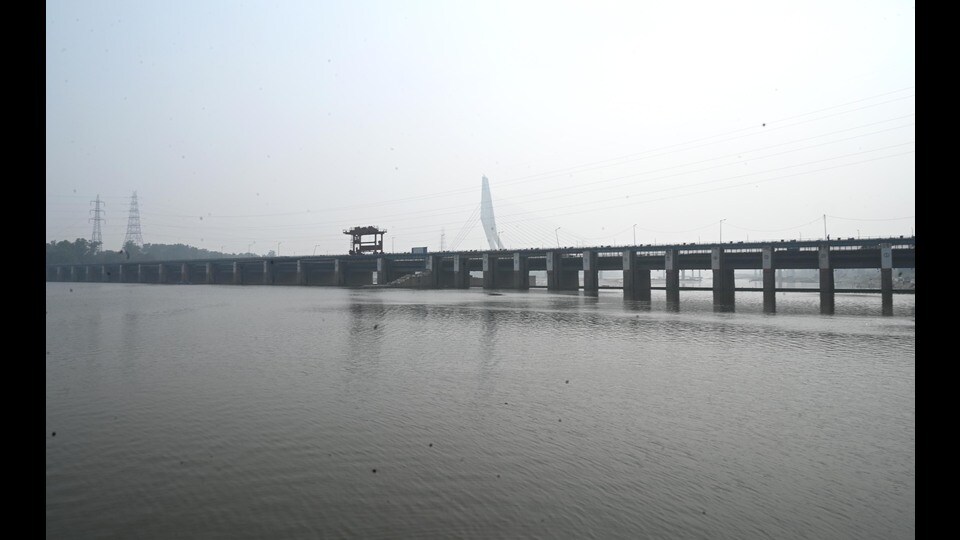
The reports dated January 30 and February 26 anduploaded after December, showed the river recorded a significant spike in pollution in January. Though levels marginally dipped in February, they were far from within permissible limits.
The report, seen by HT, shows peak faecal coliform levels (an indicator of untreated sewage entering the river) – rose from 92,000 units/100 ml in December and 24,000 units/100 ml in November – to 350,000 mg/l in January and came down to 110,000 units in February.
The safe limit is 2,500 units/100 ml, while the desired standard is 500 units/100 ml. In comparison, it was at 7.9 million units last January and 16 million units in February last year.
To assess Yamuna’s river quality, water samples are collected manually from eight different locations – Palla, where the river enters Delhi; Wazirabad, ISBT Kashmere Gate, ITO bridge, Nizamuddin bridge, Okhla barrage, Agra Canal and Asgarpur.
The biological oxygen demand (BOD), indicating how much oxygen organisms is needed to survive in the water, peaked at 52 mg/l in January – 17 times the safe limit of 3 mg/l. It was 36 mg/l in February, the report showed. This is marginally higher than the peak of 33 mg/l in November and 25 mg/l in December.
Dissolved oxygen (DO) – essential for aquatic life – ranged between 0.4 mg/l and 7.6 mg/l in January, however, it was zero at four locations. The level should be at least 5 mg/l. It was between 0.4 mg/l till 8.2mg/l in February, but zero at two locations.
In January last year, DO was 6 mg/l at Palla and Wazirabad and in February 2025, it was between 5.3 mg/l and 6 mg/l but went down to zero after that.
The reports have been uploaded days after a Yamuna activist, Pankaj Kumar, wrote to the DPCC on March 6. Kumar said it had been nearly three months since reports on Yamuna, Delhi’s drains, sewage treatment plants (STPs) and common effluent treatment plants (CETPs) were uploaded.
“We see BOD levels rising downstream after Wazirabad, but around Nizamuddin Bridge, it marginally improves, even though several drains are already bringing sewage into the river at this point. One may have to assess the data again, as there is no reason the water quality can improve in the middle of the river, unless our drains are bringing fresh water, which they are not,” he added.

Stay updated with all top Cities including, Bengaluru, Delhi, Mumbai and more across India. Stay informed on the latest happenings in World News along with Delhi Election 2025 and Delhi Election Result 2025 Live, New Delhi Election Result Live, Kalkaji Election Result Live at Hindustan Times.


