The Haryana Human Rights Commission (HHRC) has sought detailed reports from the Municipal Corporation of Faridabad (MCF) and the Faridabad Metropolitan Development Authority (FMDA) over a prolonged drinking water crisis in Sainik Colony, Sector 49, observing that denial of access to safe drinking water raises concerns over violation of fundamental human rights.
Taking cognisance of 14 complaints from residents of J and K Blocks in Sainik Colony, the commission, headed by Justice Lalit Batra, issued notices to the MCF commissioner and the chief executive officer of the FMDA, directing them to explain the reasons behind the disruption in water supply and the measures taken to restore regular services.
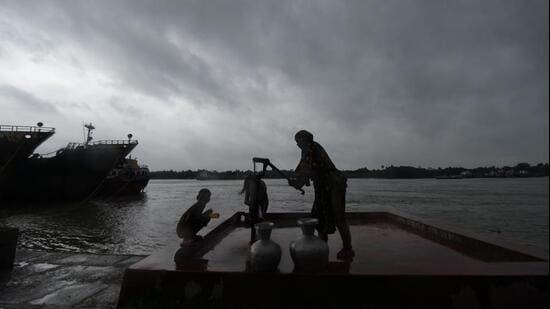
According to the complaints, residents have been facing an acute shortage of drinking water for over two weeks, with several households receiving little or no potable water during the period. Residents alleged that the area’s tube well has remained non-functional for a considerable time, while water from the ranney well (high capacity radial well linked to water bodies) was supplied only once or twice during the previous month. They also alleged that the water tankers deployed by the authorities were insufficient to meet the demand.Residents said they began facing the shortage in late-June and early-July and had raised complaints with the concerned authorities during this period.
The complainants further alleged that officials provided contradictory information regarding the disruption and that the contact details of the concerned officer displayed on the official website were incorrect, making it difficult for residents to seek assistance.
{{/usCountry}}The complainants further alleged that officials provided contradictory information regarding the disruption and that the contact details of the concerned officer displayed on the official website were incorrect, making it difficult for residents to seek assistance.
{{/usCountry}}In its order, the commission observed that if the allegations are found to be true, the matter would go beyond an administrative lapse and raise serious issues concerning the right to life, health and dignity of the affected residents. “The availability of safe and adequate drinking water is one of the basic necessities of human existence and forms an integral part of the right to life guaranteed under Article 21 of the Constitution of India,” the commission observed.
Justice Batra referred to landmark Supreme Court judgments, including A.P. Pollution Control Board vs. M.V. Nayudu (1999-2000) and Narmada Bachao Andolan vs. Union of India (2000), reiterating that access to safe drinking water is a fundamental right and that providing potable water is a constitutional obligation of the State. The commission also cited the 2010 United Nations General Assembly Resolution, which recognises access to safe and clean drinking water and sanitation as a basic human right.
The commission said that, at first glance, the complaints showed serious issues with the public water supply system, including a broken tube well, lack of backup options, poor teamwork among agencies, and not addressing residents’ repeated complaints.
The commission has directed the MCF and FMDA to submit reports on the current status of water supply in the affected area, the reasons for the disruption, the operational status of the tube well and booster station, the status of ranney well supply, the adequacy of tanker services, action taken on complaints, and corrective measures initiated to restore regular supply and prevent recurrence of such incidents.
MCF and FMDA officials said they had not yet received the notices.
Dr Puneet Arora, Assistant Registrar of the Haryana Human Rights Commission, said the authorities have been directed to submit their reports at least one week before the next hearing. The matter has been listed for hearing on September 2.
Under the Protection of Human Rights Act, 1993, the HHRC can inquire into alleged human-rights violations by public servants and has powers similar to a civil court to summon officials and seek documents. Its findings are primarily recommendatory, including on compensation and corrective action, though it can approach the High Court or Supreme Court for binding directions.
Stay updated with all the Breaking News and Latest News from Mumbai. Click here for comprehensive coverage of top Cities including Bengaluru, Delhi, Hyderabad, and more across India along with Stay informed on the latest happenings in World News.
Stay updated with all the Breaking News and Latest News from Mumbai. Click here for comprehensive coverage of top Cities including Bengaluru, Delhi, Hyderabad, and more across India along with Stay informed on the latest happenings in World News.