
 E-Paper



Wildlife dept to fill water pits for animals in the Aravallis
The wildlife department on Tuesday started refilling water pits in the forest areas of the Aravallis, to ensure that wild animals do not stray too close to human settlements while searching for water

 Prefer HTon Google


The wildlife department on Tuesday started refilling water pits in the forest areas of the Aravallis, to ensure that wild animals do not stray too close to human settlements while searching for water.
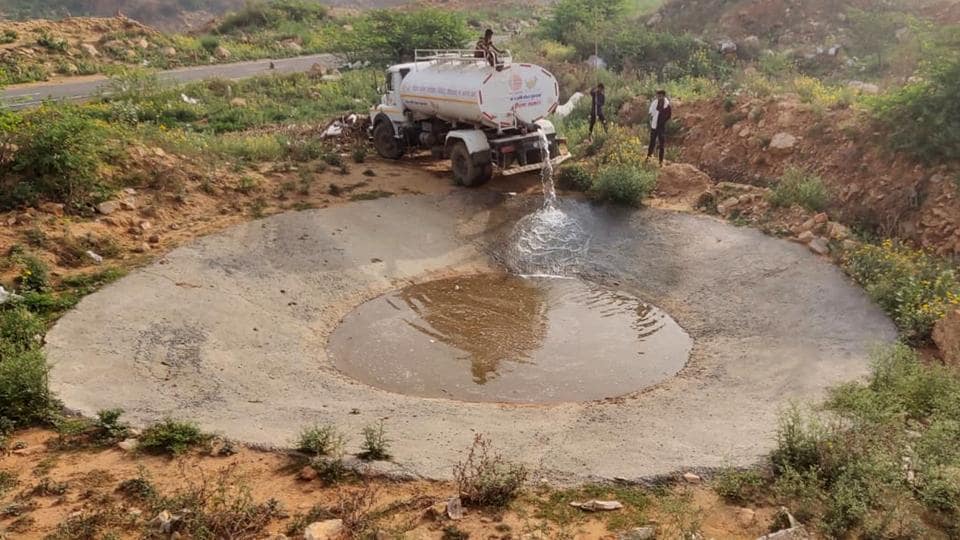
In 2019, the department had identified a total of 35 water pits for animals, officials said, adding that last year too a team had inspected the areas in Sohna, Gurugram and Nuh. A three-member team was formed on Monday to inspect the condition of water pits.
Wildlife inspector Rajesh Chahal said that wildlife in the Aravalli forest region enter human habitat looking for water. “To avoid this, we have started filling up the water pits in the Aravallis. We are refilling water twice a day,” he said, adding that water is refilled as per density of wildlife in the region.
Chahal said that they had received multiple calls regarding sighting of leopards in residential areas after which the teams were sent to check the status of water in the pits.
The animals come out of the forest area in search of water during summer, as the Aravalli hills dry out completely, said officials.
Wildlife officials said that they send at least three water tankers of capacity 12,000 litres each, four times a day. “At few pits, water needs to be refilled twice a day as the terrain makes it difficult to retain water,” said Chahal, adding that there is no water scarcity in the Aravallis.
Chahal said the department had dug up five new water pits in Rojka Gujjar, near Bandhwari on Gurugram-Faridabad road, and in the Mandawar forest areas, apart from Sohna and Nuh, to provide relief to the wildlife. “The mining pits have been developed by the forest department as a source of water for the animals. Even trails were created to enable the animals to reach the pits,” he said.
The wildlife officials said that the water pits are located at least two kilometres from each other. The aim is to create more water bodies so that the animals do not have to walk for more than a kilometre, officials added.


