The Ranthambore Tiger Reserve (RTR) in Sawai Madhopur district of Rajasthan has seen a growth of 45% in big cat population in the last eight years. However, it has caused concern over not having adequate space for the tigers in the reserve to mark their territory. A dozen of them have no territory and have been pushed out to the periphery posing a threat to the nearby human habitats, officials familiar with the matter said.
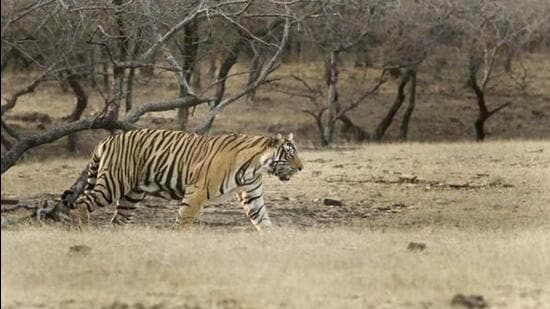
From 59 tigers in 2014, the present population of the big cats in the reserve has reached 86, according to official data. The reserve’s 86 tigers live in an area of 1,334 square kms, making it the third most congested habitats of felines in India, after Corbett National Park in Uttarakhand and Kaziranga National Park in Assam.
According to officials, of the total tigers in RTR, about a dozen adults between the age of 3-5 years have no territory and are moving in the periphery.
Ranthambore reserve field director, Sedu Ram Yadav, said dispersal of adult tigers has increased because of congestion and these dozen tigers are a concern for them as they don’t have a territory. Tigers are dominant territorial animals who normally do not allow another feline within their territory.
“Most of such big cats are in periphery area as they have been pushed out by stronger tigers. The concern is not just that such big cats are moving in periphery but if they disperse outside during monsoon it will bring them in contact with human settlements,” he said.
{{/usCountry}}“Most of such big cats are in periphery area as they have been pushed out by stronger tigers. The concern is not just that such big cats are moving in periphery but if they disperse outside during monsoon it will bring them in contact with human settlements,” he said.
{{/usCountry}}He added that directions have been given to ensure 24x7 monitoring of them and installing camera traps on their movements.
“The tiger population is rising in the Reserve and they need space. We have been suggesting relocation to other reserves,” said a senior forest official.
The number of tigers are increasing in RTR, but a number of them have also gone missing. From January 2020 to March 2021, a total of 12 tigers have gone missing, which include male tiger T-47, T-42, T-62, T-64, T-95, T-97, and tigress T-72, T-73 and her 3 cubs, and T-92.
Retired Indian Forest Service (IFS) officer Sunayan Sharma said tiger on periphery is a concern as they could be poached, human conflict cannot be ruled out, they can even drift outside and go missing like the 13 others as reported. “The only solution is creation of effective corridors and relocation to other deficit reserves on war footing,” he said.
Meanwhile, some reports also claim that the survival rate of cubs has also reduced by 30%, which in 2018 was 100%. It says that in 2018, four cubs were born and all survived, whereas in 2022, of the 11 born three died.