
 E-Paper



Clamour for revival of Kolkata’s iconic trams amid govt’s move for phase-out
Tram lovers allege that systematic efforts have been made over the past three decades to phase out trams from the city and sell the properties worth a few thousand crores of rupees

 Prefer HTon Google


The West Bengal government is planning to run Kolkata’s iconic trams only on one line from 2024 and that also for recreational and tourism purposes, officials said- a move that has triggered criticisms from the city’s tram lovers and transport experts. The critics have alleged that systematic and consistent efforts have been made over the past three decades to phase out trams from the city and sell the properties worth a few thousand crores of rupees.
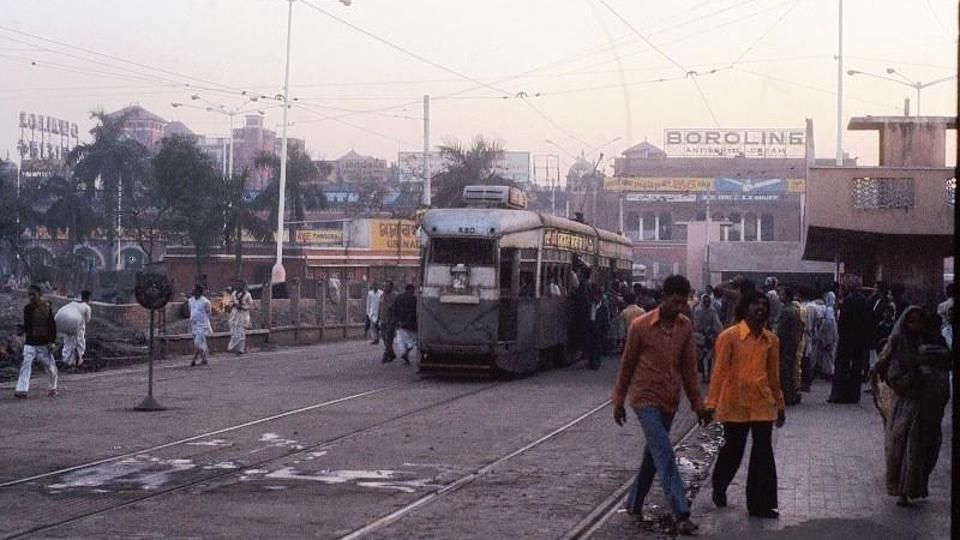
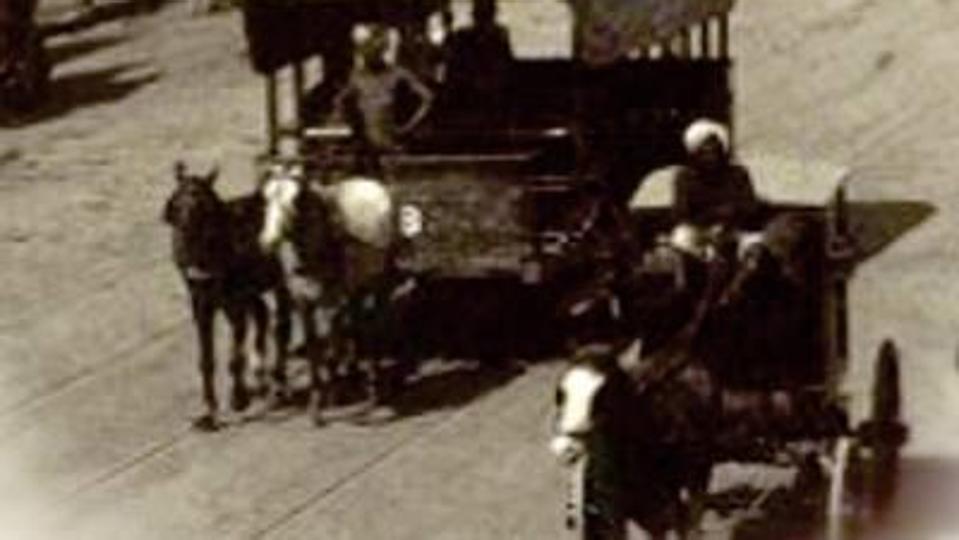
After an experimental start on February 24, 1873 when the first horse-drawn tram car was introduced between Sealdah and Armenian Ghat in north Kolkata, trams were formally introduced in Kolkata in 1880. The Calcutta Tramways Company was formed and registered in London in December 1880. Since 1902, electric tram cars have been operating in Kolkata.
“From around a total track length of 70.74 km in 1969 when the Calcutta Tramways Company was at its peak, we now have trams running only three routes – Gariahat to Esplanade, Tollygunge to Ballygunge and Esplanade to Shyambazar,” said an officer of the West Bengal Transport Corporation (WBTC), which now runs the trams.
Speaking at a public meeting in 1992, the then transport minister Shyamal Chakraborty had said that trams had become “obsolete and they would die a natural death”.
Data available with the WBTC shows that even a decade ago when the Mamata Banerjee-administration came to power in 2011, there were at least 37 tram routes with a total track length of more than 60km.
The first tram services to be shut down was the Howrah section. It was in the year 1970-71. Since then, one after another tram routes have been closed. Now, the trams operate only on three routes which have a total length of around 8 km. Official said that it was not economically feasible to run the trams anymore and therefore, plans are afoot to phase out transport use of trams.
“Trams were once the main modes of transport in Kolkata. At a time when trams are being revived in many countries such as Lisbon, Dublin and Berlin, tram lines in Kolkata were being shut down with one or the other excuses. All kinds of allegations such as they were triggering congestion, operational constraints and bikers were meeting with accidents on tram tracks were given to make it a villain. Properties of the tram company were sold off or leased out,” said Debasish Bhattacharya, president of the Calcutta Tram Users Association, a city-based NGO which has been advocating for upliftment of trams over the past seven years.

They counter with umpteen reasons as to why trams should be revived – higher passenger capacity than buses, sturdier than buses and hence greater life-expectancy, safe mode of transport as they run on specific tracks and environment-friendly among others.
“Now the government wants to shut down even the three existing routes and revive the Esplanade-Kidderpore “heritage” tram route. This came up in a meeting held earlier this month which was chaired by the city’s mayor and attended by the state transport minister, transport secretary and police commissioner among others,” said an official.
HT has accessed a report prepared by the Kolkata Traffic Police which was sent to the secretary of the state transport department earlier this year.
“However, the one (route) between Kidderpore and Esplanade via Maidan may be preserved as a heritage track since its existence does not interfere with the normal traffic and jeopardise road safety. In addition, tram track from Esplanade to tram depot located at Nonapukur may be kept for tram maintenance and survey purpose,” the report said.
An official of the WBTC, however, said that efforts were on over the past three to four years to reintroduce trams in a different avatar rather than being just another mode of transport along with buses, taxis and metro. Six such trams with festive themes have been launched.
“Trams are now being placed as a desirable environment-friendly heritage mode of transport. In 2020 the world’s first tram library was launched in Kolkata. That changed the way people looked at the trams. Later an art gallery was launched on a tram where artists can exhibit their paintings. We had decorated a tram with jute handicrafts made by inmates of two correctional homes. A children library on tram was also launched. Now trams symbolise some sort of entertainment and festivity. In October 2023, we launched a puja pandal-themed tram,” said the IAS officer.
A tram museum has already been set up at Gariahat in south Kolkata and earlier this year the 150th birthday of trams in Kolkata was celebrated with much fanfare. Tram lovers from Germany and Australia had also come to celebrate the occasion.
But tram enthusiasts see these as just eyewash by the authorities and have moved the Calcutta high court in 2022. A second PIL was filed in 2023. A division bench of the chief justice of Calcutta high court while hearing the petitions set up an 11-member committee headed by the chairman of the WBTC and having tram lovers as members to preserve the cultural heritage of Kolkata.
“Several private individuals will be willing to participate in the exercise that may be undertaken by the State of West Bengal for restoration of the tram services provided a proper module is created as is being done in several government projects with PPP model. This aspect can also be considered by the Committee and appropriate recommendations can be made. The first aspect the Committee needs to be considered is to modernise the tram cars and make them appealing providing better seats, lighting facility etc. which will encourage not only regular office goers for using the tram services but it will serve as an entertainment as well,” the Calcutta high court said in a recent hearing.
A team of experts from IIT Kharagpur, which has been studying tram routes in Kolkata to save the city’s icon from trundling towards its death bed feel that trams if revived could be Kolkata’s reply to rising pollution levels and it can even help reduce congestion.
“For any mode of transport - be it the Metrorail, buses, trams or app cabs - to become successful, it needs to have sound service characteristics – network, frequency, availability, infrastructure and spread of operation among others. But unfortunately, neither the past government nor the present government has given Kolkata’s trams any priority. As a result, it never underwent any upliftment. An efficient tram service could have been Kolkata’s reply to rising pollution levels and traffic snarls,” said Bhargab Maitra, a professor of civil engineering who specialises in the field of transportation planning and public transportation system.
“Several European and Asian countries have revived trams. What worked in other countries may not work here. But we can develop our own model. It could be a PPP model. We may invite private partners to run trams along. If private buses and government buses can run government roads why not trams?” he said.
The Calcutta high court, which is presently hearing two PILs on trams, has also expressed hope that the court-mandated committee would come up with some solution in January when the next hearing is scheduled, to revive the city’s heritage.


