LUCKNOW Food items may look like paneer, taste like khoya and even resemble ghee — but if these are made largely from non-dairy ingredients and sold as conventional milk products, it could now land manufacturers, suppliers and retailers in serious trouble in Uttar Pradesh.
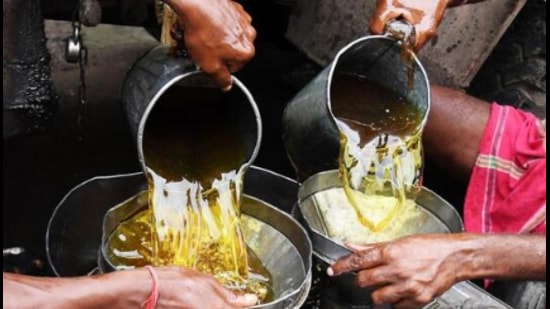
In one of the state’s biggest crackdowns on dairy-product quality, more than 22,000 quintals of analogue paneer, khoya and other milk-based products have been seized or destroyed in over 100 enforcement operations during the past six months, said officials.
The drive has acquired greater significance ahead of the festive season, when demand for paneer, khoya, chhena, cream and ghee traditionally surges.
The state government has now specifically prohibited the manufacture, storage and sale of dairy analogue products (imitation foods) made using non-milk ingredients. The order was issued on August 15 under the Food Safety and Standards Act, 2006.
The scale of the ongoing operation was evident on August 14, when the Food Safety and Drug Administration (FSDA) deployed 24 special enforcement teams for surprise inspections at dairy and dairy product manufacturing units in Ghaziabad, Mathura and Saharanpur. On Monday too, there was action in Bareli, Deoria and Shahjahanpur.
The teams took action against 25 manufacturing units, while three other units were found non-operational.
{{/usCountry}}The teams took action against 25 manufacturing units, while three other units were found non-operational.
{{/usCountry}}Officials destroyed 7,686 kg of food material on the spot, valued at nearly ₹10 lakh, after finding it allegedly unfit for consumption or manufactured/stored in unsafe and unhygienic conditions.
Another 2,131 kg of food material and suspected adulterants, worth around ₹4.75 lakh, was seized.
In all, 9,817 kg of food material and suspected adulterants were seized or destroyed during the single-day operation.
The government order does not ban genuine paneer, khoya, ghee, chhena or cream. FSDA commissioner Roshan Jacob clarified that the action is directed specifically at dairy analogues —products designed to imitate conventional dairy products but made substantially from non-dairy ingredients.
“Analogue paneer/khoya can involve chemicals such as butyric acid, formalin and hydrogen peroxide to convert soya into paneer. This is injurious to health. Besides, analogue paneer has no prescribed specifications,” said Jacob.
She added that manufacturers using harmful chemicals or substances could face FIRs under the Bharatiya Nyaya Sanhita (BNS), besides action under food safety laws.
Adulteration generally involves adding an extraneous substance to an otherwise genuine food product. A dairy analogue, on the other hand, is essentially manufactured as a substitute, with major milk components replaced by non-dairy ingredients.
The crackdown comes alongside a new FSDA standard operating procedure issued on August 14, which requires authorities to move quickly once an unsafe food report is received.
Officials must inspect the establishment from where the sample originated, verify stocks, identify the affected batch and seize available material. If the manufacturing unit is located elsewhere, it too must be inspected.
Importantly, the investigation will not stop with the failed sample. “Officials have been directed to collect samples from other batches of the same product, besides taking samples of other food products and adulterants being manufactured or handled at the premises,” Jacob said. This will establish whether the violation is limited to one batch or indicates a wider problem.
Unsafe food to be traced across dists
If an unsafe batch has already reached more than one district, the information must be sent to FSDA headquarters by the next working day. Headquarters will have two working days to issue an order restricting its sale across the state.
Manufacturers will also be required to initiate a recall, including stocks already moving through different levels of the supply chain and submit details of the action taken. The sale restriction order will also be uploaded on the department’s website.
For repeat offenders, the SOP provides for stronger action. If a repeat sample from a manufacturing unit is again found unsafe, the matter can be referred to headquarters for an emergency prohibition order under Section 34 of the Food Safety and Standards Act, 2006, potentially stopping the unit’s operations.