The Allahabad high court on Wednesday directed the State Election Commission (SEC) to hold panchayati raj elections in Uttar Pradesh within three months.
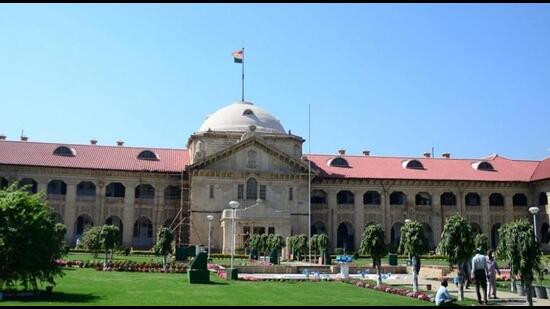
The order was passed by a bench comprising Justices Ajit Kumar and Garima Prashad while allowing the plea by Dashrath Yadav and others.
The petitioner had moved the court seeking direction to the poll body to place on record a detailed time-bound schedule for completion of the entire panchayat election process well before the expiry of the district panchayat tenure.
The relief for quashing appointments of outgoing gram pradhans as administrators of respective gram panchayats was rejected
The bench observed, “The State Government and the State Election Commission shall proceed forthwith with the preparatory steps, issue the election programme, and complete the elections to the village panchayats in Uttar Pradesh within three months from the date of this judgement. The schedule shall provide for the steps necessary to constitute the elected bodies within the above-prescribed period.”
The court also said, “The State Government and the State Election Commission shall conduct the entire elections under the existing reservation arrangement, including 27 per cent reservation for Other Backward Classes.”
“The elections shall not be conducted by treating the OBC-reserved seats as open seats merely because the Dedicated Commission’s inquiry remains pending. Reservations for Scheduled Castes, Scheduled Tribes and women shall be maintained in accordance with the applicable laws, subject to the aggregate ceiling governing vertical reservation,” the court said.
{{/usCountry}}“The elections shall not be conducted by treating the OBC-reserved seats as open seats merely because the Dedicated Commission’s inquiry remains pending. Reservations for Scheduled Castes, Scheduled Tribes and women shall be maintained in accordance with the applicable laws, subject to the aggregate ceiling governing vertical reservation,” the court said.
{{/usCountry}}“The State Government shall provide the staff, funds, security and other logistical assistance as may be required by the State Election Commission to hold elections within the time bound period above. The time allowed for completion of the elections does not extend an administrator’s tenure beyond the period permitted by law. Any intervening administrative arrangement must remain within the applicable statutory limits,” added the court.
The court further said, “The dedicated Commission shall continue with its investigation and inquiry considering the observations contained in the body of the judgment for collective empirical data qua OBC and preparation of report on that basis.
“It shall complete its process within the period already prescribed within such extended period as be provided by the State Government. The State shall thereafter examine the recommendations and undertake the statutory steps and amendments, where required, for their lawful implementation.” “The relief for quashing the Government order dated May 25, 2026 invoking power under Section 12(3-A) for appointment of administrator and so also relief for quashing of the appointments of outgoing Pradhans as administrators of respective Gram Panchayats are hereby rejected. The relief for declaration with regard to Sections 12(3-A) and 12-BB(3) as ultra vires Article 243-E is also hereby rejected and hence the Writ petitions in that regard stand rejected,” the court said.
Earlier, the state government counsel had submitted that the state government had appointed an OBC Commission for determining the reservation aspects related to the Other Backward Classes category.
The state government’s plea was that the election of gram pradhans and members of gram panchayats cannot be held until the said exercise is completed, as a decision on the reservations would be part of the said elections. Till date, the OBC Commission has not submitted its report.
After the Allahabad high court order, the state machinery faces a challenge on the implementation front of conducting the rural polls when the administrative apparatus is gearing up for the Uttar Pradesh assembly elections due early next year.
Uttar Pradesh currently has 125.85 million (1,25,851,570) panchayat voters as compared to 122.95 million (1,22,950,052) voters in 2021.
Panchayatiraj minister Om Prakash Rajbhar, who was in Ambedkarnagar, said, “The court’s decision is welcome. Now, the documents are being called for and we will read and examine them.’’
“We will first go through the order from the court,” said Ravindra, principal secretary, panchayati raj department.
Conducting the election in three months will require selection, training, deployment and movement of ground staff and security. The same machinery on the ground takes care of assembly and panchayat polls. Earlier, there was speculation that the authorities planned to hold the rural polls immediately after the assembly polls.
Panchayat elections would need to be completed for various posts, including 57,694 gram pradhans, 75 zila panchayat chairpersons, 826 block pramukhs and others by January, which is three months from the date of Wednesday’s order.
By then, political parties’ preparations will be in full swing for the state’s 19th assembly election.
Besides, the Registrar General of India has announced that population enumeration will be held in Uttar Pradesh along with three other poll-bound states from December 1, 2026 to January 4, 2027.
In 2022, the Election Commission had announced the code of conduct for the seven-phase assembly polls on January 8, 2022. The results were declared on March 11, 2022.
Over two lakh personnel were deployed for the last panchayat elections in 2021. The exercise was conducted in four phases starting with nominations on April 3 and 4.
The State Election Commission, which is responsible for conducting panchayat elections in the state, has the voter list ready for the polling process.
In May, the Uttar Pradesh cabinet approved setting up of the UP State Local Rural Bodies Dedicated Backward Classes Commission to reserve seats for the Other Backward Classes (OBCs) in the three-tier panchayat raj institutions. The report is likely to be submitted by the third week of November, according to people familiar with the matter.
In a statement, Uttar Pradesh Congress president Aradhana Mishra demanded the elections be held in three-months.
“As BJP feared that public discontent in rural areas could manifest against the party in the polls, potentially impacting the upcoming assembly elections, it was delaying the panchayat elections. Coupled with the decision to appoint outgoing pradhans as administrators, (this) raises serious questions about the BJP government’s functioning,” she said.
BJP chief spokesperson Dinesh Pratap Singh said the state government was waiting for the high court’s order. “Only after going through the court’s order, legal advice on the issue could be obtained. Thereafter, the government will decide accordingly,” Singh said.
Reacting to the court’s directive, Samajwadi Party spokesperson Abbas Haider said, “The order raises serious questions about the state government’s handling of the democratic process.”
“Why were these elections not conducted on time? Why did the government allow a situation to arise in which the high court had to intervene and prescribe a deadline?” Haider asked.
(With PTI inputs)