The Uttar Pradesh government has started advising farmers to take up paddy cultivation this Kharif season only if they have assured irrigation facilities, while encouraging others to consider less water-intensive alternatives such as pulses and oilseeds in view of concerns over a potentially weak monsoon.
The advisory comes against the backdrop of forecasts indicating below-normal rainfall this season due to the possible impact of El Niño conditions. According to the agriculture department, the state is likely to receive nearly 90% of its normal rainfall this year.
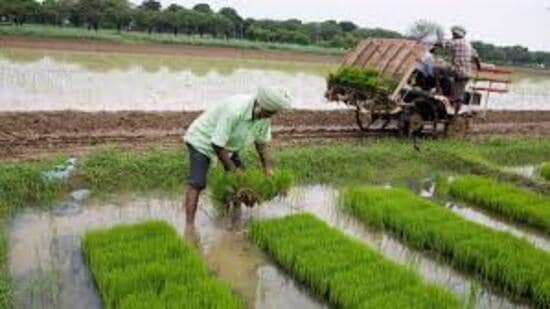
Paddy remains the principal Kharif crop in Uttar Pradesh, accounting for more than 60% of the total cultivable area in the state. However, it is also among the most water-intensive crops, requiring substantial water both at the time of transplantation and for multiple irrigation cycles during its growth period.
Director (agriculture) Pankaj Tripathi said that a 10% rainfall deficit by itself might not pose a major challenge if precipitation was evenly distributed through the season.
“Even if rainfall is at 90% of normal, it may not create serious problems if the rains occur at regular intervals,” Tripathi said. “The concern arises if the onset of monsoon is significantly delayed or if there are prolonged dry spells.”
He said such situations could create difficulties for farmers and increase dependence on irrigation sources. “In view of this possibility, we have started advising farmers through Kisan seminars and awareness programmes to opt for paddy cultivation only if they have assured private irrigation facilities,” Tripathi added.
{{/usCountry}}He said such situations could create difficulties for farmers and increase dependence on irrigation sources. “In view of this possibility, we have started advising farmers through Kisan seminars and awareness programmes to opt for paddy cultivation only if they have assured private irrigation facilities,” Tripathi added.
{{/usCountry}}The state agriculture department estimates that nearly 84% of farmers in Uttar Pradesh already have access to irrigation facilities, either through private tubewells, which number more than 16 lakh across the state, or through canal networks and other water sources, reducing their dependence on rainfall.
“If the dry spell is extended and temperatures remain high, farmers may be forced to run water pumps repeatedly for irrigation. In such a situation, their input costs will rise substantially, which could make cultivation economically unviable,” he pointed out.
Agriculture experts say crops such as pulses and oilseeds, which require comparatively less water, could provide a safer option for farmers who do not have reliable irrigation systems.
The state government has intensified outreach efforts through farmer awareness programmes to ensure cultivators are better prepared for weather uncertainties and can make informed decisions before the Kharif sowing season begins.
With weather patterns becoming increasingly unpredictable, officials believe that crop planning based on local water availability and irrigation capacity could help farmers reduce risks and avoid higher production costs.
Also, at a meeting of the Crop Weather Watch Group organised by the Uttar Pradesh Council of Agricultural Research (UPCAR) in Alambagh on Friday, agricultural scientists advised farmers to delay paddy nursery sowing by at least a week in view of the forecast of severe heatwave conditions across the state. However, the present period was considered suitable for Sanda paddy nursery.
Experts recommended Jalnidhi and Swarna Sub-1 varieties for waterlogged areas, and CSR-43 and Narendra Usar Dhan-2008 for saline or alkaline soils. Farmers were also advised to maintain adequate soil moisture and avoid farm operations during peak daytime heat.