Despite recording no significant rainfall since September 27, large swathes of Lucknow remain severely waterlogged as a surging Gomti river pushed deeper into the city’s urban core on Wednesday. Driven by massive upstream discharge, floodwaters reached key arteries, including Shaheed Path, marking a geographical shift from the city’s northern fringes to its prominent corridors.
The flooding, which initially inundated northern boundary villages like Itaunja and Bakshi Ka Talab (BKT) over a week ago, has left Faizullaganj submerged.
Also Read I More of Lucknow comes under Gomti’s rising waters
Swollen Gomti disrupts civic life
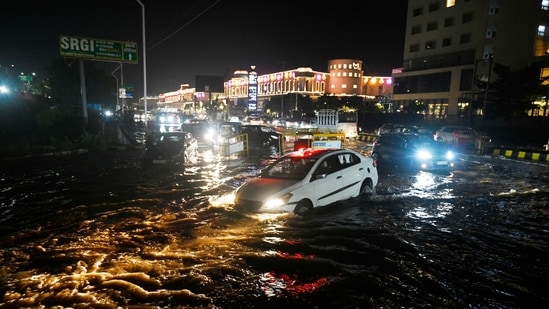
The crisis escalated on Wednesday when floodwaters breached Gomti Nagar Extension, disrupting normal movement along Shaheed Path. Waterlogging was reported near Phoenix Palassio mall, Ekana Stadium area and UP State Disaster Management Authority (UP SDMA) building in Sector 7.
The inundation prompted police to deploy PAC teams to manage the deteriorating traffic situation. Commuters were forced to negotiate heavily submerged stretches, particularly along the service lane opposite the Signature Building and the road leading from the Ekana service road towards IIIT in Chak Gajaria.
The rising river also severed access to vital public and religious spaces. Major cremation grounds, including Baikunth Dham and Gulalaghat, were inundated alongside shrines such as the Chandrika Devi Temple in BKT. The water levels left grieving families scrambling for dry space to perform last rites of their loved ones.
Water level increases by up to 10cm
{{/usCountry}}The rising river also severed access to vital public and religious spaces. Major cremation grounds, including Baikunth Dham and Gulalaghat, were inundated alongside shrines such as the Chandrika Devi Temple in BKT. The water levels left grieving families scrambling for dry space to perform last rites of their loved ones.
Water level increases by up to 10cm
{{/usCountry}}Out of all, Faizullaganj, a densely populated area, was severely affected leaving thousands of people out of their homes. Since then, the flood has spread across several parts of the state capital, including Gomti Nagar Extension, now affecting residential areas, roads and crematoriums in the central part, and has now reached one of Lucknow’s busiest and most prominent urban corridors.
During the 24 hours ending Wednesday, the Gomti continued to rise at three of the four key monitoring points in Lucknow, according to irrigation department officials.
Also Read I Floodwaters disrupt last rites, temple visits in Lucknow
The river stood at 107.24 metres at Hanuman Setu, an increase of 8 cm, while the Gomti barrage recorded 107 metres, up 10 cm. At Gaughat, the river reached 108.58 metres, increasing by 3 cm in 24 hours. Bhatpurva, however, recorded a decline of 8 cm to 113.08 metres.
Officials said the barrage level remained stable between 2pm and 6pm on Wednesday.
Levels touch close to 2008 floods
Irrigation department executive engineer (Lucknow division) Mukesh Vaish said the decline recorded at Bhatpurva could eventually bring relief downstream.
The normal Gomti level at Gaughat is around 105.70 metres. The current level has reached close to the levels recorded during the 2008 flood, when the river touched around 108 metres at Gaughat, said officials. They said backflow from a nullah worsened the situation around the Ekana Stadium service road. The LDA had temporarily closed the nullah after an earlier breach.
Also Read I Choked Gomti, lost floodplains: Lucknow waterlogging a ‘self-inflicted’ crisis, say environmentalists
According to officials, a barrel that had been closed with soil apparently allowed backflow, after which water reached the service road and adjoining areas.
They said the situation could be under control by Thursday, if the affected point is properly monitored and sealed. Otherwise, continued pressure from the swollen river could worsen the flooding.