E-Paper



Floodwaters disrupt last rites, temple visits in Lucknow
Of the 32 wooden cremation platforms available at Bhaisakund, only 11 remain accessible and unaffected by floodwater, allowing people to perform last rites of their loved ones

 Prefer HTon Google


LUCKNOW The surging waters of the Gomti have triggered a crisis along Lucknow’s riverfront, inundating major cremation grounds and religious shrines. The rising water levels have left grieving families scrambling for space to perform last rites of their loved ones and severed access to key public spaces.
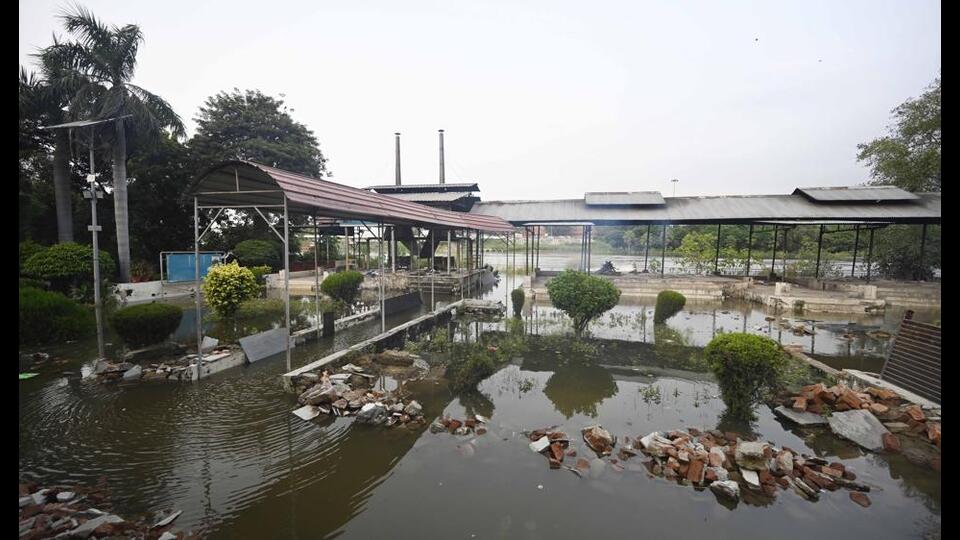
A Hindustan Times ground visit to Bhaisakund near Samta Mulak crossing, Gulalaghat and areas around the 1090 crossing on Wednesday found floodwaters entering crematoriums, public spaces and religious premises. The rising river submerged cremation platforms, cut off approach routes and forced people to shift to the few remaining usable spaces.
Of the 32 wooden cremation platforms available at Bhaisakund, only 11 remain completely accessible and unaffected by floodwater, allowing people to perform last rites of their loved ones. On the new side of Bhaisakund, 24 platforms are available, of which 13 located in the lower section are already inundated.
Floodwaters have also entered the approach to the old crematorium where eight platforms were located. Water has accumulated on the pathway at a depth of around two to three feet, making it difficult for people to reach the platforms.
With the river water cutting off access to the lower platforms, families bringing their loved ones for last rites are now relying on the remaining platforms. The limited space has also increased pressure on the crematorium as bodies arrive one after another for cremation. People expressed concern over the close placement of bodies and the difficulty of maintaining separate cremation spaces.
The situation at Gulalaghat is worse. All 30 cremation platforms are submerged by the rising Gomti. The electric crematorium has also been shut after water entered the facility. A senior Lucknow Municipal Corporation official said cremations, wherever required, are being carried out outside the affected premises.
The rising water has also affected the Chandrika Devi temple in BKT. The premises have been shut for three days after water entered the area and reached a height of around three feet on the road level.
The flooding has cut off devotees from the shrine, with access becoming difficult as water continues to occupy the premises.