Chaudhary Charan Singh International Airport (CCSIA) in Lucknow has inaugurated an 804-metre priority section of its proposed 2,864-metre parallel taxi track (PTT), which will become operational from midnight on Thursday. The first phase of the project aims to reduce runway congestion and improve aircraft movement.
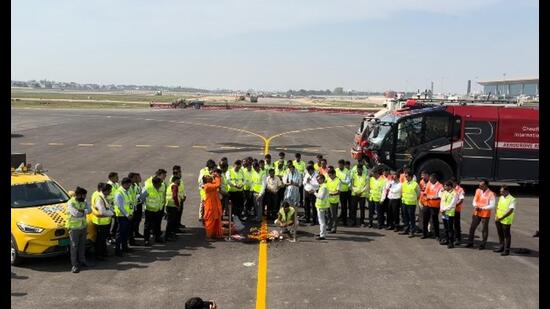
The project is being developed in coordination with the Airports Authority of India (AAI). The remaining 2,060-metre stretch is scheduled for completion by the end of March 2027.
An airport taxi track is a paved path connecting a runway with parking areas, hangars or terminals, allowing aircraft to taxi safely to and from the runway. The PTT, which runs alongside the main runway for its entire length or a substantial portion of it, is expected to reduce runway occupancy time during ground movement and help streamline aircraft arrivals and departures.
Helps during weather disruptions
The upgrade is relevant for Lucknow airport, which handles scheduled domestic and international flights, general aviation and non-scheduled operations. It also serves as a diversion airport for flights originally bound for Delhi, Varanasi and other cities when adverse weather or operational disruptions affect flight schedules.
An official of Lucknow airport said, “The infrastructure upgrade is particularly relevant for Lucknow because of the airport’s role in handling diverted flights during weather-related disruptions at other airports. When flights are diverted from their intended destinations, airport resources, including runway and taxiway capacity, come under additional pressure.”
{{/usCountry}}An official of Lucknow airport said, “The infrastructure upgrade is particularly relevant for Lucknow because of the airport’s role in handling diverted flights during weather-related disruptions at other airports. When flights are diverted from their intended destinations, airport resources, including runway and taxiway capacity, come under additional pressure.”
{{/usCountry}}Runway occupancy time is a key factor in airport operations, particularly during periods of heavy traffic. The additional route could help airport authorities manage ground traffic when several flights arrive or depart within a short period. Its impact on delays will depend on traffic levels, weather conditions, air traffic control requirements and other operational factors.
For passengers, the facility could help reduce delays arising from aircraft ground movement. However, it cannot eliminate delays caused by adverse weather, airspace restrictions, technical issues or congestion elsewhere in the aviation network.