Lucknow is generating nearly seven times more faecal sludge than its treatment infrastructure can handle. The city produces an estimated 657 kilolitres (KLD) of faecal sludge every day, largely from septic tanks in areas without sewer connections. Against this, it has treatment capacity of only 100 kiloliters per day, leaving a substantial gap in safe waste management.
Even this limited capacity is not being fully utilised. The 100-KLD faecal-sludge co-treatment facility at the 345-MLD (million litres per day) Bharwara sewage treatment plant (STP) has struggled to receive adequate sludge, with tankers often unloading at nearby sewage-pumping stations instead of travelling to the designated facility.
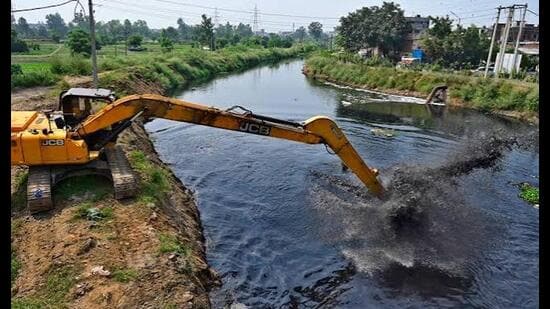
This raises concerns over faecal sludge being discharged into nullahs that eventually flow into rivers.
Lucknow currently has no standalone faecal sludge treatment plant (FSTP). The Bharwara facility is a co-treatment unit within an existing STP. Sanctioned under the AMRUT programme at around ₹3.15 crore, it was completed in February 2022.
According to a Centre for Science and Environment (CSE) assessment, around 280 KLD of sludge was being collected against estimated generation of 657 KLD. With only 100 KLD treatment capacity, the existing facility can theoretically handle about 15% of daily generation.
Former additional municipal commissioner and urban development expert PK Srivastava said the capacity deficit was only part of the problem. “The CSE assessment found around 50 private desludging operators registered with the Jal Kal department/Lucknow Municipal Corporation, with many taking collected sludge to the nearest sewage-pumping station instead of Bharwara,” he said.
{{/usCountry}}Former additional municipal commissioner and urban development expert PK Srivastava said the capacity deficit was only part of the problem. “The CSE assessment found around 50 private desludging operators registered with the Jal Kal department/Lucknow Municipal Corporation, with many taking collected sludge to the nearest sewage-pumping station instead of Bharwara,” he said.
{{/usCountry}}The practice reduces travel distance, fuel consumption and operating costs for tanker operators.
More recent CSE monitoring continues to list co-treatment capacity at 100 KLD, with utilisation at around 40%.
Sewage is a separate issue
Lucknow generates around 730 MLD of sewage. A 2025 assessment reported that about 600 MLD was being treated, leaving a gap of around 130 MLD. These figures relate to sewage, not faecal sludge from septic tanks.
Mayor Sushma Kharakwal said the city could develop decentralised FSTPs and co-treatment facilities, particularly in areas outside the sewerage network. She also called for tracking tanker operators and ensuring discharge only at authorised facilities. “I will direct the municipal commissioner to develop FSTPs for safety of environment,” she said.
Municipal commissioner Gaurav Kumar said he had sought a complete report on areas without sewer lines and that sewer treatment would be more regulated.