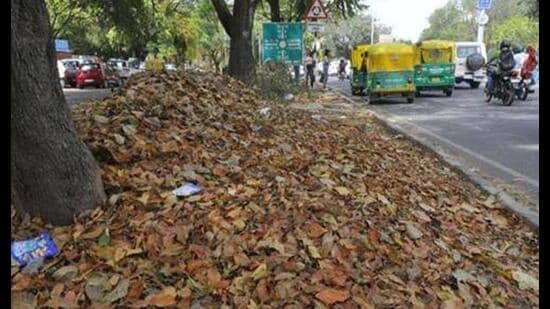
Every day, Lucknow generates enough leaves, tree branches and other horticulture waste to fill dozens of truckloads, but much of it currently ends up at dumping sites or open spaces. Now, the Lucknow Municipal Corporation (LMC) plans to turn this green waste into usable products by setting up the city’s first horticulture waste processing plant.
The civic body has floated an Expression of Interest (EOI) to select an agency for the project, with seven agencies so far showing interest, Additional municipal commissioner Arvind Kumar Rao said. The proposed plant will have a capacity to process 150-300 tonnes of horticulture waste daily, against the city’s current generation of around 100-115 tonnes.
At present, two private agencies collect tree cuttings and other green waste for the LMC. But without a dedicated processing facility, the collected material is often transported to designated dumping locations or open spaces. The wood portion of tree cuttings is also used as firewood for bonfires at shelter homes and other locations during winter.
Leaves, smaller branches and other biodegradable material, however, continue to pile up at such locations, adding to the city’s cleanliness burden.
“Lucknow currently does not have a horticulture waste processing plant. We are taking steps to establish one so that the waste generated every day can be scientifically processed instead of being dumped at different locations,” Rao said.
{{/usCountry}}“Lucknow currently does not have a horticulture waste processing plant. We are taking steps to establish one so that the waste generated every day can be scientifically processed instead of being dumped at different locations,” Rao said.
{{/usCountry}}Once operational, the facility is expected to convert horticulture waste into fuel and material that can be used in industrial furnaces. Officials said the processed material could also be used to make bricks and other products.
The LMC plans to provide around three to four acres of land for the facility. It is likely to be developed under the public-private partnership (PPP) model, with a private agency handling the processing operations.
With a proposed capacity of up to 300 tonnes a day, the plant will have room to handle seasonal spikes in tree and garden waste and future growth in the city’s green-waste generation.