E-Paper



Lucknow’s Residency gets major facelift after year-long drive
ASI Lucknow restores over 200 graves in Lucknow's Residency Complex, including those of British officials from the 1857 siege. The restoration also covers other structures in the area.

 Prefer HTon Google


Over 200 graves in Lucknow’s iconic Residency, also touted as British Residency or Residency Complex, have undergone a massive restoration, undertaken by the Archaeological Survey of India’s (ASI) Lucknow circle.
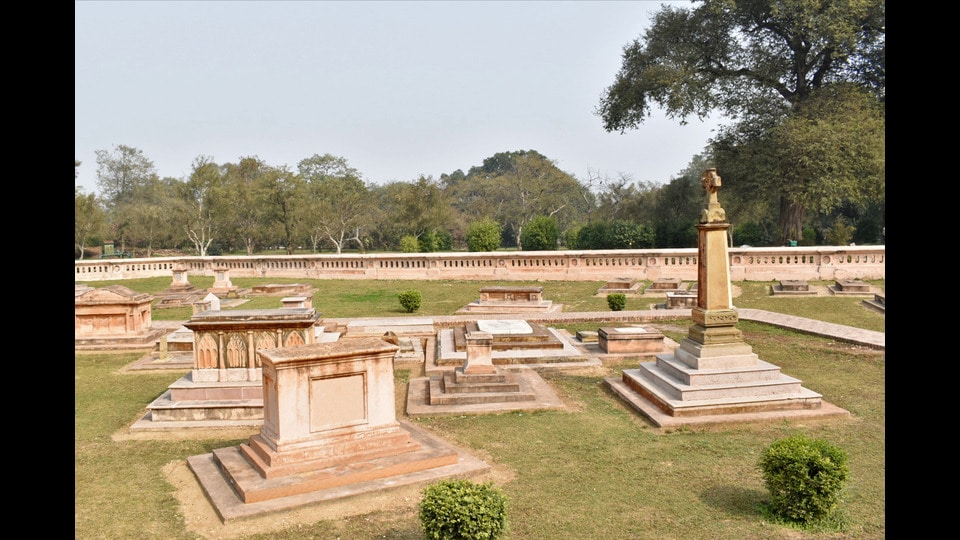
The long-ignored graves of British officials killed during the 1857 siege, were falling apart, but a year after the ASI started the restoration work, the work in the cemetery has been completed, said officials, adding that other parts of the structure have also got a facelift.
“We have restored and preserved the graves in the cemetery that were in a shambles,” said Aftab Hussain, superintendent archaeologist, ASI, Lucknow Circle.
“Cenotaphic structures of British cemeteries in the Residency were facing problems like dismantled stone members due to environmental reasons and roots of self-growing plants. After uprooting the plants, resetting of stone members was done and pathways are provided for easy access in the area,” he added.
“There are more than 100 graves in the cemetery that were in bad shape and in need of immediate repair,” an official engaged in the restoration exercise said. Most graves needed plastering and cleaning, and in some graves, stone replacement was required, the official said.
The cemetery, lying around the church (St Mary’s Church), was first used as a burial ground during the siege. Despite being unhygienic, the sheer number of casualties required the dead to be buried in the residential area. It also contains the graves of Henry Lawrence, a British military officer and other British military officers of East India Company who served during an 1857 siege, including and Major John Sherbrooke Banks and General James George Smith Neill.
Long restoration drive
Not only the cemetery, but all the 49 acres of the area have seen some kind of conservation in one of the biggest restoration drives in its history.
“While the work of a few structures was undertaken last year, such as the Treasury building, Dr Joseph Fayrer’s (a surgeon in the Residency) house, Sikh square in the Residency building complex and conservation and preservation work of the German post, Banquet hall and La Martiniere Post and various other structures are undergoing during this financial year, Aftab said.
“The restoration is being done in a way that the originality of the ruins remains intact,’’ the official said, adding that the original materials of the monument like bricks, and lime mortar were used, and these were manufactured using the same type of material and methods tested over the years. “
The materials used in preparing lime mortar are lime, surkhi, pulses, wood apples (Bel), jaggery, eggs etc,” said Aftab.
History
According to the ASI, the Residency complex, a centrally protected monument, was set up on the bank of the Gomti in 1775 by Nawab Asaf-ud-daula (1775-1795 CE) for the British resident, after the shifting of the capital of Awadh from Faizabad (now Ayodhya) to Lucknow. It came under the protection of the ASI in 1920.
The ruins of the Residency are reminiscent of the historic siege of the British stronghold by the Awadh forces and freedom fighters in 1857. The Indian soldiers started shelling the British forces on July 1, 1857, in the residency where Henry Montgomery Lawrence, the British Resident, was injured in the firing on July 2 and died on July 4, 1857, at Dr Fayerer’s House. The siege lasted for five months and eventually, the British had to withdraw from the Residency and many Europeans were killed and buried near the St Mary’s Church within the complex.