
 E-Paper



Supreme Court orders states to shield Chambal forest staff from prosecution
The court said it was not fully satisfied with the overall progress in tackling organised illegal sand mining, despite some improvements

 Prefer HTon Google


The Supreme Court has directed the governments of Rajasthan, Madhya Pradesh and Uttar Pradesh to issue notifications within two weeks granting legal protection to forest officers and forest guards working in the National Chambal Gharial Sanctuary, holding that their role in combating illegal sand mining, poaching and other unlawful activities is intrinsically connected with the maintenance of public order under the Bharatiya Nagarik Suraksha Sanhita (BNSS), 2023.
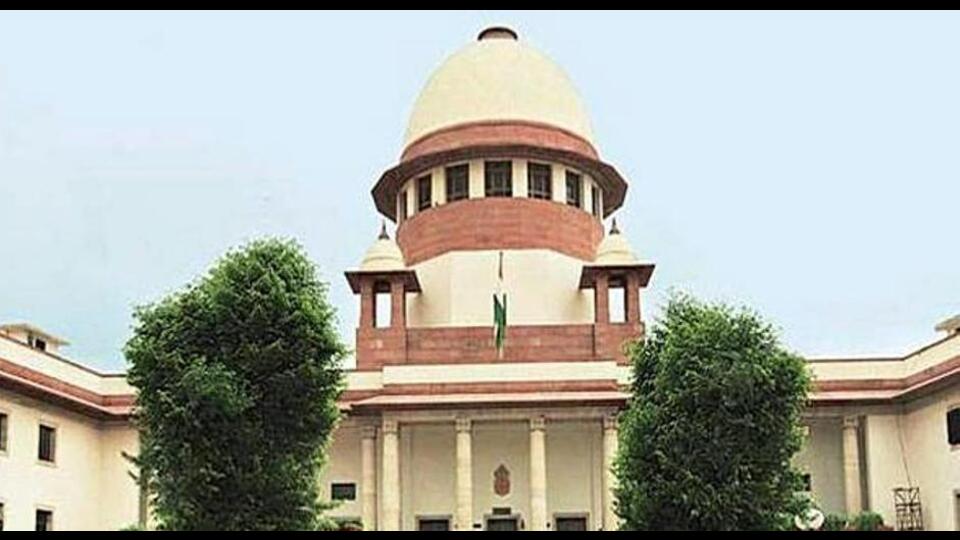
A bench of justices Vikram Nath and Sandeep Mehta said there was “no justification for any further delay” in issuing notifications under Section 218(3) of the BNSS after noting that frontline forest personnel continued to feel “handicapped and inhibited” in performing their duties due to fears of police or departmental action even when acting bona fide.
The provision requires prior sanction before courts can take cognisance of offences allegedly committed by public servants while acting or purporting to act in the discharge of duties connected with maintenance of public order.
“The duties discharged by forest officers and forest guards within the National Chambal Gharial Sanctuary are not confined merely to protection of forests and wildlife,” noted the bench, adding that they are entrusted with the “highly dangerous task” of protecting ecologically fragile habitats from organised illegal sand mining and poaching, activities that also threaten public infrastructure and law and order. It held that these functions are “intrinsically connected with the maintenance of public order” within the meaning of Section 218(3) of the BNSS.
The order, released on Monday, came in the court’s suo motu proceedings on rampant illegal sand mining in and around the National Chambal Gharial Sanctuary spanning the three states. The court was considering compliance reports filed pursuant to its earlier directions aimed at curbing illegal mining, strengthening enforcement and protecting the sanctuary’s fragile river ecosystem and endangered gharials.
Reviewing the latest compliance reports, the bench said it was not fully satisfied with the overall progress in tackling organised illegal sand mining, despite some improvements in surveillance and enforcement. It noted that none of the three states had seriously considered invoking preventive detention laws against “kingpins and habitual offenders” engaged in organised illegal sand mining despite an earlier direction. The court reiterated that the states should examine such measures, observing that illegal mining not only destroys wildlife habitats but also poses a grave threat to ecology and human lives.
To tighten enforcement, the bench directed the chief secretaries of the three states to personally oversee implementation of its orders and ensure coordination among all departments. It designated magistrates in districts falling within the sanctuary as nodal officers responsible for preventing illegal sand mining and coordinating action by the forest, police, mining and revenue departments.
The court further held superintendents of police responsible for dismantling organised illegal mining syndicates, identifying financiers and transporters, and ensuring registration of criminal cases under the Bharatiya Nyaya Sanhita, the Wildlife (Protection) Act, the Indian Forest Act, the Mines and Minerals (Development and Regulation) Act and the Prevention of Damage to Public Property Act, wherever applicable. It warned that failure to prevent recurring illegal mining at identified hotspots could invite administrative and departmental action against officers concerned.
Among its other directions, the bench ordered fortnightly joint inspections by revenue and forest officials, surprise joint enforcement drives at least twice every week in vulnerable stretches, and monthly review meetings by the chief secretaries to monitor seizures, prosecutions and conviction rates. It also suggested modifying Annual Performance Appraisal Reports (APARs) of district magistrates, police chiefs, forest, mining and revenue officers to include their performance in preventing illegal mining and complying with court directions.
The court directed states to consider referring large organised mining syndicates to the Enforcement Directorate, Income Tax Department and Financial Intelligence Unit to investigate the money trail, besides considering preventive detention laws in appropriate cases. It also ordered the appointment of special public prosecutors, directed that investigations be completed expeditiously with chargesheets ordinarily filed within 60 days, and asked the states to recover environmental compensation and confiscate vehicles and machinery repeatedly used in illegal mining.
To improve public participation, the bench ordered creation of a QR code-based digital grievance platform enabling citizens to confidentially report illegal mining, poaching and encroachments by uploading photographs, videos and geotagged information. It also directed the establishment of a publicly accessible online dashboard displaying data on illegal mining cases, seizures, prosecutions, convictions, environmental compensation recovered and disciplinary action taken against erring officials.
The court asked Rajasthan and Uttar Pradesh to examine adopting Madhya Pradesh’s joint standard operating procedure for coordinated enforcement by forest, police, mining, transport and revenue departments. It directed the states to consider notifying revenue lands within the sanctuary as protected forests, formulate dedicated welfare schemes for frontline forest personnel, establish M-Sand manufacturing units and licensed sand storage depots where required, and strengthen surveillance infrastructure.
The bench directed the National Highways Authority of India to place before it a definitive timeline for installation and operationalisation of surveillance infrastructure, including CCTV cameras, AI-enabled PTZ cameras, thermal imaging systems, surveillance towers and other protective measures around the Morena-Dholpur bridge over the Chambal River.
The matter has been listed for further hearing on August 11.



