
 E-Paper



Over 40% academic posts vacant in Punjab’s teacher training institutes
Centre links release of funds for upgrade to filling of posts with qualified teacher educators in PunjabMore than 40% of academic posts are lying vacant in government-run teacher education institutions — the State Council of Education Research and Training (SCERT) and the District Institutes of Education and Training (DIETs) — in Punjab

 Prefer HTon Google


Centre links release of funds for upgrade to filling of posts with qualified teacher educators in Punjab
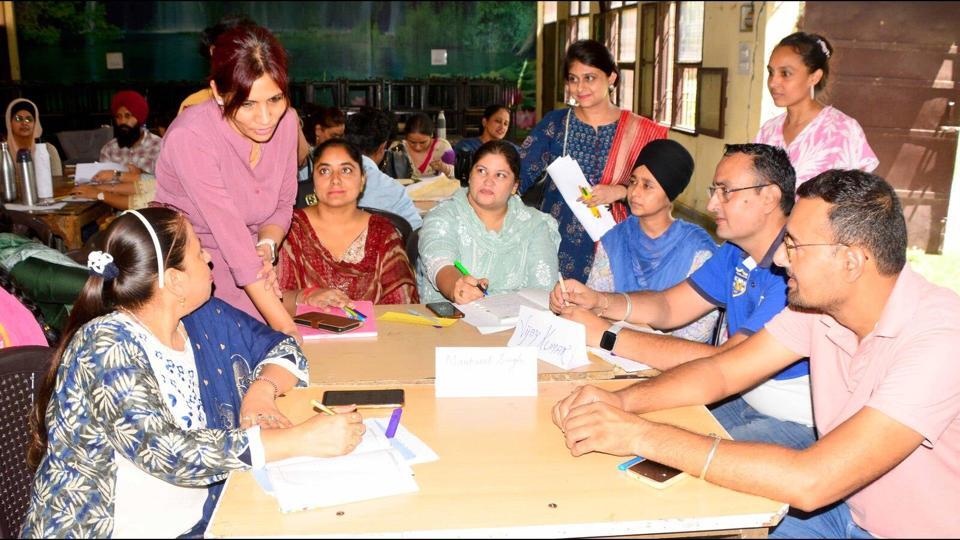
More than 40% of academic posts are lying vacant in government-run teacher education institutions — the State Council of Education Research and Training (SCERT) and the District Institutes of Education and Training (DIETs) — in Punjab.
The shortage of academic staff stands at 31% in the SCERT, while 45% of sanctioned posts are lying vacant in DIETs across the state, according to a review of the staffing position conducted by the Union ministry of education (MoE) before approving the state’s annual work plan and budget for the 2026-27 financial year under the centrally-sponsored Samagra Shiksha scheme. These teacher education institutes have a combined sanctioned academic staff strength of 360.
The education ministry expressed serious concern over the large number of vacant academic posts during the project approval board meeting held last month and asked the state officials to take action. “Considering the significance of Centres of Excellence in improving quality and capacity building of teachers, the state was advised to address the issue of the vacant positions in the SCERT and DIETs on priority,” it said.
The education ministry also asked the state to fill these vacancies at the earliest with competent and qualified teacher educators, making it clear that release of funds for upgradation of DIETs as “Centre of Excellence” would be contingent upon filling the vacant posts.
The programme was launched by the Centre in March 2024 after carrying out a nationwide study of DIETs identified gaps such as staff shortage, inadequate physical infrastructure, insufficient funding, limited research and development facilities, and the absence of convergence and linkages with higher education institutions. In February 2024 also, the MoE had pointed to vacant academic positions, particularly in the district-level institutes.
SCERT director Kiran Sharma said there were some vacant posts due to transfers, retirements and other administrative reasons. “Steps are being taken on priority to fill vacant posts through restructuring and deployment. Recruitment was also undertaken to fill the vacancies,” she added. Another school education department official, requesting anonymity, said that academic staff shortages were higher in states such as Haryana, Maharashtra, and Madhya Pradesh. “The state government’s commitment to teacher training is evident from the fact that it has sent several batches of teachers have been sent abroad for professional training,” he said.
The staff shortage issue was also flagged by the Comptroller and Auditor General (CAG) in its report for the period 2023-24 which was tabled in the Punjab assembly in March 2026. The federal auditor stated that the acute shortage of staff had adversely hampered the functioning of these institutes and the implementation of the Samagra Shiksha framework. It added that curriculum development, the design of age-appropriate syllabus, the creation of learning materials and the preparation of an annual training calendar for in-service teachers were also affected.


