
 E-Paper



Post-SIR voter list takes centrestage in UP poll battle
Adityanath alleged that the names of 1.27 crore Hindu voters are missing from the post-SIR electoral list; Akhilesh Yadav challenges him to back opposition’s long-standing demands for electoral reform

 Prefer HTon Google


LUCKNOW The electoral rolls of Uttar Pradesh have emerged as the latest political battleground ahead of the 2027 Assembly polls, following a 13.24% reduction in registered voters after the Special Intensive Revision (SIR). With the Election Commission of India (ECI) set to launch its Special Summary Revision (SSR) on November 17, a fierce tussle has erupted between the ruling BJP-led NDA and the opposition Samajwadi Party-led INDIA bloc.
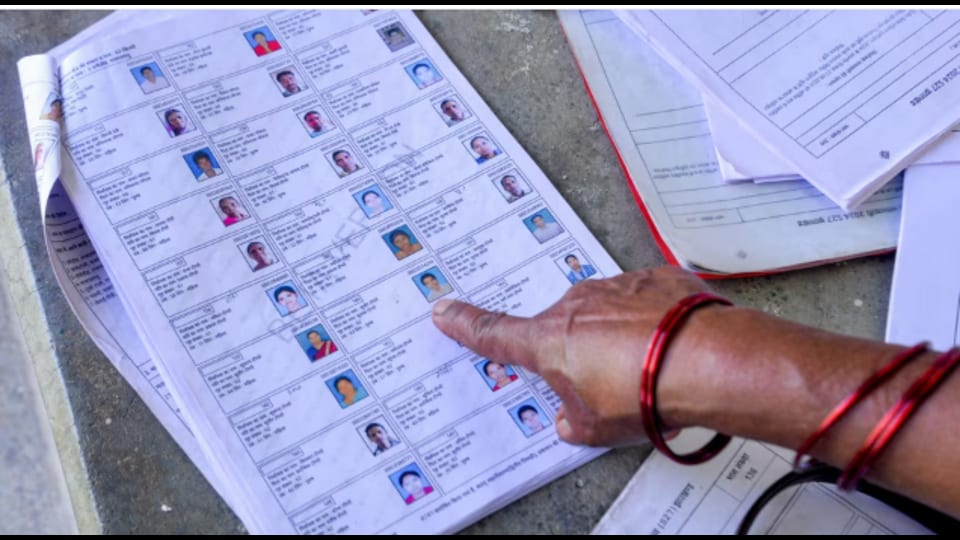
Chief minister Yogi Adityanath has alleged that the names of 1.27 crore (12.7 million) Hindu voters are missing from the post-SIR electoral list, even as the rolls recorded a 1.65% increase in Muslim voters.
Breaking down the figures, the CM claimed that 66 lakh of the 1.27 crore ‘omitted voters’ are currently enrolled in the State Election Commission’s panchayat voter list — which stands at 12.58 crore as of June — but have been left out of the ECI’s Assembly rolls. He further alleged that 55 lakh Hindu beneficiaries of government welfare schemes and approximately 4.5 lakh young voters in the 18–19 age group were missing from the voter list.
Countering the CM’s allegations, Samajwadi Party (SP) chief Akhilesh Yadav challenged Adityanath to back the opposition’s long-standing demands for electoral reforms if he genuinely believed 1.27 crore votes had been lost.
“Aadhaar cards should be linked to voting, metal cards should be issued to voters and fingerprint or iris-based biometric identification must be adopted,” Yadav said, urging a crackdown on voter list irregularities and polling fraud. The SP chief added that his party has already mobilized its rank and file to closely monitor the upcoming SSR exercise and ensure maximum voter enrollment.
Data from the ECI’s Special Intensive Revision—which began with door-to-door enumeration from November 4 to December 26, 2025, and concluded with the final roll publication on April 10, 2026—shows that Uttar Pradesh’s total electorate shrank from 15.44 crore (as of October 27, 2025) to 13.39 crore (133,984,792 voters).
The districts with the highest net deletions were Lucknow, Ghaziabad, Kanpur Nagar, Gautam Buddha Nagar and Meerut, where the post-SIR roll had 22.9%, 20.2%, 19.4%, 19.3%, and 18.7% fewer electors, respectively, than the pre-SIR roll. The BJP has strong support base in these districts. The districts considered rural hubs and strongholds of SP saw lowest deletions including Lalitpur, Hamirpur, Pilibhit, Mahoba, and Banda, where the rolls contracted by 6.7%, 6.9%, 8%, 8.5%, and 8.9%, respectively.
Earlier speaking to media persons, UP chief electoral officer (CEO) Navdeep Rinwa had stated that during the SIR of electoral rolls, there was no deletion or addition of voters targeting any specific community, assembly constituency, town or village. After the publication of the final voter list on April 10, with the completion of the SIR process, there was no complaint from any political party, added Rinwa.
Rinwa said the ECI has revised the schedule of the special summary revision of assembly electoral rolls-2027 for all 403 Assembly Constituencies of the state, with January 1, 2027 as the qualifying date. As per the instructions issued by the poll panel, the integrated draft electoral roll will now be published on November 17.
Under the revised schedule, claims and objections for inclusion of names, deletion of names or correction of any entry in the electoral roll will be received from November 17 to December 16. The claims and objections received will be disposed of by December 28. The final publication of the electoral roll will be on January 4 2027, he said.
The enumeration phase of SIR had started in UP on November 4 and concluded on December 26. The draft voter list was published on January 6 in which 28.9 million (2.89 crore) names were dropped. The draft rolls list had 125.5 million voters, compared to 154.4 million voters in the rolls published on October 27, 2025, after the special summary revision.
The ECI flagged 28.9 million as uncollectible voters, 12.9 million (8.40%) were categorised as permanently shifted, 4.6 million (2.99%) as deceased, 2.54 million ( 1.65%) as duplicate and 7.95 million (5.15%) as untraceable, according to data. Another 774,472 voters (0.50%) had not returned enumeration forms after collecting them from booth level officers.
After the completion of the claim and objection phase of SIR, ECI published the final voter list on April 10 that comprised 133,984,792 voters. The ECI deleted 815,000 voters in the final list including 350,000 who did not reply to ECI notices, 328,000 permanently shifted/absent voters, 79,076 duplicate voters, 55,865 deceased voters and 2,269 voters who were not Indian citizens or were found under age.
However, to plug the gaps ahead of the 2027 polls, the ECI issued three key directives to district election officers (DEOs) for the upcoming SSR:
Local Body Roll Matching: Cross-verify urban local body and panchayat voter lists with Assembly constituency rolls.
Ration Shop Audits: Inspect beneficiary lists of the Food and Civil Supplies Department at fair price shops and assist unregistered beneficiaries aged 18 and above in filing Form 6.
Women Voter Drive: Deploy ASHA, ANM and anganwadi workers to enroll women voters after the state’s electoral gender ratio dropped sharply from 877 women per 1,000 men (2025 roll) to 834 in the final SIR roll.


