In a move to strengthen security arrangements for VVIPs visiting or transiting through the state, the Uttar Pradesh government has sanctioned ₹2,19,65,332 for purchasing four anti-drone guns equipped with detection systems, senior home department officials confirmed here on Monday.
The officials said the state home department released the funds through a government order dated March 1, 2026, signed by Annavi Dinesh Kumar, special secretary (Home).
Each anti-drone gun with a detection system will cost ₹54,91,333, and the procurement will be carried out in accordance with the procedures prescribed by the micro, small and medium enterprises (MSME) department.
The government has directed the state police and security department to strictly adhere to procurement norms and ensure that the allocated funds are fully utilised by March 31, 2026.
The decision comes amid rising concerns over the misuse of commercially available drones for surveillance, smuggling, or potential attacks. Small unmanned aerial vehicles can bypass traditional perimeter security and pose a serious threat at public gatherings, political events and high-profile visits.
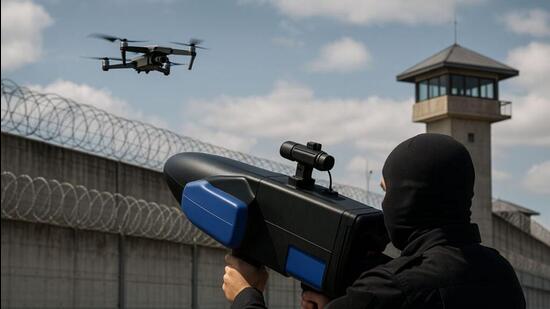
A senior police official explained an anti-drone gun is a counter-unmanned aerial system (C-UAS) device designed to detect, track, and neutralise rogue or unauthorised drones. The system typically integrates two core components including detection module and neutralisation mechanism (Drone Gun).
{{/usCountry}}A senior police official explained an anti-drone gun is a counter-unmanned aerial system (C-UAS) device designed to detect, track, and neutralise rogue or unauthorised drones. The system typically integrates two core components including detection module and neutralisation mechanism (Drone Gun).
{{/usCountry}}He said the detection system includes radar, radio frequency (RF) sensors, electro-optical cameras, or infrared systems that identify and track drones in real time. Advanced systems can detect multiple drones simultaneously and determine their location, altitude, speed, and in some cases, the location of the operator.
He further informed that the handheld or mounted “gun” emits directed radio frequency jamming signals that disrupt communication between the drone and its controller. It can force the drone to land immediately, trigger a “return-to-home” function, or disable its navigation system. Unlike kinetic systems, anti-drone guns are non-destructive and are preferred in urban or high-security environments where falling debris could pose a risk to civilians.
A senior state government officer said that detailed technical specifications and operational parameters for the equipment are with the state police and security department. The procurement forms part of the broader police modernisation initiative aimed at upgrading surveillance, intelligence, and response capabilities. With the induction of anti-drone technology, Uttar Pradesh joins a growing number of states and central security agencies deploying counter-drone systems to address emerging aerial threats in sensitive zones. The move is expected to significantly enhance layered security during VVIP movements and major state events.