Setting the ball rolling to make Uttar Pradesh a “zero poverty state” by lifting poor families above the poverty line within a year, the Uttar Pradesh government has issued guidelines for the project and will prepare a digital database of the impoverished families.
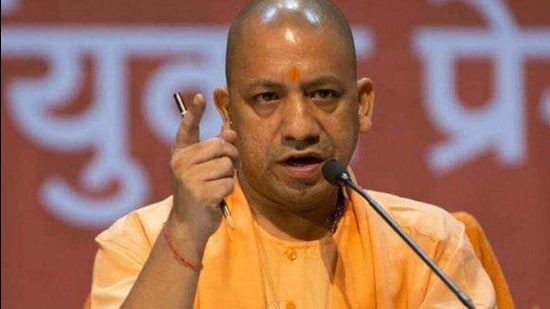
Launching the project on October 2, the birth anniversary of Mahatma Gandhi, chief minister Yogi Adityanath had termed Uttar Pradesh’s zero poverty drive the country’s most ambitious poverty alleviation programme.
The state government will support impoverished families, uplift them from poverty and integrate them into the mainstream, he had said.
On the other hand, opposition parties had said the project was an eyewash and an attempt to misguide people amid burning issues like unemployment and poverty.
Now, the state government has prepared the guidelines for the project with the focus on elimination of extreme poverty in the state, panchayati raj minister Om Prakash Rajbhar said on Friday.
“The state government has issued the GO (Government Order), directing all the district magistrates to accomplish the vision promptly and in a time bound manner,” he said.
About 10-25 families living in extreme poverty will be identified in each gram panchayat.
{{/usCountry}}About 10-25 families living in extreme poverty will be identified in each gram panchayat.
{{/usCountry}}“The state government is committed that the impoverished families get basic support including food, clothing, quality education, healthcare and housing facilities from the government. We will also ensure that each family has a regular source of income,” he said.
Elaborating on the panchayati raj department’s plan to prepare a digital database of impoverished families on the basis of measurable benchmark of poverty, Rajbhar said the upward mobility of poor families and their livelihood will be recorded on the zero poverty portal.
The details of the families will be collected including their financial condition, property owned by them, their eligibility for government jobs, health condition, age of working members, skill of the members and possibility of self employment, he said.
“The families that have no source of income will be covered under pension scheme. The state government will also include entrepreneurs and banks in the scheme for uplift of the impoverished families,” he said.
While conducting identification of impoverished families at three levels, information will be gathered about the poorest 10-25 families in each gram panchayat.
A three-tier, hybrid method will be employed for the selection of these families, ensuring a completely transparent process, he said.
In the first tier, details of the families will be collected on the Mobile App launched by the department, the minister said, adding the enumerators will identify poor families and feed their details in the mobile app.
In the second-tier, a five -member village level committee will verify the details of families collected by the enumerators.
The third tier will see an automated rating of families done on the basis of identification by the enumerators and approval by the village committee. The performance support unit under the chief secretary will verify the records.
“If wrong information has been fed, then action will be taken against enumerators and officers of gram panchayats. The list of selected poor families will be displayed at public places and on the zero poverty portal. They will be given a family ID as well,” Rajbhar said.
Along with the panchayati raj department, other state government departments have been roped in for the project. They include food and civil supplies department to provide rations cards, rural housing to give houses under PM Awas Yojana and CM Awas Yojana, the education department for admission in schools, uniforms and books and health for the Ayushman Bharat scheme.
Other departments involved in the project to free the families from the clutches of poverty include the labour department, agriculture, women and child development, SC and ST welfare department, minority welfare department, Jal Jeevan Mission and the skill development department.